Why Crown Choice Matters Today
Modern crown technology gives patients a clear choice between same‑day, computer‑aided design (CEREC) restorations and traditional laboratory‑fabricated crowns. CEREC uses an intra‑oral scanner and in‑office milling to design and place a ceramic crown in a single visit, preserving 15‑20 % more natural tooth structure and eliminating messy impressions and temporary crowns. Traditional crowns still offer a broader palette of materials—including metal‑ceramic, gold, and layered porcelain—making them ideal for heavily loaded molars or complex cases. Today’s patients often prioritize speed, comfort, and a natural, metal‑free appearance, while also wanting durability and cost‑effectiveness. The decision hinges on factors such as the tooth’s location, bite forces, amount of remaining tooth structure, aesthetic goals, insurance coverage, and the practice’s ability to deliver precise CAD/CAM work. By weighing these elements, patients can select the crown that best fits their lifestyle and oral‑health needs.
What Is a Same‑Day Crown? – The CEREC Process
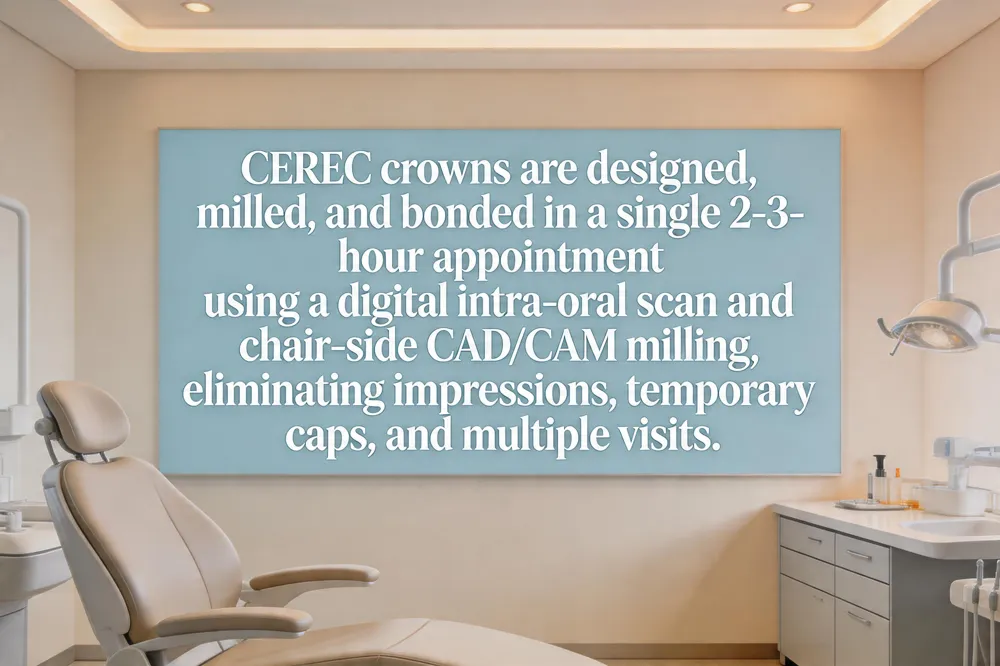 Instant dental crowns, also called same‑day or CEREC crowns, are fabricated right in the dentist’s office during a single appointment. Using a digital intra‑oral scanner, the dentist captures a 3‑D image of the prepared tooth, then a chair‑side milling unit sculpts a custom ceramic crown that fits precisely—no messy alginate impressions or temporary caps are needed. The entire workflow—examination, design, milling, adjustment, and bonding—typically takes 2–3 hours, allowing patients to leave with a permanent, high‑quality restoration the same day.
One‑day crowns are permanent dental caps that are designed, fabricated, and placed in a single office visit using advanced CAD/CAM technology. After the digital scan, the crown is designed on a computer and milled from a solid block of high‑strength ceramic (lithium disilicate or zirconia) in about 15‑30 minutes. The result is a natural‑looking, durable restoration that fits accurately and eliminates the inconvenience of multiple appointments.
Yes, a crown can be done in one visit with CEREC® technology. The dentist evaluates the tooth, takes a digital scan, designs the crown, mills it chair‑side, and permanently bonds it—all within a few hours. This approach is ideal for most anterior and moderate‑load teeth, though extensive damage or high‑stress molar areas may still benefit from a traditional lab‑fabricated crown with a metal substructure.
In‑office crowns are made with modern ceramic blocks that provide strength, durability, and aesthetics comparable to lab‑crafted crowns. While laboratory crowns can achieve slightly tighter internal fits and incorporate metal for extra strength, the convenience, precise fit, and immediate restoration of CEREC crowns make them an excellent choice for many patients at Best Choice Dental in Totowa, NJ.
Materials and Aesthetics: CEREC vs. Traditional Porcelain & Zirconia
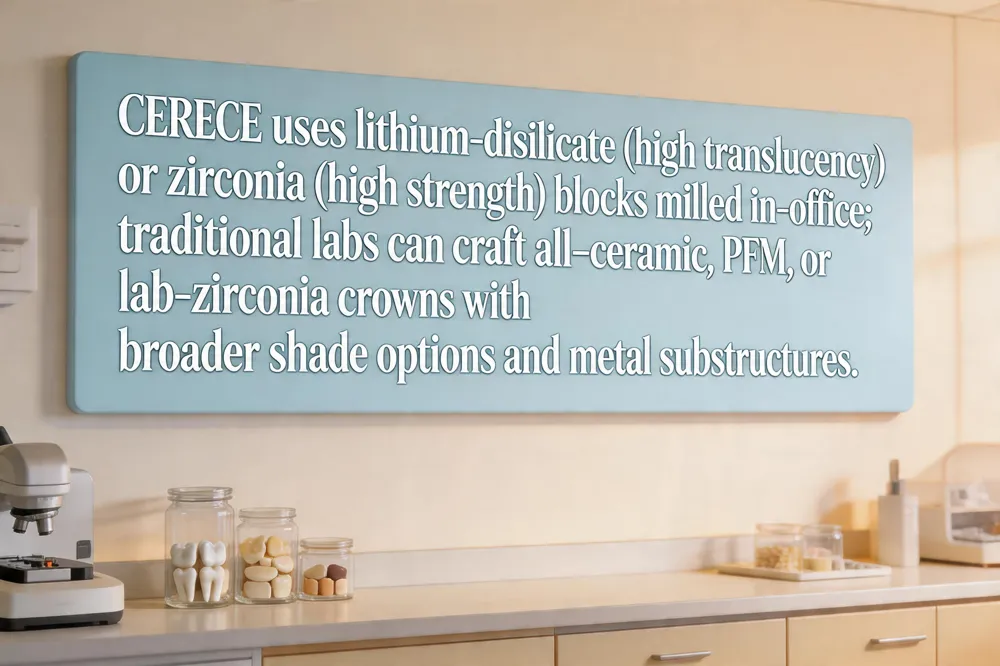 CEREC crowns are milled chair‑side from solid ceramic blocks, most commonly lithium‑disilicate (E.Max) for superior translucency and zirconia for high strength. Because the material comes from a single block, the restoration can be bonded with a light‑cured resin, giving a precise, metal‑free fit in one visit. Lab‑fabricated porcelain crowns, on the other hand, are built up layer‑by‑layer in a dental laboratory and usually require two or more appointments with a temporary crown in place. They can be all‑ceramic or porcelain‑fused‑to‑metal (PFM), offering a broader range of shades and the option of a metal substructure for added durability in heavy‑load molars.
Zirconia crowns—whether milled in‑office or in a lab—provide exceptional fracture resistance and wear resistance, making them ideal for posterior teeth that endure high bite forces. Modern zirconia can be tinted to improve translucency, but it still lags behind lithium‑disilicate in sheer optical realism. CEREC "fired" crowns receive a heat‑treatment step that strengthens the porcelain and reduces chipping risk, yet they remain less robust than zirconia under extreme stress.
In short, if you prioritize same‑day convenience, minimal tooth reduction, and a highly aesthetic front‑tooth result, a CEREC lithium‑disilicate crown is an excellent choice. For patients needing maximum strength, especially on back teeth or heavily damaged teeth, a traditional laboratory‑fabricated zirconia crown offers the best combination of durability and natural appearance.
Cost, Insurance, and Value: What You’ll Pay for a Crown
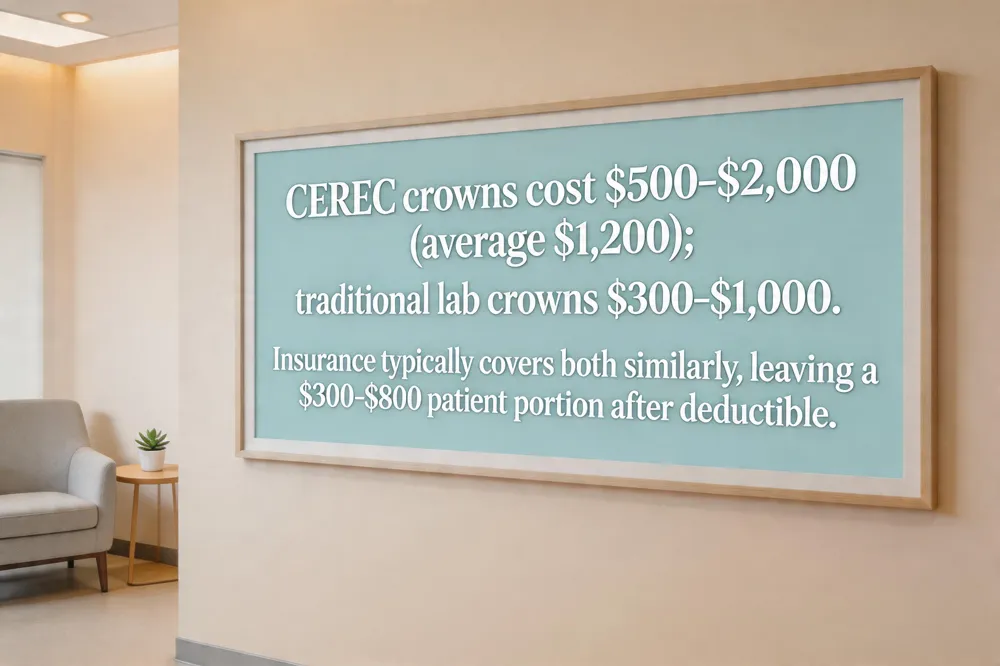 CEREC crowns are typically priced between $500 and $2,000 per tooth, with most patients paying about $1,200 on average. Out‑of‑pocket costs usually fall in the $800‑$1,500 range when you have no insurance, depending on the ceramic material (lithium disilicate, zirconia, or porcelain) and the amount of preparatory work required. Traditional lab‑fabricated crowns are generally less expensive, ranging from $300‑$1,000 for all‑ceramic or metal‑ceramic options, because the material and laboratory fees are lower.
Insurance plans usually treat CEREC crowns the same as any other permanent crown. Most carriers cover a portion of the fee after the deductible, leaving a copayment or deductible of roughly $300‑$800 for a CEREC restoration. Some plans may only reimburse part of the cost if they classify the crown as cosmetic.
Regional cost differences are modest; in Totowa, NJ, Best Choice Dental offers a detailed estimate after reviewing your dental benefits and the specific case. The convenience of a same‑day, metal‑free restoration often offsets the slightly higher price compared with multi‑visit traditional crowns, especially when you consider the elimination of temporary crowns and extra appointments.
Durability, Longevity, and Clinical Considerations
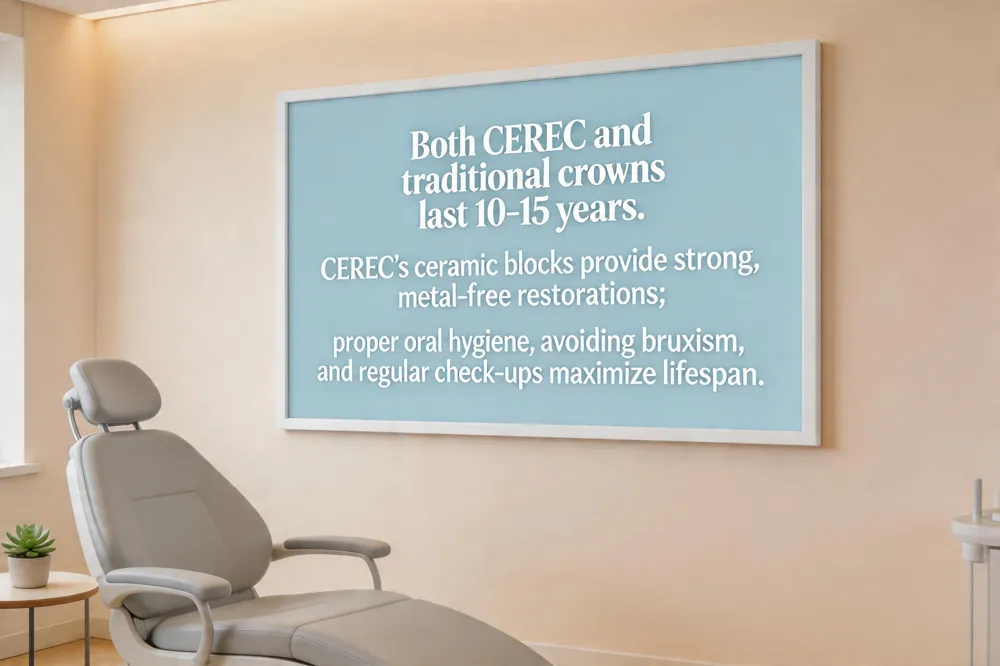 CEREC same‑day crowns typically last 10 to 15 years, matching the lifespan of traditional metal‑ or porcelain‑fused‑to‑metal crowns. Their durability comes from high‑strength ceramic blocks—lithium disilicate or zirconia—milled from a solid piece and bonded with a light‑cured resin. To maximize longevity, patients should avoid grinding or clenching, maintain diligent oral‑hygiene, and schedule six‑month check‑ups; a night‑guard may be advised for bruxism.
Porcelain or all‑ceramic crowns are considered the healthiest option because they are completely metal‑free and biocompatible, eliminating metal‑related toxicity or allergic reactions and reducing plaque accumulation.
CEREC crowns are suitable for molars. The robust ceramic material can withstand heavy chewing forces, and the CAD/CAM workflow provides a precise fit that reduces the risk of decay under the restoration. The single‑visit process eliminates temporary crowns, offering convenience and immediate function.
Patient complaints include occasional bulkiness if the digital scan misses fine anatomy, longer chair‑time for adjustments, and higher upfront cost. The limited material palette (ceramic only) and difficulty capturing sub‑gingival damage are also noted disadvantages.
Overall patient satisfaction is high: reviews praise the same‑day service, natural aesthetics, and comfortable fit, with most patients experiencing minimal post‑operative sensitivity. While traditional lab‑crafted crowns may offer a broader material range and slightly tighter internal fit, CEREC crowns provide comparable strength, a convenient workflow, and excellent aesthetic results—making them a strong choice for most restorative needs in Totowa, NJ.
Practical Aspects and Practice Workflow
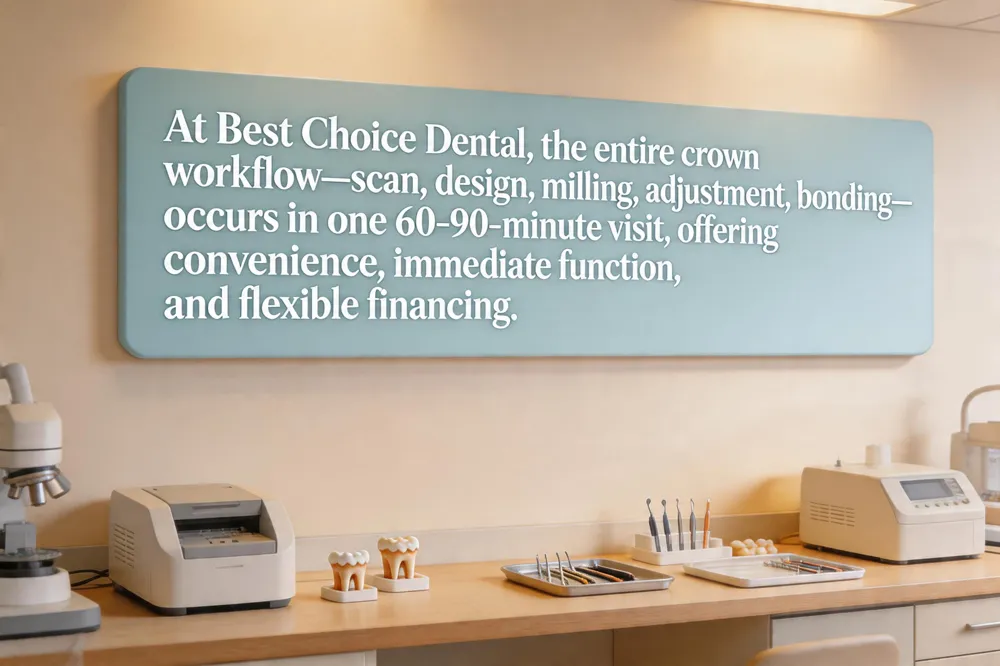 At Best Choice Dental in Totowa, NJ, we combine modern technology with personalized care to make crown treatment as smooth as possible. Dentist‑made crowns and in‑office capabilities – While most traditional crowns are fabricated by an external laboratory, our CEREC system lets us design, mill, and place a high‑strength ceramic crown right in the office. The crown is produced by a CAD/CAM milling unit, not by hand‑craft, which but the the still can expect a‑ compiled” restoration in a single visit. Scheduling and patient convenience – Because the entire workflow (digital scan, virtual design, milling, and final placement) occurs during one appointment, patients avoid the inconvenience of multiple trips, temporary crowns, and the dietary restrictions that come with them. Typical chair‑time is 60‑90 minutes, allowing patients to return to work or school the same day. Insurance and financing options – Most dental insurance plans cover CEREC crowns at the same rate as traditional crowns, as both are classified as permanent restorations. Our staff works with each patient to verify benefits, and we offer flexible financing to offset the modest premium for the premium ceramic block and digital equipment. Material selection guidance – We discuss the advantages of all‑ceramic CEREC crowns (natural esthetics, metal‑free, excellent translucency) versus traditional lab‑fabricated options that may include metal‑ceramic or gold for high‑stress posterior teeth. By evaluating bite forces, aesthetic goals, and any metal sensitivities, we help patients choose the material that best fits their clinical needs and budget.
Making an Informed Crown Decision
Choosing between a same‑day CEREC crown and a traditional lab‑fabricated crown involves weighing speed, cost, and material strength. CEREC offers a single‑visit, minimally invasive restoration with high‑strength ceramic, but its upfront price can be 20‑30 % higher; traditional crowns provide a broader material palette, including metal‑ceramic options that may better withstand heavy bite forces. Discuss your aesthetic goals, budget, and functional needs with your dentist, who can recommend the most suitable option based on the tooth’s location and condition. After placement, maintain regular brushing, flossing, and dental check‑ups to ensure the crown’s longevity and protect surrounding teeth for many years and a confident smile.