Why Family Oral Health Matters
Good oral health is more than a bright smile—it’s a cornerstone of overall wellness. Research links untreated gum disease and cavities to systemic conditions such as heart disease, stroke, diabetes, and complications during pregnancy. Establishing proper brushing, flossing and fluoride use early in life sets the stage for lifelong dental health, reduces the risk of cavities and gum disease, and teaches children habits they will carry into adulthood. A family‑oriented dental practice, like our Totowa office, offers age‑appropriate preventive care—from infant gum cleaning and fluoride varnish to adult cleanings and sealants—using advanced technology such as digital imaging and ADA‑approved products. By tailoring education and treatment to each family member’s needs, we create a comfortable, supportive environment that encourages regular visits, early detection of problems, and lasting oral‑systemic health benefits.
Essential Daily Oral Hygiene Routine
Essential Daily Oral Hygiene Routine
| Step | Action |
|---|---|
| 1 | Brush twice daily with a soft‑bristled brush + fluoride toothpaste (2 min) |
| 2 | Floss daily using a C‑shaped motion or interdental brushes |
| 3 | Rinse with an alcohol‑free antibacterial mouthwash that contains fluoride or essential oils |
| 4 | Finish with a water swish to clear residues |
| 5 | Replace toothbrush (or electric head) every 3‑4 months |
| 6 | Limit sugary/acidic foods, stay hydrated, and eat calcium‑rich foods |
| 7 | Schedule professional cleanings every 6 months |
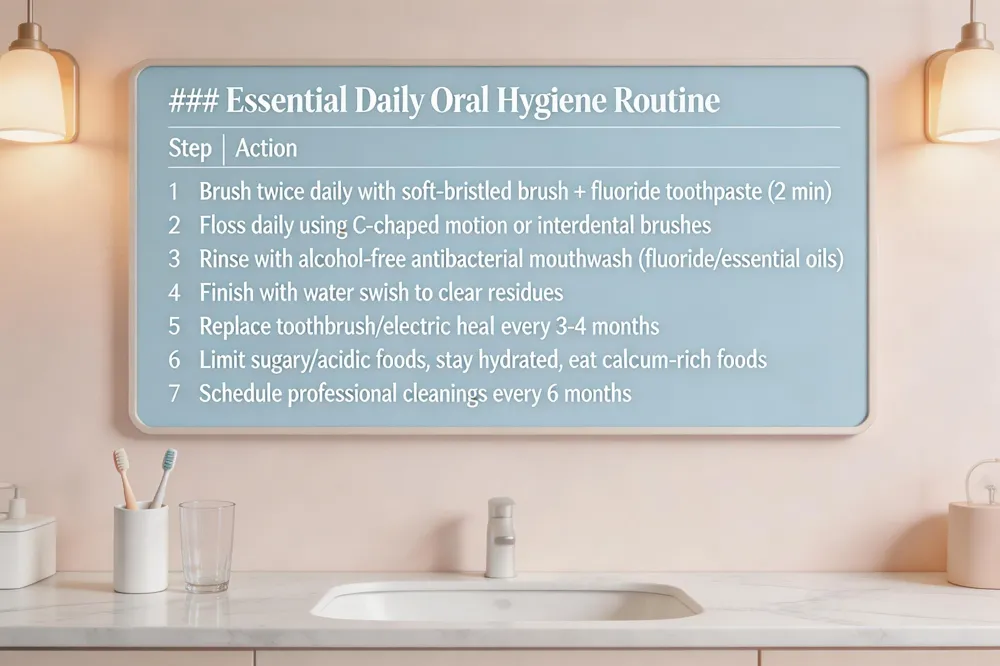 After flossing, rinse with an alcohol‑free antibacterial mouthwash that contains fluoride or essential oils; this reduces bacterial load, freshens breath, and adds an extra layer of protection against gingivitis. Replace your toothbrush (or electric head) every three to four months, or sooner if the bristles become frayed, to maintain optimal cleaning efficiency.
Diet matters too: limit sugary and acidic foods and drinks, stay well‑hydrated with water, and choose calcium‑rich dairy, crunchy fruits, and leafy vegetables that stimulate saliva and help neutralize acids.
6 ways to take care of your teeth – brush twice daily, floss daily, use fluoride mouthwash, limit sugar, stay hydrated, and schedule professional cleanings every six months.
Oral hygiene routine order – brush with fluoride toothpaste, floss, rinse with mouthwash, then finish with a water swish.
Oral care products – soft‑bristled brush, fluoride toothpaste, dental floss (or interdental brushes), fluoride mouthwash, and a tongue scraper.
Benefits of oral hygiene – prevents cavities, gum disease, and bad breath; saves money on dental work; and supports overall systemic health.
At our family‑focused practice we combine these evidence‑based habits with state‑of‑the‑art digital imaging, gentle scaling, and personalized coaching to make every visit comfortable and effective.
Kids' Oral Health Foundations
Kids' Oral Health Foundations
| Practice | Details |
|---|---|
| Supervised brushing | Parents guide kids twice daily with a soft brush, 45° angle, circular motions |
| Flossing technique | Introduce floss picks or C‑shaped floss once two teeth touch |
| Fluoride use | Rice‑grain‑size smear for infants, pea‑size for ages 3+; consider varnish or supplements if water isn’t fluoridated |
| Fun routines | 2‑minute song, sand‑timer, electric brush timer, stickers/rewards |
| Early visits | First exam within 6 months of first tooth or by age 1; check‑ups every 6 months for sealants, varnish, orthodontic eval |
| Educational tools | Poster, downloadable PDF, “10 Ways” checklist for kids |
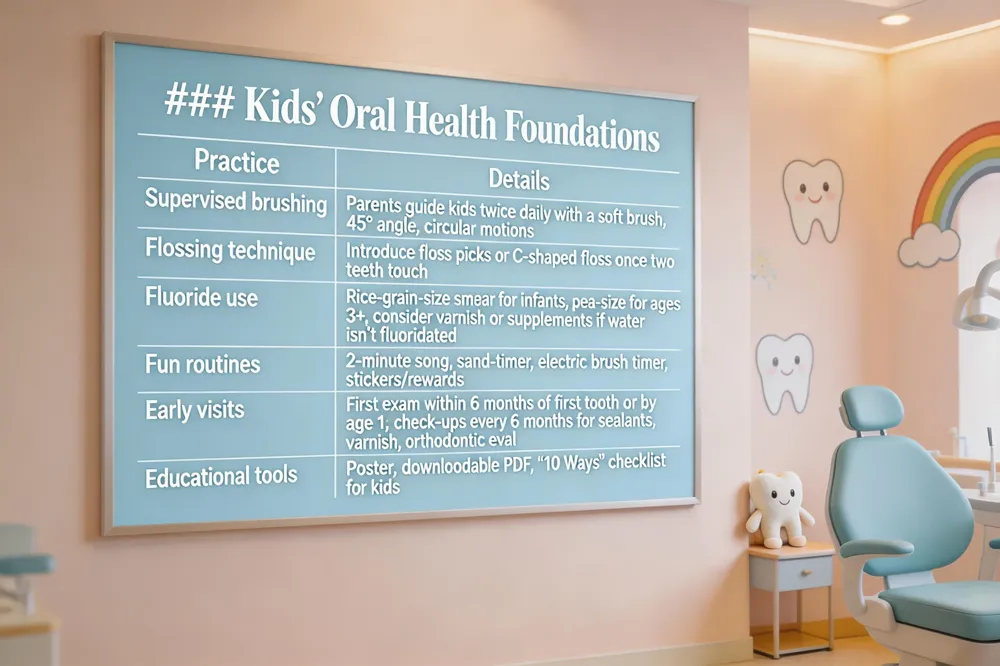 Creating a solid oral‑health foundation early on sets children up for a lifetime of bright smiles. At our practice we guide families through supervised brushing and flossing: parents should help kids brush twice daily with a soft‑bristled brush, using a 45‑degree angle and gentle circular motions, and introduce floss picks or a C‑shaped floss technique as soon as two teeth touch.
Fluoride use for children is essential. Begin with a rice‑grain‑sized smear of fluoride toothpaste for infants, then a pea‑sized amount once the child is three. If community water isn’t fluoridated, we can discuss safe supplements or professional Fluoride varnish applications, which reduce cavity risk by up to 30 %.
Creating fun, engaging routines keeps kids motivated. Sing a two‑minute brushing song, use a sand‑timer or an electric brush with a built‑in timer, and reward consistent habits with stickers or praise. Activities such as “tooth‑brush” games on a doll’s teeth turn oral care into play.
Early dental visits and preventive treatments are critical. Schedule the first exam within six months of the first tooth erupting or by the first birthday. Regular six‑month check‑ups allow us to apply sealants, fluoride varnish, and early orthodontic evaluations, using gentle, tech‑advanced tools that make the experience comfortable.
Educational tools for kids include a colorful "Oral Hygiene for Kids" poster that illustrates proper technique, a downloadable "Child Dental Health PDF" covering brushing, flossing, diet, and when to see a dentist, and a "10 Ways to Take Care of Your Teeth for Kids" checklist (supervise brushing, pea‑size toothpaste, proper technique, floss picks, limit sugary drinks, offer fruits/veg, fluoride rinse, praise, regular check‑ups, fun timers).
Our family‑oriented office combines cutting‑edge technology with personalized, friendly care, ensuring every child feels confident and protected on their dental journey.
Nutrition and Lifestyle for Healthy Teeth
Nutrition & Lifestyle for Healthy Teeth
| Category | Recommendations |
|---|---|
| Sugar & acids | Limit frequent sugary snacks & acidic drinks; rinse with water between meals |
| Calcium‑rich foods | Dairy, leafy greens, almonds, fortified plant milks; pair with vitamin D sources |
| Hydration | Drink plenty of water to stimulate saliva (natural buffer) |
| Tobacco & alcohol | Avoid smoking; limit alcohol to protect gums & enamel |
| Natural adjuncts | Soft‑bristled brush, oil‑pulling with coconut oil, crunchy vegetables, vitamin‑dense diet |
| 2‑2‑2 rule | Brush twice daily for 2 min, see dentist twice a year |
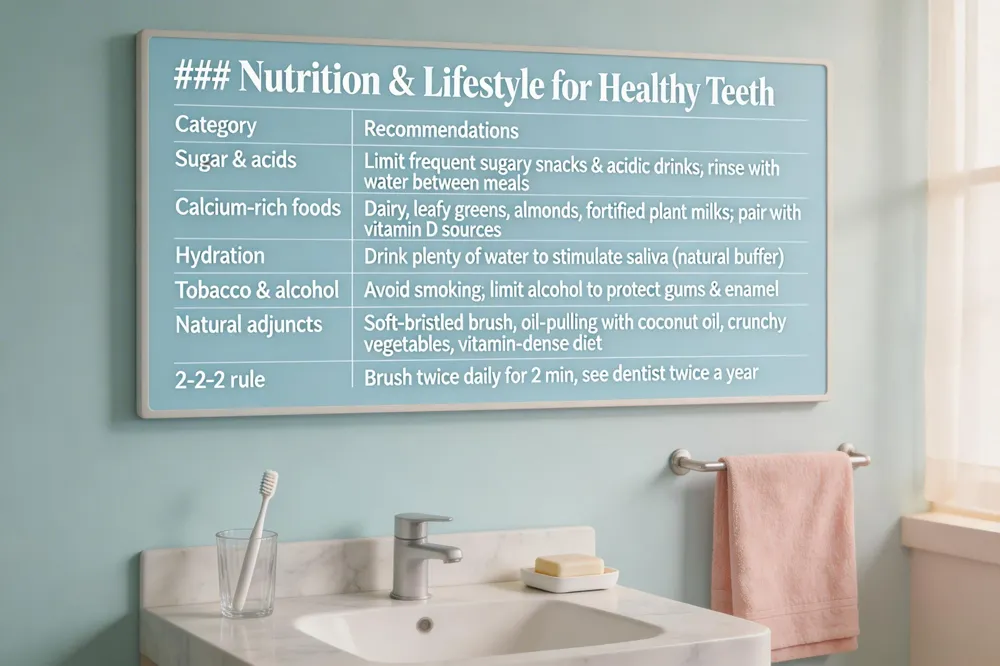 A balanced diet and smart lifestyle choices are essential partners to daily brushing, flosing, and professional care at our family‑focused clinic, where we use the latest digital imaging and gentle, personalized techniques to keep every smile comfortable and bright.
Impact of sugar and acids – Frequent sugary snacks and acidic drinks feed decay‑causing bacteria and soften enamel. Limiting these foods and drinking water between meals helps keep the mouth’s pH neutral and reduces cavity risk.
Calcium‑rich foods – Calcium‑rich foods – Dairy, leafy greens, almonds, and fortified plant milks supply calcium and phosphorus that remineralize enamel. Pairing these foods with vitamin D‑rich options (fatty fish, fortified eggs) maximizes absorption.
Hydration and saliva – Plenty of water rinses away food particles and stimulates saliva, the natural buffer that neutralizes acids and supplies minerals.
Tobacco and alcohol avoidance – Smoking and excessive alcohol increase gum disease, oral cancer, and enamel erosion. Quitting tobacco and moderating alcohol protect gums and overall health.
Natural adjuncts to oral care – A soft‑bristled brush, oil‑pulling with coconut oil, crunchy vegetables, and a vitamin‑rich diet support oral health without replacing fluoride or professional cleanings.
10 ways to keep your teeth healthy – 1) Brush twice daily, 2) Floss daily, 3) Use fluoride toothpaste, 4) Limit sugar, 5) Eat calcium‑rich foods, 6) Stay hydrated, 7) Avoid tobacco, 8) Use an alcohol‑free antibacterial mouthwash, 9) Replace toothbrush every 3 months, 10) Visit the dentist twice a year.
How to take care of teeth naturally – Use a soft‑bristled brush, oil‑pull with coconut oil, chew crunchy vegetables, steer clear of acidic drinks, and follow a balanced, vitamin‑dense diet.
The 2‑2‑2 rule – Brush twice a day for two minutes each session and see your dentist twice a year.
Healthy teeth and gums – Look for strong enamel, pink firm gums, no bleeding, fresh breath, and no sensitivity.
Unhealthy kids’ teeth – Watch for cavities, white spots, gum inflammation, pain, or early tooth loss, and bring them in for early evaluation.
Our practice offers comprehensive preventive services—including fluoride varnish, sealants, and personalized nutrition counseling—to help every family member achieve lasting oral health.
Professional Care and Preventive Measures
Professional Care & Preventive Measures
| Preventive Service | Frequency / Details |
|---|---|
| Dental exam & cleaning | Every 6 months (removes tartar, catches early disease) |
| Fluoride varnish | 2‑4 times a year; strengthens enamel, can reverse early lesions |
| Sealants | Applied to molar chewing surfaces; prevents up to 80 % of cavities in high‑risk youth |
| ADA‑approved products | Use only products bearing the ADA Seal of Acceptance for safety/effectiveness |
| Dry‑mouth management | Increase water, sugar‑free gum, avoid tobacco/alcohol, discuss meds with dentist |
| High‑risk groups | Tailored plans (more cleanings, supplements) for diabetes, osteoporosis, HIV/AIDS, medication‑induced xerostomia |
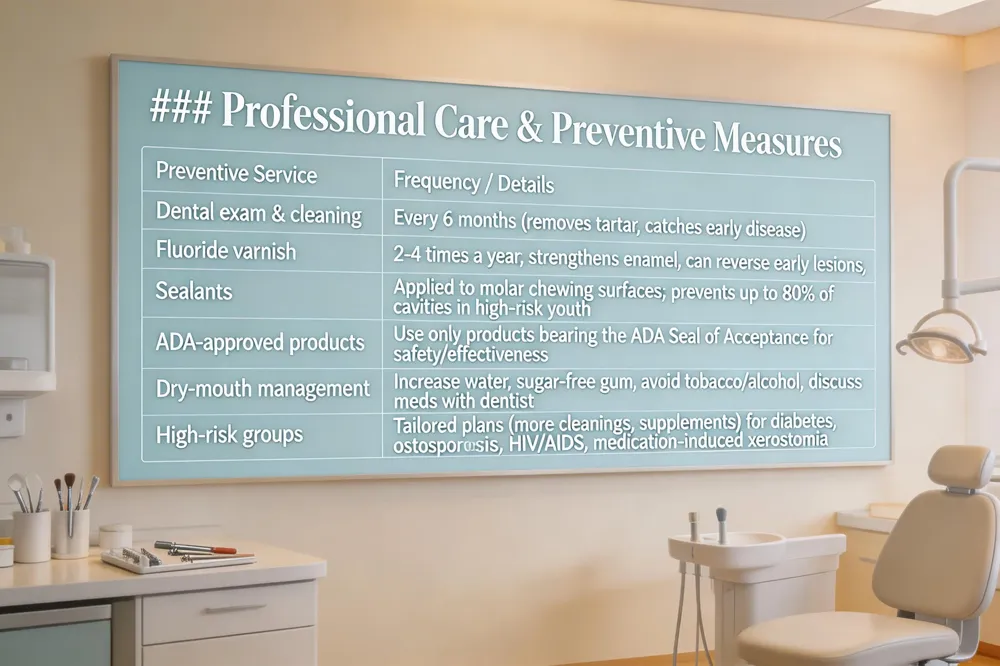 Maintaining optimal oral health starts with a solid home routine and is reinforced by professional, preventive care.
Teeth care tips at home – Brush twice daily for two minutes with a soft‑bristled toothbrush and fluoride toothpaste, use a gentle 45‑degree angle, floss once a day with a C‑shaped motion, limit sugary snacks and drinks, stay hydrated, and replace your brush every 3–4 months.
Oral hygiene definition – Oral hygiene is the daily practice of keeping the mouth clean—brushing, flossing, and using adjuncts like mouthwash—to remove plaque, control bacteria, and prevent disease.
5 ways to take care of your teeth – 1) Brush twice a day with fluoride toothpaste, 2) Floss daily, 3) Use fluoride products (toothpaste, varnish, mouthwash), 4) Limit sugar and acidic foods, 5) Visit the dentist for exams and cleanings at least twice a year.
Benefits of oral hygiene – Consistent care prevents cavities, gum disease, and bad breath, reduces the need for costly restorative work, and lowers the risk of systemic conditions such as heart disease, stroke, diabetes complications, and adverse pregnancy outcomes.
Oral health in children – Start cleaning gums at birth, introduce a soft toothbrush with a rice‑grain‑size fluoride smear once the first tooth appears, progress to a pea‑sized amount by age 3, supervise brushing and flossing, apply fluoride varnish and sealants as recommended, limit sugary drinks, and schedule the first dental visit by the first birthday with regular check‑ups thereafter.
Routine dental exams and cleanings – Professional cleanings every six months remove tartar that home care cannot, and exams catch early signs of decay, gum disease, or oral cancer.
Fluoride varnish and sealants – Fluoride varnish applied 2–4 times a year strengthens enamel and can reverse early lesions; sealants on molar chewing surfaces prevent up to 80 % of cavities in high‑risk children and teens.
ADA Seal of Acceptance – ADA Seal of Acceptance – Products bearing this seal have been vetted for safety and effectiveness, ensuring you use reliable, evidence‑based tools for your oral care.
Managing dry mouth and medication effects – Increase water intake, chew sugar‑free gum, avoid tobacco and alcohol, and discuss alternative medications with your dentist to mitigate dry mouth‑related decay.
Tailored care for high‑risk groups – Individuals with diabetes, osteoporosis, HIV/AIDS, or those on medications causing dry mouth receive personalized preventive plans, possibly including more frequent cleanings, fluoride supplements, and targeted education.
By integrating these home habits with the comprehensive, technology‑driven services offered at our family‑focused practice, you can protect your smile, your health, and your wallet for life.
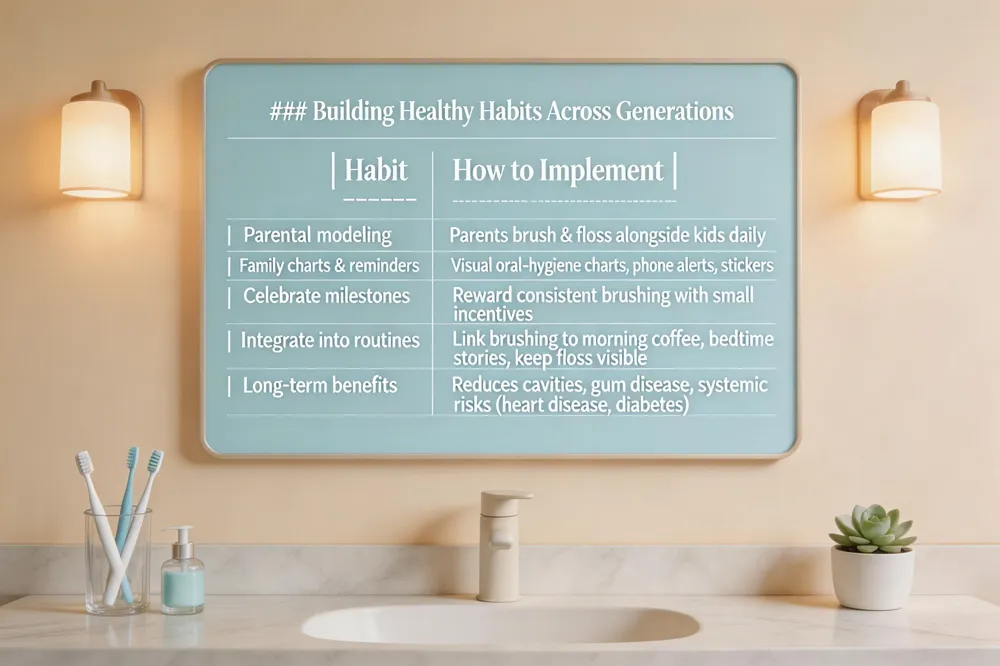
Building Healthy Habits Across Generations
Building Healthy Habits Across Generations
| Habit | How to Implement |
|---|---|
| Parental modeling | Parents brush & floss alongside kids daily |
| Family charts & reminders | Visual oral‑hygiene charts, phone alerts, stickers |
| Celebrate milestones | Reward consistent brushing with small incentives |
| Integrate into routines | Link brushing to morning coffee, bedtime stories, keep floss visible |
| Long‑term benefits | Reduces cavities, gum disease, systemic risks (heart disease, diabetes) |
 Oral hygiene definition
Oral hygiene is the daily practice of keeping the mouth clean to prevent disease, including brushing, flossing, and regular dental care.
Healthy teeth and gums
Strong enamel, pink firm gums, no bleeding, fresh breath, and no sensitivity are signs of good oral health.
[Unhealthy kids teeth]
Cavities, white spots, gum inflammation, pain, and early tooth loss indicate poor oral health in children.
Benefits of oral hygiene
Proper care prevents cavities, gum disease, and bad breath, saves money on extensive dental work, and supports overall systemic health.
5 ways to take care of your teeth
- Brush twice daily with fluoride toothpaste using a soft‑bristled brush at a 45‑degree angle.
- Floss once a day to clean between teeth.
- Use an alcohol‑free antibacterial mouthwash.
- Limit sugary and acidic foods and drinks.
- Visit the dentist for professional cleanings and exams at least twice a year.
Parental modeling of oral care
Parents who brush and floss alongside their children set a powerful example, encouraging lifelong habits.
Family oral‑hygiene charts and reminders
Visual charts and phone alerts keep everyone on track and make tracking progress fun.
Celebrating milestones and good behavior
Reward charts for consistent brushing reinforce positive actions and build confidence.
Integrating oral health into daily routines
Link brushing to morning coffee or bedtime stories, and keep floss and mouthwash in visible spots.
Long‑term health benefits
Consistent family oral care reduces the risk of cavities, gum disease, and systemic conditions such as heart disease and diabetes, while our practice’s advanced technology and personalized, comfortable care ensure every generation receives the best preventive treatment.
Take the First Step Today
At Best Choice Dental we invite you to schedule a family dental exam—our friendly team uses digital imaging and comfortable sedation options to make every visit easy. Meanwhile, build a solid home routine by brushing twice daily with fluoride toothpaste, flossing each night, and using an alcohol‑free antibacterial mouthwash as outlined above. By teaching each family member proper technique and encouraging regular check‑ups, you empower everyone to protect their smile and enjoy lasting oral health.