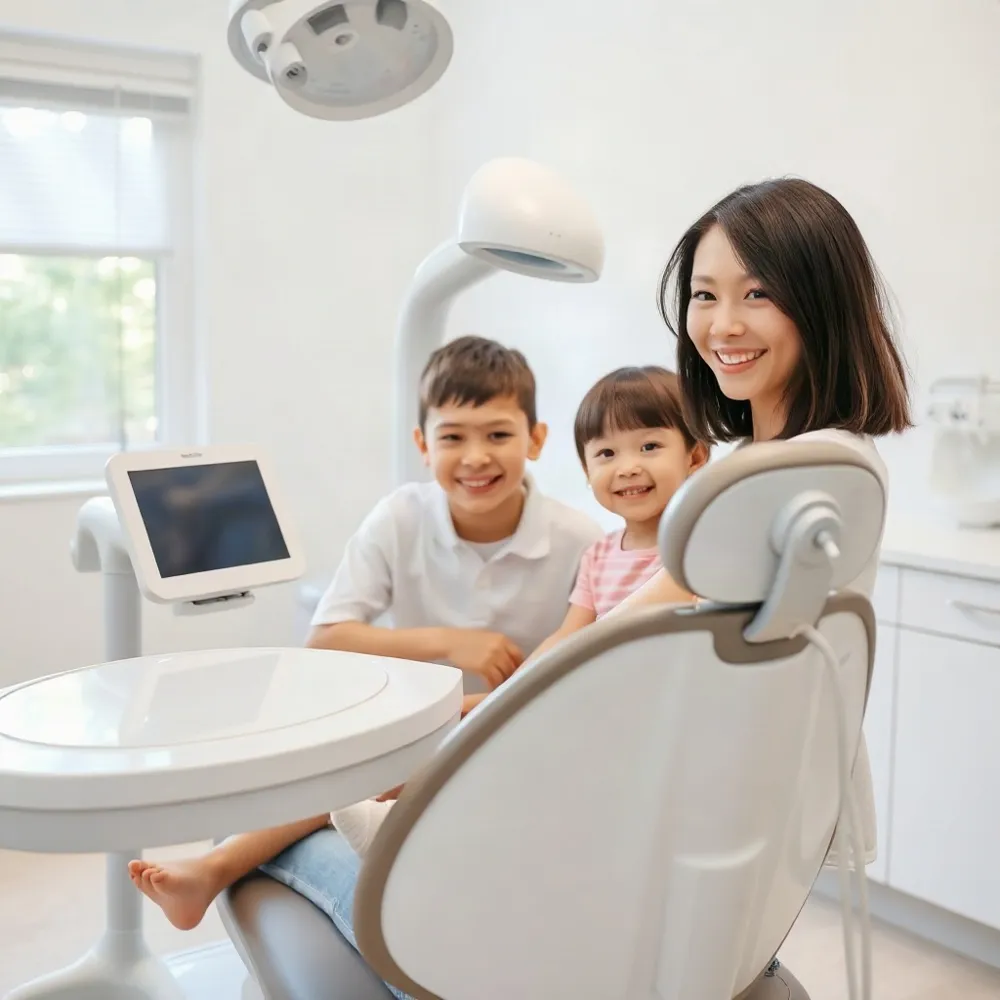
The Foundation of Fun: Why Play and Routine Crush Dental Fear
Dental fear is a common and potent hurdle, affecting over 9% of children in the United States. This anxiety can lead to skipped appointments, poor oral health, and a lifetime of avoidance. However, the most effective strategy is surprisingly simple: transform the dental visit from an intimidating event into a routine, playful adventure from the very beginning.
The Power of the First Visit: Start Early, Stay Calm
The cornerstone of fear prevention is the first dental visit. The American Academy of Pediatric Dentistry (AAPD) strongly recommends this happen by the child’s first birthday or within six months of the first tooth erupting. This isn't just about checking for cavities; it's about building a foundation of trust. A landmark study involving 575 children (average age 6.85 years) revealed a powerful connection: the age at a child's first visit and the frequency of subsequent checkups predicted a staggering 44.4% of dental fear. Children who first visited before age two and maintained regular six-month or yearly appointments showed significantly lower anxiety levels. This early exposure normalizes the sights, sounds, and smells of a dental office, turning it into a familiar, non-threatening environment.
The "Vaccine" of Positive Experiences
The science behind this early-intervention strategy is called "latent inhibition." This concept suggests that a series of positive or neutral dental experiences before any potentially uncomfortable one acts as a powerful "vaccine" against future fear. The same study found that a greater number of non-aversive visits before a bad experience predicted a 22.7% reduction in dental fear. In contrast, children who only visited the dentist when they were in pain—a group that made up 25.7% of the study—were far more likely to develop high anxiety. This makes the guideline clear: consistent, proactive check-ups, rather than reactive, problem-driven visits, are the single best way to prevent fear.
Turning Preparation into Play
Preparation is a parent’s most powerful tool, and it can be turned into a fun game. A few days before the appointment, read children's books about friendly dentist visits, like "The Berenstain Bears Visit the Dentist." Watch short, positive videos from shows like "Peppa Pig" or "Daniel Tiger." Role-playing at home is incredibly effective—let your child be the "dentist" and count your teeth with a toothbrush, or be the patient and practice opening wide. This demystifies the process and gives the child a sense of control, turning the unknown into a familiar game.
The Kid-Friendly Office: A World of Exploration
The environment of the dental practice itself is a powerful tool for reducing anxiety. Pediatric and family-oriented offices are designed with children in mind: bright colors, fun décor, and a waiting room with toys, books, and games create a welcoming "play zone." Many offices use positive language, calling the suction a "silly straw" or the x-ray camera a "space camera." Techniques like "tell-show-do" are standard, where the dentist explains a step, demonstrates it on a model, and then performs it gently. This transparent, interactive approach builds trust and reduces the fear of the unknown. A pre-appointment tour of the office, just to meet the staff and sit in the chair, can work wonders for a hesitant child.
Rewarding Bravery: The Power of Positive Reinforcement
Positive reinforcement transforms a dental visit into a goal to look forward to. After a successful appointment, a sticker, a small toy from a "treasure chest," or a special outing to the park creates a powerful positive association. Involving the child in small choices—like picking the flavor of toothpaste or the color of a new toothbrush—gives them a sense of agency and control. A sticker chart at home, where each successful visit earns a star leading to a larger reward, can make the entire process feel like an adventure with a valuable prize at the end. When parents model calm, upbeat attitudes and avoid using scary words like "pain" or "shot," children are far more likely to mirror that relaxed confidence. By embedding dental care in a framework of routine, play, and reward, we don't just treat teeth—we build a lifelong habit of fearless oral health.
| Strategy | Description | Impact on Fear | Example from Pediatric Practice |
|---|---|---|---|
| Early Start | First visit by age one or first tooth. | Familiarizes child with the environment, preventing fear from developing. | Before age two, with 6-month check-ups, significantly lower anxiety levels. |
| Playful Preparation | Books, videos, and role-playing at home. | Demystifies the unknown and gives the child a sense of control. | Using “silly straw” for suction or “space camera” for x-rays. |
| Kid-Friendly Office | Bright decor, toys, games, and a welcoming staff. | Creates a non-clinical, safe space that signals fun. | Pre-appointment tour to meet staff and sit in the chair. |
| Positive Reinforcement | Stickers, small toys, praise, and reward charts. | Creates a powerful, positive association with the dental visit. | A post-visit “treasure chest” or a sticker chart for each successful appointment. |
| Parental Modeling | Calm, upbeat language and avoiding negative phrases. | Children mirror adult attitudes, reducing their own anxiety. | Focusing on “counting teeth” or “making your smile sparkle.” |
1. At-Home Play: Your Secret Weapon for a Calm Visit
How can I help my child with dental anxiety or fear of the dentist?
One of the most effective ways to reduce dental fear is to start preparing your child long before you even enter the office. The goal is to transform the unknown into a familiar routine. Since children often mirror their parents’ emotions, modeling a calm and positive attitude about dental care is the first and most powerful step. Instead of focusing on what might be scary, highlight the benefits of a healthy smile and the fun of a visit.
Avoid using dental visits as a threat for poor brushing, and never share your own negative experiences. Instead, frame the visit as an exciting adventure where the dentist is a helper who keeps teeth “strong and sparkly.” By consistently using upbeat language and focusing on the positive aspects of the appointment, you help your child adopt the same relaxed perspective.
How can role-playing at home help demystify a dental visit?
Role-playing a dental visit at home is a proven technique to demystify the experience and turn a potentially scary event into a familiar game. Let your child “be the dentist” and examine a favorite stuffed animal, a doll, or even your teeth. Use a toothbrush to gently “count” teeth out loud and a small mirror to explore their mouth. This playful rehearsal gives your child a sense of control and predictability.
You can also practice having your child sit still and open their mouth wide while you count their teeth. This hands-on dramatization builds familiarity with the basic steps of a check-up, such as having their mouth explored. By making this a fun, low-stress activity at home, you significantly reduce the anxiety that comes from the unknown during a real visit.
What specific books and videos can help reduce fear of the dentist?
Children’s books and videos featuring friendly characters are excellent tools for preparing your child. Seeing beloved characters like Daniel Tiger, Peppa Pig, or the Berenstain Bears have positive experiences at the dentist normalizes the process and reduces intimidation. These stories introduce the dental office, the tools, and the procedures in an age-appropriate, non-threatening way.
For instance, characters use simple, playful terms like “silly straws” for the suction tool or “sugar bugs” for plaque, transforming clinical concepts into something whimsical and safe. Watching a short video or reading a book together allows you to answer your child’s questions in a calm setting, reinforcing that the dentist is a friendly helper. This familiarization is a key step in building comfort and reducing fear of the unknown, making the actual visit feel like a continuation of a positive story.
What other home-based activities can ease dental anxiety?
Beyond role-playing and media, several other at-home strategies can build a foundation for calm visits. Teaching simple relaxation techniques, such as “slow belly breaths” (inhale for 4 counts, hold for 2, exhale for 6), can be turned into a game. Practice these together regularly so they become a natural coping tool.
Establishing a fun, consistent oral hygiene routine at home also makes dental care feel normal and less scary. Use a favorite song as a timer for brushing, employ a sticker chart to track successful sessions, or use a fun toothbrushing app. When daily brushing and flossing are already positive, familiar activities, having a dentist perform similar actions feels less strange. Remember to offer plenty of praise and encouragement for these efforts, celebrating your child’s bravery long before the appointment, which helps build confidence. If anxiety persists despite these strategies, it’s wise to discuss further behavioral approaches with your child’s dentist.
| Activity | Description | Primary Benefit |
|---|---|---|
| Role-Playing with Toys | Child “examines” a stuffed animal or your teeth with a toothbrush and mirror. | Builds familiarity with the check-up routine and provides a sense of control. |
| Reading Books | Stories like “The Berenstain Bears Visit the Dentist” show positive dental experiences. | Normalizes the process and introduces characters as relatable helpers. |
| Watching Videos | Episodes of “Daniel Tiger’s Neighborhood” or “Peppa Pig” about the dentist. | Reduces fear of the unknown through familiar, trusted characters. |
| Practicing Deep Breathing | Simple “belly breaths” exercises turned into a calming game. | Provides a practical coping tool for managing anxiety during the visit. |
| Fun Home Brushing Routines | Using a song as a timer or a sticker chart for brushing and flossing. | Normalizes oral care as a positive, daily activity, not a scary one. |
| Using Positive Language | Avoiding words like “pain” or “shot,” using “check your smile” or “count teeth.” | Shapes your child’s perspective and lowers anxiety about the visit. |
2. The Conscious Practice: Creating a Real Experience
 A trip to the dentist doesn't have to be intimidating. Modern family dentists use a variety of kid-friendly techniques to transform a potentially scary experience into a positive adventure. These methods focus on communication, control, and comfort, ensuring that children feel safe and engaged from the moment they walk in.
How do dentists manage the behavior of children during treatment?
Managing a child's behavior during dental treatment begins long before the instruments come out. Dentists use specialized communication techniques to build trust and reduce anxiety. The cornerstone approach is often the "tell-show-do" technique. Here is how it works:
- Tell: The dentist explains a step in simple, child-friendly terms. For example, they might say, "Now I'm going to use this little mirror to count your teeth and see how clean they are."
- Show: The dentist demonstrates the instrument on a model of a tooth or even on the child's hand or fingernail. This allows the child to see that the tool is not scary.
- Do: Once the child is comfortable, the dentist performs the actual procedure. This method demystifies the unknown and gives the child a sense of control.
Beyond the tell-show-do technique, dentists use several other proven behavior management strategies:
- Positive Reinforcement: Praising the child for specific positive behaviors, like opening their mouth wide or holding still. This can be accompanied by small, tangible rewards such as a sticker, a small toy, or a "bravery certificate" from a treasure chest.
- Distraction: Engaging the child's attention elsewhere. This can include ceiling-mounted TVs playing cartoons, allowing the child to listen to music through headphones, telling a story, or playing a game like "I spy" in the treatment room. The goal is to shift focus away from the dental procedure.
- Child-Friendly Language: Using whimsical terminology can transform clinical tools. A suction straw becomes a "silly straw," the x-ray camera becomes a "space camera," and plaque becomes "sugar bugs." This playful language reduces intimidation.
- Modeling: A younger or anxious child may be allowed to watch an older sibling or parent have a simple, non-invasive exam first. Seeing a familiar, calm person go through the process can be very reassuring.
- Parental Presence: For very young or particularly anxious children, a parent is often invited to sit in the treatment room or even hold the child on their lap during the initial examination. A parent's calm presence is a powerful comfort tool.
- Giving Choices: Empowering the child by offering small, non-essential choices, such as "Do you want the grape or bubblegum-flavored toothpaste?" or "Would you like to sit in the big chair or the regular chair first?" This provides a sense of agency and control.
| Technique | How It Works | Example in Practice |
|---|---|---|
| Tell-Show-Do | Explains procedure step-by-step, demonstrates tools, then performs. | "I'm going to use this little air spray to dry your teeth (Tell). Watch me squirt it on my finger (Show). Now I'm going to dry your tooth (Do)." |
| Distraction | Focuses the child's attention away from the procedure. | Allowing the child to watch a favorite cartoon on a ceiling-mounted TV during a cleaning. |
| Positive Reinforcement | Rewards cooperation to build positive associations. | Praising the child for sitting still and letting them pick a prize from the treasure chest. |
| Child-Friendly Language | Replaces frightening clinical terms with fun, playful words. | Calling the suction device a "silly straw" or collecting "sugar bugs." |
| Modeling | Allows child to learn calm behavior by watching a familiar person. | When a child watches their older brother have a painless exam first. |
For children with higher levels of anxiety or those with special needs, the dentist may also offer more advanced options. Sedation, such as nitrous oxide (laughing gas), is a safe and effective way to help a child relax while remaining awake and responsive. In more complex cases, oral sedatives or general anesthesia may be used to ensure a comfortable, stress-free experience. By combining gentle communication with these advanced techniques, a modern family dentist creates a conscious, positive experience that builds trust and reduces fear, making each visit something a child can feel good about.
3. Family Dentist vs. Pediatric Specialist: Who Should Treat Your Child?
Do family dentists treat children? Absolutely. Here’s what to expect at Best Choice Dental.
Many parents wonder if they need to find a separate pediatric specialist for their child or if a family dentist, like Dr. Choi at Best Choice Dental in Totowa, NJ, can provide excellent care. The reassuring answer is yes—family dentists are trained to treat patients of all ages, including young children. This offers the significant convenience of having your entire family’s dental care managed under one roof.
A family dentist undergoes comprehensive training that covers dental development from childhood through the senior years. This means Dr. Choi and his award-winning team are well-equipped to handle routine cleanings, exams, and fillings for children. They can also provide essential preventive care like dental sealants and fluoride treatments to protect young teeth from decay. The goal is to build a long-term relationship, making the dental office a familiar and comfortable place for your child as they grow.
While family dentists are capable of managing most pediatric needs, they are also trained to recognize when a child’s situation might benefit from a specialist. For example, if your child has severe dental anxiety in children that requires advanced behavior management techniques or has early orthodontic issues needing specialized intervention, your family dentist may recommend a pediatric dentist or an orthodontist. This collaborative approach ensures your child gets the most appropriate care when needed.
What is the difference between a pediatric dentist and a family dentist?
The primary difference lies in the focus of their training and the age range of their patient base. Pediatric dentists have completed additional, specialized training specifically in child development, child psychology, and behavior management techniques for young patients. Their practices are often designed exclusively for children, featuring child-friendly décor and equipment. This focused expertise can be particularly helpful for very young children or those who experience significant anxiety.
Family dentists, on the other hand, are trained to provide comprehensive care for every member of the family. Their expertise is broad, covering the unique needs of children, teenagers, adults, and seniors. At Best Choice Dental, the team is experienced in communicating with patients of all ages. They use simple, positive language and can employ many of the same fear-reducing techniques as pediatric specialists.
Making the right choice for your child’s smile
Ultimately, the best choice depends on your family’s specific needs and comfort level. A family dentist like Dr. Choi offers the distinct advantage of convenience and continuity of care. Your child can grow up seeing the same dentist, building trust over years of routine visits. Early and consistent care with a familiar provider is one of the most effective ways to reduce dental fear and establish lifelong positive habits.
For most routine check-ups, cleanings, and preventive treatments, a family dentist is an excellent choice. However, if your child has a complex medical history, severe anxiety, or requires specialized procedures like early orthodontic evaluations, you may be referred to a pediatric dentist. The key is to choose a provider who is dedicated to making children feel safe and comfortable. Open communication with your dental team about your child’s needs will help ensure a positive experience for the whole family.
Quick comparison: Family dentist vs. Pediatric dentist
| Feature | Family Dentist (e.g., Best Choice Dental) | Pediatric Dentist |
|---|---|---|
| Patient Age Range | All ages—children, teens, adults, and seniors | Infants, children, and adolescents |
| Training Focus | Comprehensive general dentistry for the whole family | Specialized training in child development and behavior management |
| Services | Routine cleanings, exams, fillings, sealants, fluoride, and more | Same plus advanced behavior guidance, sedation options for kids, and early orthodontic care |
| Main Advantage | One provider for the entire family, convenient and consistent | Dedicated child-focused environment and specialized techniques for anxious children |
| When to Choose | For most routine pediatric dental care and family convenience | For children with severe dental anxiety, special needs, or complex dental issues |
4. Totowa Family Services: What to Expect at Your Local Practice
What comprehensive dental services are available for families in Totowa, NJ?
Best Choice Dental in Totowa, NJ provides a full range of dental services for every member of your family, from toddlers to grandparents. Preventive care forms the foundation, including professional cleanings, comprehensive oral exams, fluoride treatments, and dental sealants to protect young molars from decay. Restorative options like tooth-colored (composite) fillings repair cavities, while crowns and bridges restore damaged or missing teeth. For more complex needs, the practice also offers dental implant restorations. Cosmetic treatments such as Invisalign®, porcelain veneers, and professional teeth whitening are available to enhance smiles for teens and adults.
How does the practice cater to special needs and anxious children?
Recognizing that each child is unique, Best Choice Dental is equipped to treat children with disabilities and those who experience dental anxiety. The office environment is designed to be welcoming and non-threatening, with staff trained to communicate in a gentle, child-friendly manner. For extremely anxious young patients, specialists can build trust through a series of short, non-invasive visits to familiarize them with the dental chair and instruments. The practice also offers sedation options to create a calm, comfortable experience when needed, ensuring that every child receives the care they need in a safe, supportive setting.
What specialized services are available for children's oral health?
In addition to routine check-ups, the practice provides specialized pediatric services focused on comfortable first visits, growth monitoring, and behavioral guidance. For children whose molars have emerged (usually between ages two and three), dental sealants can be applied to seal out bacteria and food particles, helping to prevent cavities. The team also demonstrates proper brushing and flossing techniques, advises on dietary habits to reduce cavity risk, and offers strategies for stopping thumb sucking or pacifier use. Topical fluoride treatments are routinely applied to strengthen tooth enamel and prevent mineral loss.
How does flexible scheduling make dental care easier for families?
Understanding the demands of modern family life, Best Choice Dental offers flexible hours designed to minimize stress. The practice is open Monday, Tuesday, and Thursday from 9:00 a.m. to 8:00 p.m., Wednesday from 8:00 a.m. to 2:00 p.m., with early morning and evening slots available. Weekend hours are also offered on Saturdays from 9:00 a.m. to 3:00 p.m. This flexibility allows parents to schedule appointments at times when children are well-rested and calm, such as early mornings, avoiding conflicts with school and work. The convenient location at 418 Union Blvd in Totowa, above Blinds To Go, is easily accessible for families from Totowa and neighboring communities like Clifton, Wayne, and Woodland Park.
What restorative and cosmetic options are available for teens and adults?
For older children, teens, and adults, Best Choice Dental provides a wide spectrum of restorative and cosmetic services. Restorative options include tooth-colored fillings that blend seamlessly with natural teeth, as well as durable crowns and bridges to repair damaged or missing teeth. Cosmetic treatments such as Invisalign® clear aligners can straighten teeth without traditional braces, while porcelain veneers correct chips, stains, or gaps. Professional teeth whitening systems are also available for a brighter, more confident smile. These services are provided using the latest technology and materials to ensure both aesthetic results and long-term function.
How do the practice's advanced amenities enhance patient comfort?
The office is designed to be a relaxing, family-friendly environment. Amenities include a cozy waiting area with toys and books for children, treatment rooms equipped with ceiling-mounted TVs and tablets for distraction during procedures, and comfortable seating. The team uses gentle techniques and the tell-show-do approach, explaining each step in child-friendly language to demystify the experience. Patient reviews consistently praise the friendly, attentive staff and the doctor's ability to connect with children, making visits feel less like a chore and more like a positive part of their health routine.
| Service Category | Examples | Age Group | Key Benefit |
|---|---|---|---|
| Preventive | Cleanings, exams, fluoride, sealants | All ages | Prevents cavities and catches issues early |
| Restorative | White fillings, crowns, bridges, implants | Children, teens, adults | Repairs damage and restores function |
| Cosmetic | Invisalign®, veneers, whitening | Teens, adults | Enhances smile appearance |
| Specialized Pediatric | Growth monitoring, behavior guidance, sedation | Children | Addresses anxiety and unique needs |
| Emergency Care | Same-day appointments for urgent issues | All ages | Provides prompt relief and treatment |
| Convenience Features | Evening/weekend hours, online scheduling, insurance acceptance | All ages | Fits busy family schedules and reduces stress |
5. Quick Guide: The 'Rule of 7' and the '2-Year Rule'
You may hear about a 'rule of 7' in pediatric dentistry. This guideline isn't about the number of teeth your child has but about the ideal timing for their first orthodontic evaluation. The American Association of Orthodontists recommends that children have this check-up around age 7. At this stage, enough permanent teeth have typically emerged for a dentist to evaluate how the jaw is growing and how the teeth are aligning. This early look allows the dental team to spot potential issues—such as crowding, crossbites, or problems with jaw growth—before they become more complex. Early intervention can sometimes guide jaw development and create space for permanent teeth, potentially reducing the need for more extensive treatment later. This proactive approach is a prime example of preventive, personalized care in action.
It's also common to hear talk of a '2-year rule' in dentistry. This can be a source of confusion for families. The '2-year rule' is a policy specific to the National Health Service (NHS) in the United Kingdom. In the U.S., including New Jersey, no such rule exists that removes a patient from a practice after two years without a visit. You are always welcome back. However, maintaining optimal oral health does rely on regular care. The standard recommendation is for children and adults to have a dental check-up and cleaning every six months. These regular visits allow the team to monitor oral hygiene, catch early signs of decay or gum disease, and provide professional cleanings that keep teeth and gums healthy. So, you can rest assured: there is no hidden time limit on your family's care here. The focus is simply on building a consistent routine for lifelong oral health.
To summarize these important distinctions, here is a quick reference table:
| Concept | Purpose & Timing | Key Facts for Parents | Practical Advice |
|---|---|---|---|
| Rule of 7 | First orthodontic evaluation around age 7. | Checks jaw growth and alignment of emerging permanent teeth. Enables early, less-invasive intervention. | Schedule this evaluation even if no obvious problems are visible. |
| 2-Year Rule (U.S. vs. UK) | U.S. (including NJ): No removal policy. UK: Applies to NHS dental services. | In the U.S., you are not penalized for gaps in care. Regular 6-month check-ups are the strong recommendation. | Focus on consistent, 6-month visits for best preventive care. |
| Standard Check-ups | Recommended every 6 months for all ages. | Allows for professional cleanings, early detection of decay or gum issues, and monitoring of development. | Treat these like routine health check-ups—essential for well-being. |
Ultimately, these guidelines empower you with knowledge. The 'rule of 7' is a valuable tool for early orthodontic planning, and knowing there is no 'U.S. two-year rule' removes a needless worry. By following the simple, proven path of twice-yearly check-ups, you are giving your child the best foundation for a healthy, confident smile for years to come.
Building a Lifetime of Confident Smiles
A child’s first dental visit sets the tone for a lifetime of oral health. When approached with preparation, playful language, and a supportive dental team, what could be a source of anxiety becomes a positive, memorable experience. The goal is simple: transform the routine check-up into a fun activity that fosters a healthy relationship with dental care. By starting early, using games and rewards at home, and partnering with a Totowa practice that prioritizes patient comfort, you can help your child overcome anxiety and build habits that last a lifetime.
Starting Early: The Best Foundation for Fear-Free Visits
The American Academy of Pediatric Dentistry (AAPD) and the American Dental Association (ADA) recommend that a child’s first dental visit occur by their first birthday or within six months of the first tooth erupting. Early, regular visits—ideally every six months—are the most effective way to prevent dental fear. Research shows that children who first visit the dentist before age two and maintain consistent check-ups have significantly lower anxiety levels. These early exposures allow children to become familiar with the sights, sounds, and smells of the dental office in a non-threatening way. A phenomenon called “latent inhibition” even suggests that positive or neutral early experiences act as a protective “vaccine” against fear, should a negative event occur later. Scheduling that first “happy visit”—a brief, non-treatment tour where the child meets the team, sits in the chair, and receives a small reward—turns the unknown into an adventure.
Making It Fun: Games, Language, and Rewards at Home
Preparation at home is just as important as what happens in the office. Transform the visit into a game by role-playing: let your child play “dentist” on a stuffed animal or on you, counting teeth with a toothbrush and using a small flashlight. This demystifies the tools and procedures. Use child-friendly language—call the suction straw a “silly straw,” plaque “sugar bugs,” and the X-ray camera a “space camera.” Read books like The Berenstain Bears Visit the Dentist or watch episodes featuring favorite characters like Daniel Tiger or Peppa Pig having positive dental experiences. Avoid negative words such as “pain,” “hurt,” or “shot.” Instead, frame the visit as an exciting event: “The dentist will help keep your teeth strong and shiny like a superhero!” Practice simple calming techniques such as deep “belly breathing” (inhale for four counts, hold for two, exhale for six) or “blowing out birthday candles.” A reward system, such as a sticker chart that tracks successful visits and leads to a special treat afterwards, reinforces bravery and creates positive associations.
Choosing the Right Partner: The Totowa Dental Team
Selecting a family-oriented practice that understands children’s needs is critical. In Totowa, practices like Best Choice Dental offer a welcoming environment designed to put young patients at ease. Look for an office with a child-friendly atmosphere: bright décor, toys or books in the waiting area, and treatment rooms with themed decorations or interactive games. The staff should use “tell-show-do,” explaining each step in simple language and demonstrating on a model before proceeding. Positive reinforcement—praise, stickers, small toys, or a “bravery certificate”—immediately after a cooperative visit builds confidence. Many Totowa practices also offer flexible scheduling, including morning appointments when children are freshest, and some provide sedation options for extreme anxiety. Knowing that the team is experienced and compassionate allows parents to model calm behavior, which children quickly mirror.
Long-Term Benefits of a Positive Start
When dental visits become a normal, anticipated part of life rather than a dreaded event, children develop into adults who seek regular care without fear. Consistent preventive visits catch problems early, reducing the need for invasive treatments and emergency visits. At home, maintaining a fun oral hygiene routine—using a tooth-brushing song, a flavored toothpaste the child chose, or a reward chart for twice-daily brushing—reinforces the message that dental health is a positive, empowering habit. By investing in early, playful, and partnership-driven care, you give your child the gift of a confident smile for life.
| Strategy | How It Helps | Practical Tip for Totowa Families |
|---|---|---|
| Early first visit (by age 1) | Builds familiarity, prevents over 44% of dental fear | Schedule a “happy visit” tour with a Totowa practice |
| Role-play at home | Demystifies tools and procedures | Let your child “count” your teeth with a toothbrush |
| Positive language | Reduces anxiety about the unknown | Say “The dentist will make your teeth sparkle!” |
| Reward system | Reinforces brave behavior | Use a sticker chart for each successful appointment |
| Child-friendly office design | Lowers stress through playful environment | Look for waiting areas with toys, games, or TVs |
| Tell-show-do technique | Builds trust and understanding | Ask your Totowa dentist to explain each step first |
| Parental calm role-modeling | Children mirror adult attitudes | Stay relaxed, avoid sharing your own past fears |
| Morning appointments | Takes advantage of child’s natural energy | Book early slots when your child is well-rested |