Why Early Dental Care Matters
Establishing a dental home by age one gives your child a trusted provider who knows their oral development, making future visits smoother. Early exams let the dentist spot early signs of childhood caries—tiny white spots or brown patches—before they become painful cavities. With a gentle cleaning, fluoride varnish, and personalized guidance on brushing, diet, and bottle‑feeding habits, team helps stop decay before it starts. Six‑month check‑ups reinforce these habits, teach kids to brush independently, and catch any bite or habit issues early. At Best Choice Dental in Totowa, NJ we combine a friendly environment with tools and a bag to keep each visit positive and comfortable. We also use gentle lap‑to‑knee exams and imaging when needed, safety and comfort.
Timing the First Visit
| Recommendation | Age/Timing | Key Details |
|---|---|---|
| First dental appointment | By 12 months of age or within 6 months after the first tooth erupts | 30‑45 min visit focused on education, light cleaning, fluoride varnish, and establishing a dental home. |
| Regular check‑ups | Every 6 months after the initial visit (adjustable) | Reinforces oral‑hygiene habits, monitors eruption and bite, and provides anticipatory guidance. |
| Scheduling tip for busy families | Morning slot + online health‑history forms | Child is well‑rested, bring a comfort item, discuss the visit positively at home. |
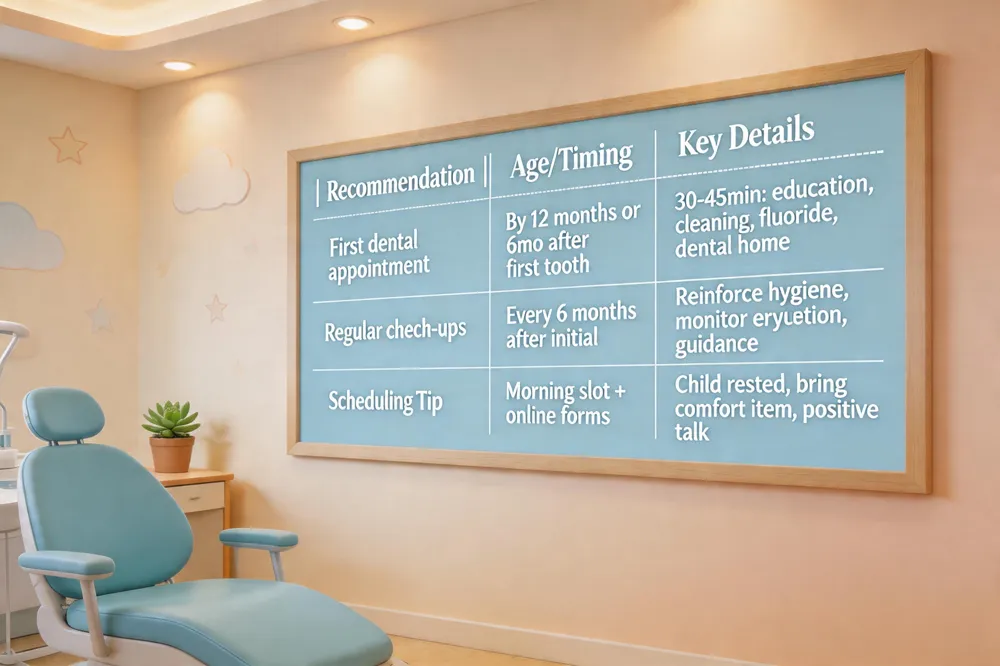 The American Academy of Pediatric Dentistry (AAPD) and the American Dental Association (ADA) agree that a child’s first dental appointment should occur by age 12 months, or within six months after the first tooth erupts. This “well‑baby” visit is a preventive milestone: the dentist gently examines the gums, emerging teeth and jaw development, removes any plaque, and may apply a topical fluoride varnish. Early detection of cavities, guidance on brushing twice daily with a rice‑grain‑sized fluoride toothpaste, and counseling on bottle‑feeding, sugary drinks, and pacifier use help prevent early childhood caries and set a calm, familiar tone for future care.
When should your child have their first dental visit? The AAPD recommends a first visit by the first birthday or six months after the first tooth appears. This brief (30‑45 minute) appointment focuses on education, a light cleaning, and fluoride protection, establishing a dental home that reduces anxiety and future treatment costs.
What age should a toddler have their first dental visit? A toddler should be seen by twelve months of age, or no later than six months after the first tooth erupts. After this introductory exam, regular six‑month check‑ups keep the smile healthy and reinforce good oral‑hygiene habits.
Scheduling tips for busy families Book a morning slot when the child is well‑rested, bring a comfort item, and complete health‑history forms online beforehand. A calm, positive conversation at home about the visit further eases the experience. Best Choice Dental in Totowa, NJ, offers a gentle, family‑oriented environment with personalized education, preventive cleanings, and fluoride treatments to make that first visit a friendly start to lifelong oral health.
What Happens Inside the Chair
| breakdown Step | Description | Approx. Duration |
|---|---|---|
| Gentle oral examination | Dentist greets child, uses small mirror and soft tools to inspect gums, teeth, jaw, and bite. No drilling. | 5‑10 min |
| Light cleaning & fluoride application | Soft brush removes plaque; thin layer of fluoride varnish or paste applied. | 5‑8 min |
| Parent education & anticipatory guidance | Review brushing (rice‑grain‑sized fluoride toothpaste), flossing, diet, bottle‑feeding, pacifier use; provide goody bag. | 5‑10 min |
| Overall visit | Calm, brief, and soothing introduction to the dental environment. | Total 30‑45 min |
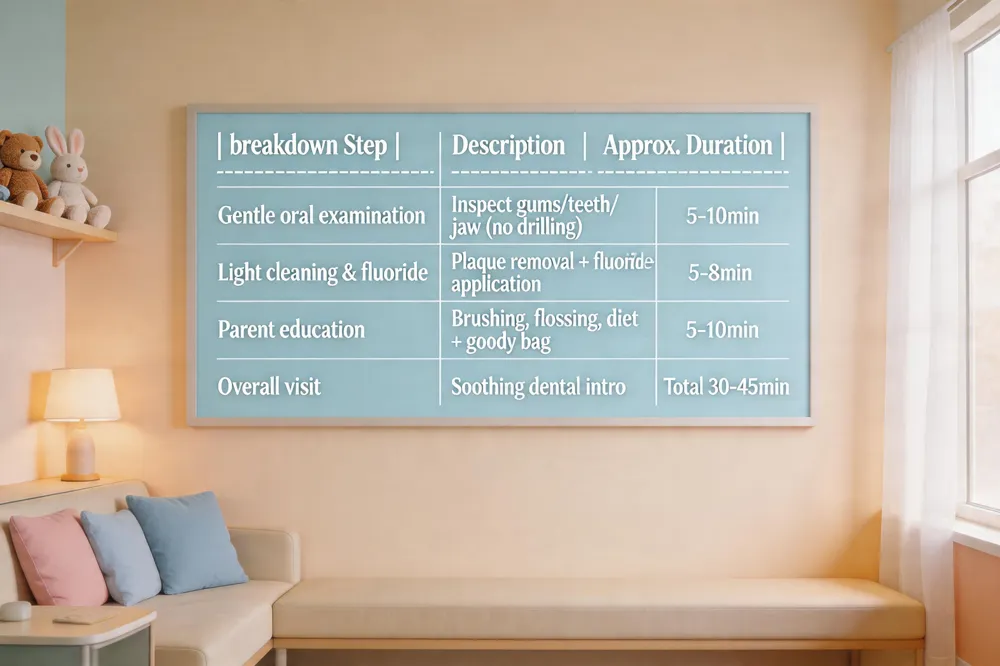 When you bring your child for the first dental visit—ideally after the first tooth erupts and no later than the first birthday—the team focuses on a calm, gentle introduction to oral care. Gentle oral examination: The dentist greets the child, often allowing them to sit on a parent’s lap or in a supported knee‑to‑knee position. Using a small hand‑held mirror and soft tools, the clinician visually checks each tooth, gums, jaw, and bite for early signs of decay, injury, or developmental concerns. No drilling or scraping is done; the exam is brief, soothing, and paused if the child moves. Light cleaning and fluoride application: A soft, age‑appropriate brush removes plaque, and a thin layer of fluoride varnish or paste is applied to strengthen enamel and help prevent cavities. This preventive step is quick and painless. Parent education and anticipatory guidance: After the exam, the dentist reviews home‑care basics—how to brush twice daily with a rice‑grain‑sized amount of fluoride toothpaste, floss when possible, limit sugary snacks, and wean from bottles at bedtime. The team answers any questions about teething, thumb‑sucking, or pacifier use and provides a “goody bag” with a toothbrush and toothpaste to reinforce positive habits. This first visit sets the stage for a lifelong, healthy dental home.
Building a Dental Home and Ongoing Schedule
| Risk Interval | Risk Level | Recommended Recall |
|---|---|---|
| Low risk (no cavities, good diet, consistent brushing) | Low | Every 6 months |
| Moderate risk (early caries, orthodontic concerns, asthma, GERD) | Moderate | Every 3‑4 months |
| High oral (excellent oral health, diligent home care) | Low/Very Low | Up to 12 months (if dentist agrees) |
| Note | Studies show a $300 reduction in treatment costs over several years with a regular dental home. |
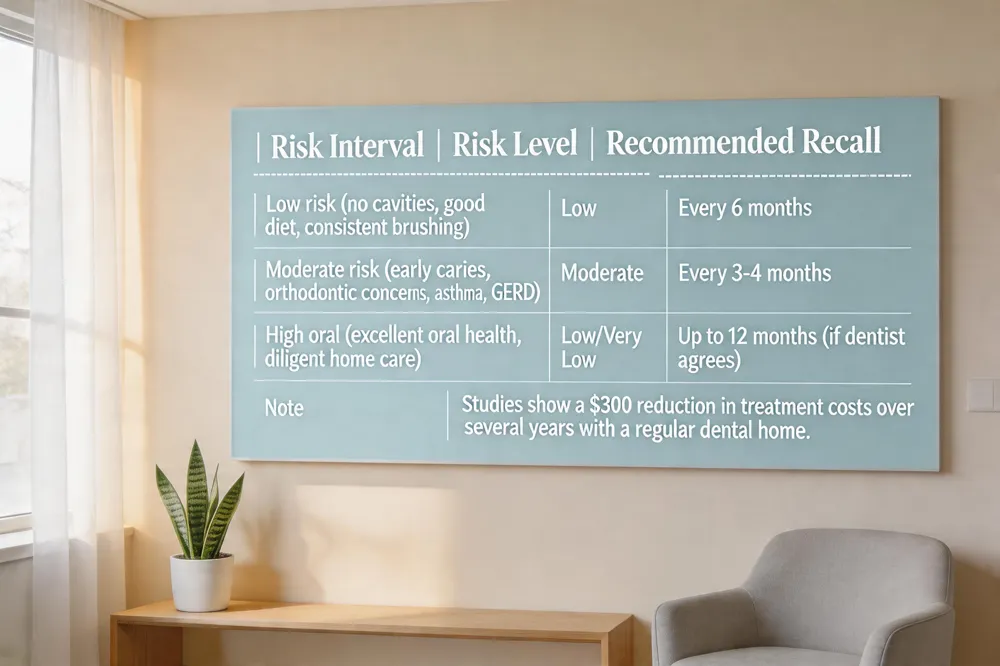 Establishing a dental home by age one creates a trusted partnership that makes future visits smoother and more effective. After the initial exam, most pediatric dentists recommend a six‑month recall appointment to monitor tooth eruption, bite development, and oral‑hygiene habits. This regular cadence allows the team to remove plaque, apply fluoride varnish, and catch early signs of decay before they become costly problems.
Visit intervals are risk‑based. Children with no cavities, a healthy diet, and good at‑home brushing can comfortably stay on the six‑month schedule. Those who have experienced early childhood caries, orthodontic concerns, or medical conditions (e.g., asthma, GERD) may be seen every three to four months for more intensive preventive care. Conversely, a child with excellent oral health and consistent home care might safely extend the recall to a year.
Long‑term benefits of a dental home include lower treatment costs—studies show a $300 reduction over several years—fewer emergency visits, and a reduced likelihood of severe decay. Regular check‑ups also reinforce positive habits, provide continuous anticipatory guidance, and keep the child comfortable with the dental environment.
How often should a child visit the dentist after the first visit? After the first visit, most pediatric dentists suggest a recall roughly every six months, adjusting the interval based on the child’s caries risk, oral‑hygiene consistency, and any special health considerations.
Is there a 2‑year rule for dental check‑ups in the United States? No. The ADA recommends at least two visits per year for most patients, but the schedule is personalized. The “2‑year rule” applies to the UK NHS, not to U.S. dental practice.
Infant Oral‑Care Before Teeth Appear
| Action | Frequency | Reason |
|---|---|---|
| Wipe gums with a clean, damp cloth or gauze | After every feeding (≥2×/day) | Removes milk residues and plaque‑forming bacteria. |
| Avoid bottle‑feeding in bed (no milk, formula, juice) | All night feeds | Prevents prolonged sugar exposure that fuels early childhood caries. |
| Offer water only at night | As needed | Reduces sugar exposure while keeping infant hydrated. |
| Transition to cup | By first birthday | Encourages independence and reduces reliance on bottles. |
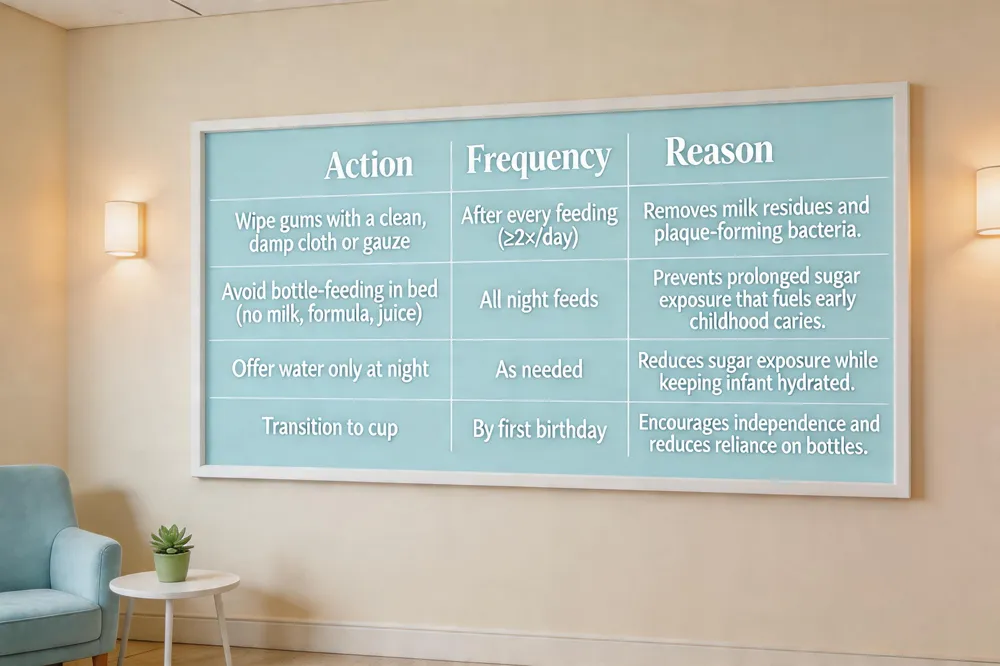 The first step in a child's oral‑health journey begins before a single tooth erupts. After every feeding, gently wipe the infant’s gums with a clean, damp cloth or gauze wrapped around your finger; doing this at least twice a day removes milk residues and plaque‑forming bacteria. Equally important is to avoid bottle‑feeding in bed—do not let a baby fall asleep with a bottle of milk, formula, or juice, as prolonged exposure to sugars fuels early childhood caries. Instead, offer water only at night and transition to a cup by the first birthday. These simple habits lay the foundation for a lifelong oral‑hygiene routine and make the first dental visit smoother. When you ask, “What oral‑care routine is recommended for infants before teeth appear?” the answer is: clean the infant’s gums after each feeding, keep nighttime bottles empty of sugary liquids, and start a gentle, consistent cleaning habit that will evolve into brushing once the first tooth arrives.
Finding a Pediatric Dentist in Totowa, NJ
| Contact Info | Services | Office Hours | |--------------|----------|----------|--------------| | Best Choice Dental, 547 Union Blvd, Totowa, NJ 07512 • Phone: 973‑942‑3233 • Website: https://www.phdental.com | Routine cleanings, fluoride varnish, sealants, space‑maintainers, silver‑diamine‑fluoride therapy, emergency care | Mon‑Fri 8:30 am‑5:00 pm; Sat slots available | | Special features | Bright décor, play area, child‑friendly behavior management, personalized education | |
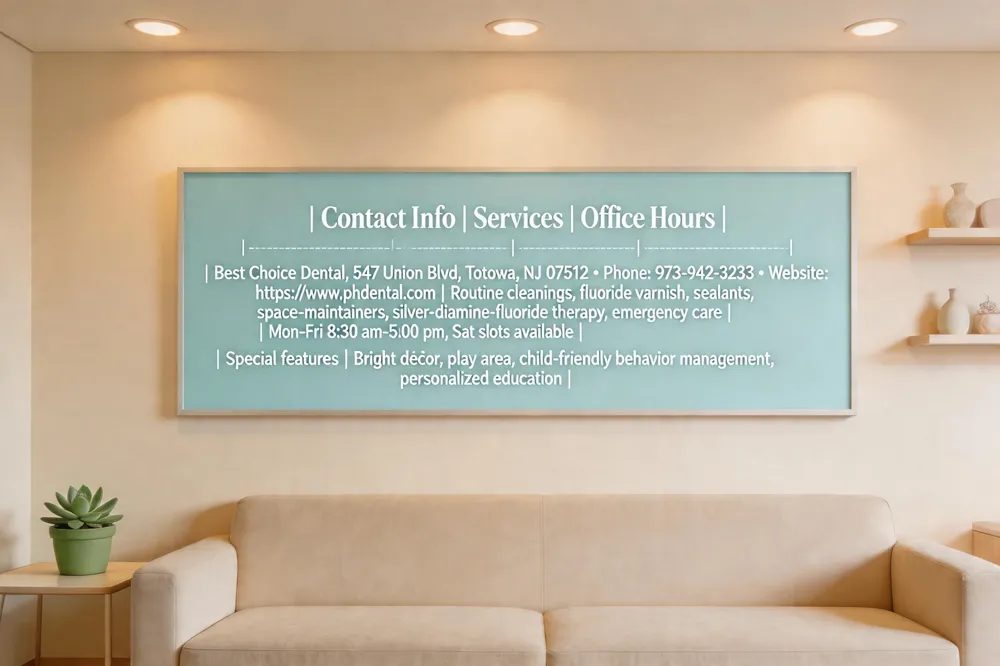 Best Choice Dental in Totowa, NJ, is a family‑oriented practice that serves as a dental home for children from infancy through adolescence. The office is located at 547 Union Blvd, Totowa, NJ 07512, and appointments can be scheduled by calling 973‑942‑3233. Hours are Monday‑Friday 8:30 am‑5:00 pm, with Saturday slots available for busy families.
The pediatric team is specially trained in child‑friendly behavior management and offers a gentle, preventive‑focused environment. Services include routine cleanings, fluoride varnish, sealants, early space‑maintainer placement, and minimally invasive treatments such as silver‑diamine‑fluoride therapy. The office features bright décor, a play area, and age‑appropriate educational tools to make visits fun and anxiety‑free.
Where can I find a pediatric dentist in Totowa, NJ? You can find a pediatric dentist right in Totowa at Best Choice Dental in Totowa, NJ, a family‑oriented practice that provides comprehensive dental care for children of all ages. Their office is located at 547 Union Blvd, Totowa, NJ 07512, and you can schedule an appointment by calling 973‑942‑3233. The clinic’s pediatric dentists are trained in child‑friendly techniques, offering preventive services such as cleanings, sealants, fluoride treatments, and education on oral‑health habits. They also handle any needed interventions, from space maintainers to emergency care, in a welcoming, fun environment.
What is the Rule of 7 in pediatric dentistry? It recommends that children receive their first orthodontic evaluation by age 7 to monitor the eruption of permanent molars and incisors and address any bite issues early.
What is the 3‑3‑3 rule for teeth? Brush for about 3 minutes, three times a day (morning, evening, and once more), using a pea‑size amount of toothpaste to maximize plaque removal while keeping the routine manageable for children.
Key Takeaways and Next Steps
Schedule the first visit by age one, ideally within six months of the first tooth erupting. Keep a six‑month recall schedule to monitor growth and catch early decay. Practice gentle oral‑care at home: wipe gums before teeth appear, then brush twice daily with a soft infant brush and a rice‑grain‑sized smear of fluoride toothpaste. Choose a local, child‑friendly practice that offers a calm environment, preventive services like fluoride varnish, and personalized education to make each visit comfortable and effective.