Why Early Dental Care Matters
Creating a dental home for your child as early as the first year sets the foundation for a lifetime of healthy smiles. The American Academy of Pediatric Dentistry and the American Academy of Pediatrics both recommend that the first dental visit occur by the child's first birthday—or within six months of the first tooth appearing—to establish a trusted, family‑centered relationship. At our practice, we welcome families with a warm, child‑friendly environment and use gentle, non‑pharmacologic behavior‑guidance techniques such as tell‑show‑do and positive reinforcement, making the initial visit comfortable and anxiety‑free.
Early check‑ups allow us to perform caries‑risk assessments, apply fluoride varnish every 3–6 months for high‑risk patients, and discuss preventive measures like sealants for erupting molars. By catching issues before they become painful or costly, we protect primary teeth that serve as space maintainers for permanent teeth, support speech development, and help your child eat and learn without interruption. Regular six‑month examinations also reinforce proper brushing and flossing habits, supervise fluoride toothpaste use, and provide personalized nutrition advice—ensuring that the good oral‑health practices you model at home translate into lasting benefits for your child's overall health.
Establishing a Dental Home and Early Visits
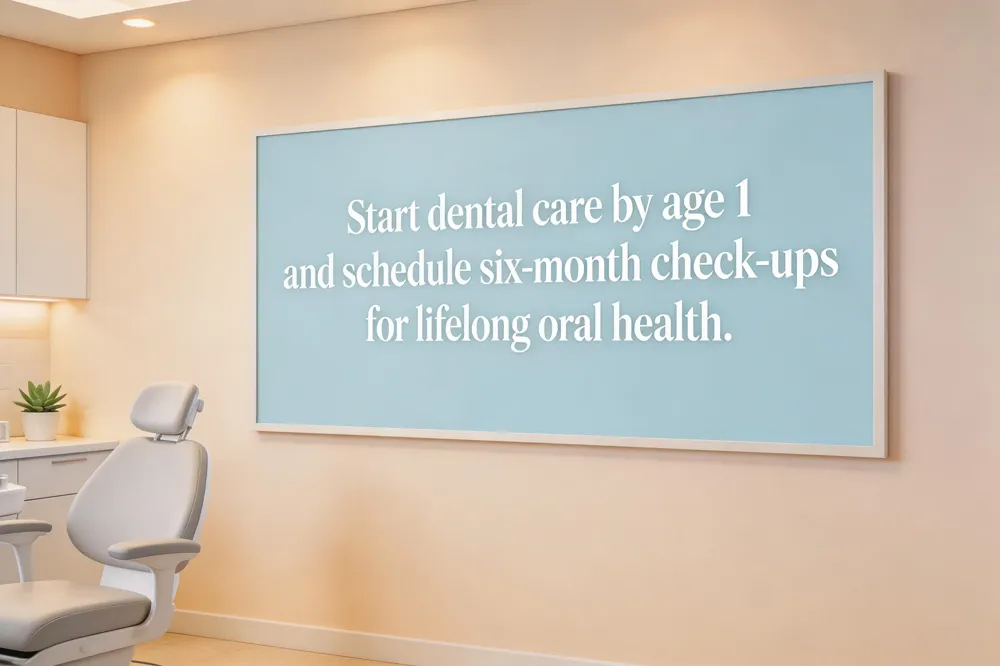 A Dental home, as defined by the American Academy of Pediatric Dentistry, is an ongoing, family‑centered partnership that begins by the child’s first birthday (or within six months of the first tooth’s eruption) and provides continuous preventive, diagnostic, and therapeutic care. Early visits are essential: the AAPD and the American Dental Association both recommend a first dental exam by age 1, followed by check‑ups every six months to monitor growth, apply fluoride varnish, and place sealants when molars erupt.
Parent education is a cornerstone of our practice. We offer several trusted resources:
- Child dental health PDF – the ADA’s printable “Tiny Smiles” guide and CDC’s early‑childhood caries PDF are available in our office and can be emailed to families.
- Oral hygiene for Kids Poster – a bright, age‑appropriate visual that shows proper brushing angles, two‑minute timers, and flossing steps; we display it in the waiting room and provide copies for home.
- AAPD Handbook PDF – the comprehensive AAPD Pediatric Dentistry Handbook is downloadable from the AAPD website and serves as an evidence‑based reference for families and providers.
By establishing a dental home early, educating caregivers with clear, printable tools, and scheduling regular six‑month appointments, we set the stage for a lifetime of healthy smiles while offering advanced technology, gentle behavior‑management, and personalized, comfortable care at every visit.
Daily Oral Hygiene Routine for Kids
 A solid daily oral‑hygiene routine sets the foundation for a bright, healthy smile that lasts a lifetime.
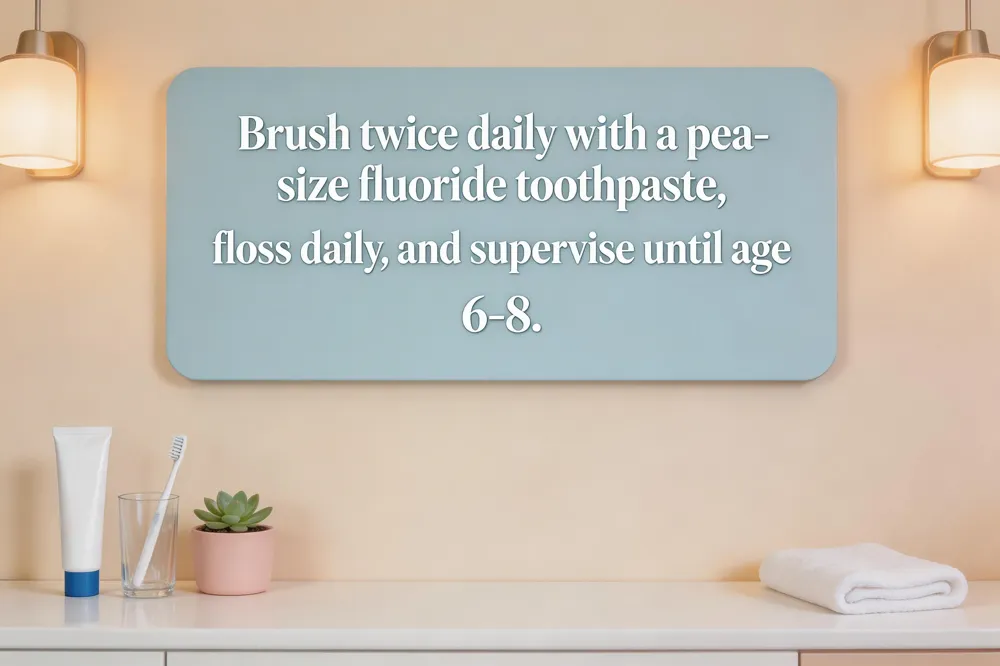
Brushing techniques – Use a soft‑bristled, age‑appropriate toothbrush and a pea‑sized amount of fluoride toothpaste for children 3 years and older (a smear of rice‑grain size for younger kids). Brush twice a day for two minutes, employing gentle circular motions and a 45‑degree angle toward the gum line. Supervise brushing until the child can reliably spit and reach all surfaces, usually by age 6‑8.
Flossing and interdental cleaning – Once two teeth touch (typically around 8‑12 months), introduce flossing or child‑friendly floss picks. Daily interdental cleaning removes plaque where brushes cannot reach and helps prevent early childhood caries.
Fluoride use and toothpaste amounts – Fluoride strengthens enamel; ensure your child uses the correct amount of toothpaste and a smear for under‑3‑year‑olds, a pea‑size dab for ages 3‑6, and continue with a pea‑size amount thereafter. Professional fluoride varnish every 3–6 months, as recommended by the AAPD, adds extra protection for high‑risk children.
Dental Hygiene for Kids ppt – A concise PowerPoint should explain why oral health matters, outline the timeline of primary and permanent teeth, and highlight key habits: twice‑daily brushing with fluoride toothpaste, age‑appropriate flossing, tongue cleaning, and regular dental visits. Include tips on selecting a small‑handle brush, using fluoride varnish, and avoiding thumb‑sucking or sugary snacks.
Teeth care tips at home – Brush for two minutes with gentle circles, floss daily, limit sugary foods/drinks, stay hydrated with fluoridated water, and schedule a professional cleaning at least twice a year.
Tell‑show‑do technique in pediatric dentistry – This three‑step approach (tell, show, do) builds trust, reduces fear, and makes each visit a positive experience, reinforcing the habits taught at home.
Dental Tips and tricks – Keep the routine fun with a timer or song, use reward charts, and consider a fluoride mouthwash once the child can spit (around age 6).
AAPD guidelines for Pediatric Dentistry – Follow AAPD recommendations for a dental home, risk assessment, fluoride varnish, sealants, and behavior‑management strategies to ensure safe, personalized, and comprehensive care for every child.
Preventive Measures: Fluoride, Sealants, and Nutrition
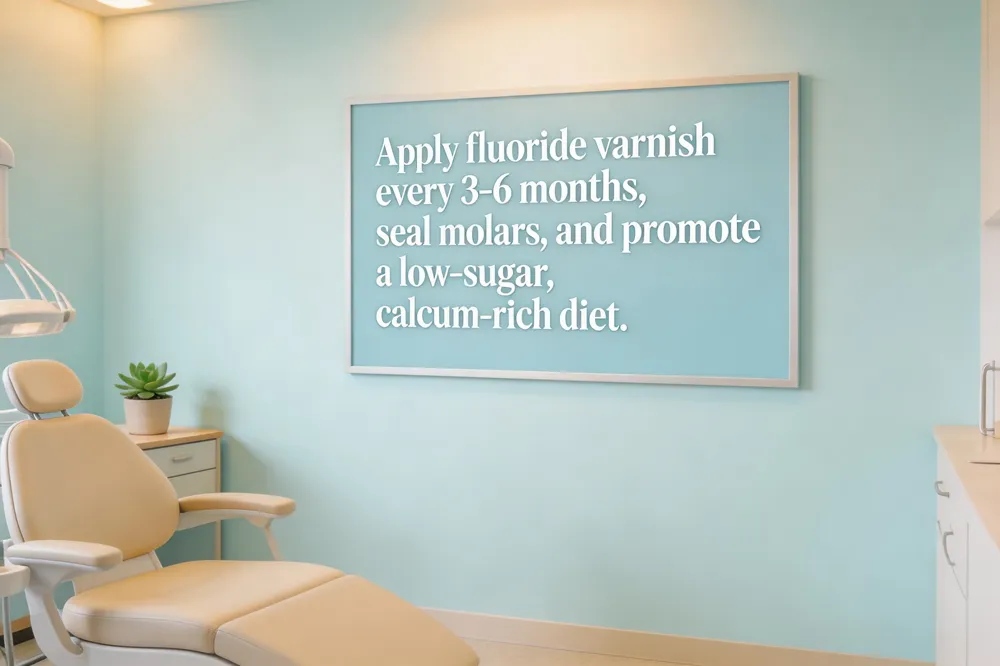 A strong foundation for a child’s oral health starts with early, evidence‑based preventive care. The American Academy of Pediatric Dentistry (AAPD) advises that a dental home be established by the first birthday, allowing the dentist to apply fluoride varnish every 3–6 months and to assess the benefits of community water fluoridation—both proven to reduce early childhood caries by up to one‑third. When permanent molars erupt, sealants create a protective barrier on pits and fissures, cutting cavity risk by as much as 80 percent.
Balanced nutrition plays an equally vital role. Limiting sugary drinks and sticky snacks while encouraging calcium‑rich foods, fruits, vegetables, and plenty of water helps keep the oral pH neutral and supports enamel remineralization. This dietary approach, combined with twice‑daily brushing using a pea‑sized amount of fluoride toothpaste and supervised flossing once teeth touch, dramatically lowers decay risk.
Poor dental health in children stems mainly from high‑sugar diets, inadequate oral‑h hygiene care early and limited access to preventive services such as fluoride varnish and sealants. Kids develop a full set of 20 primary teeth by age 3; maintaining these teeth through gentle brushing, regular dental visits and proper nutrition prevents pain, infection, and future alignment problems.
Effective behavior management—using tell‑show‑do, positive reinforcement, and, when needed, nitrous‑oxide sedation—ensures a calm, comfortable experience, supporting long‑term oral‑health habits for the whole family.
Behavior Management and Child Comfort
 At our practice we prioritize a calm, child‑friendly environment and use evidence‑based behavior‑guidance techniques to make every visit a positive experience. One cornerstone is the tell‑show‑do approach, where we explain each step, demonstrate it on a model, then let the child try it, building confidence and cooperation. Voice control—a firm, clear verbal cue delivered in a calm tone—helps manage disruptive behavior without punishment; research shows it reduces arousal and increases pleasure when combined with gentle guidance. To further ease anxiety we employ distraction, positive reinforcement, and, when needed, nitrous‑oxide sedation administered by trained providers.
For children with special health‑care needs we tailor the environment: dim lighting, soothing music, sensory‑adapted tools, and even animal‑assisted therapy can make the visit less intimidating. Our team is trained in the latest AAPD behavior‑management protocols, ensuring each child receives safe, individualized care.
Together with regular check‑ups, fluoride varnish every 3–6 months, and protective sealants, these comfort strategies help prevent cavities, reduce dental fear, and set the foundation for a lifetime of healthy smiles.
Family Engagement and Resources
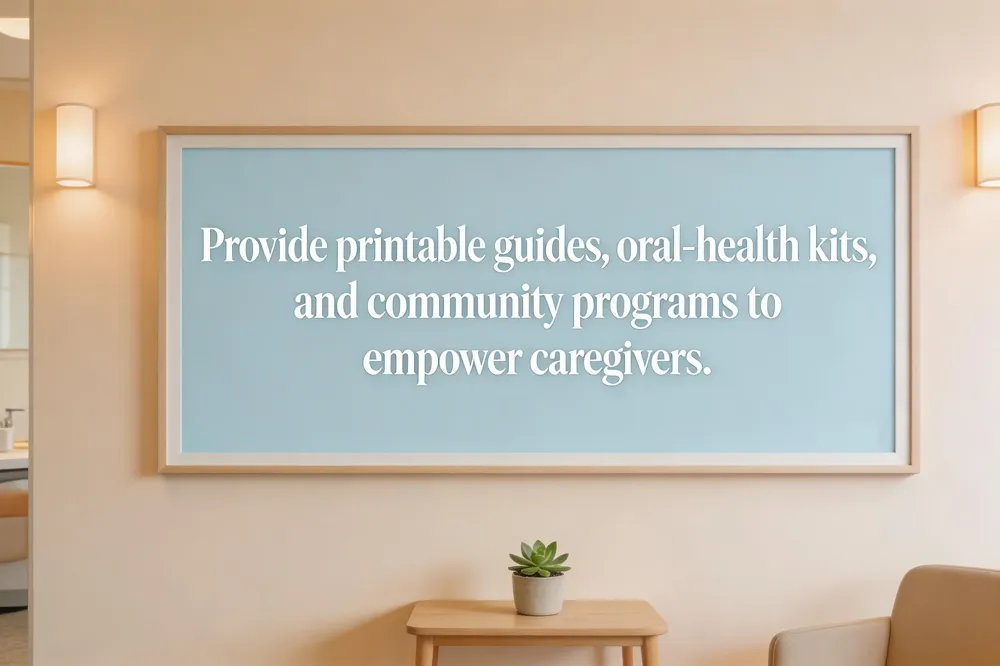 At our practice we empower families with educational tools for parents such as printable "Brush, Book, Bed" guides, age‑appropriate oral‑health handouts, and fun storybooks like The Berenstain Bears Visit the Dentist. These resources teach the importance of early care—clean a newborn’s gums with a damp cloth and start brushing with a soft, pea‑sized fluoride toothpaste as soon as the first tooth appears.
Home‑based oral‑hygiene aids include child‑size soft‑bristled brushes (TePe Mini™ for infants, Select Compact™ for preschoolers), fluoride toothpaste, interdental brushes, and gentle flossers. Turn brushing into a game using colorful charts, stickers, or an hour‑glass timer. Simple experiments—soaking an egg in soda—toshow sugar’s effect—make lessons memorable.
Community resources and support: We partner with local schools for fluoride‑varnish clinics, provide referrals to pediatric dentists for sealants, and offer printable PDFs and posters from the AAPD and CDC. Families can access the AAPD Reference Manual of Pediatric Dentistry online for evidence‑based guidance.
Quick FAQs:
- 5 ways to take care of your teeth: brush twice daily with a soft brush, floss daily, limit sugary foods, stay hydrated with fluoridated water, and visit the dentist regularly.
- Kids Oral Care products: soft‑bristled brushes, fluoride kids’ toothpaste, flossers, and alcohol‑free mouthwash for teens.
- When to start oral care for baby: clean gums at birth, brush with a smear of fluoride toothpaste at tooth eruption, and schedule the first dental visit by age one.
- How does your child‑care program support healthy teeth: on‑site screenings, fluoride varnish, sealants, and hands‑on oral‑hygiene lessons.
- Oral health Tips for adults: avoid tobacco, limit alcohol, brush and floss twice daily, use fluoride mouthwash, stay hydrated, and see the dentist at least once a year.
Putting It All Together for a Lifetime of Smiles
A healthy smile starts at home and continues with the support of a trusted dental team. Consistent home care—brushing twice a day with a soft‑bristled brush and a pea‑sized amount of fluoride toothpaste, daily flossing once teeth touch, and limiting sugary snacks and drinks—creates the foundation for strong enamel and low plaque levels. Supervision can ages 7‑8 ensures proper technique and prevents swallowing of toothpaste, while fun tools such as timers, character toothbrushes, and reward charts keep children engaged.
Regular professional visits every six months allow our dentists to monitor growth, apply fluoride varnish or silver diamine fluoride for high‑risk patients, place sealants on erupting molars, and catch early decay before it becomes costly. Advanced digital imaging, gentle behavior‑management techniques like tell‑show‑do, and optional nitrous‑oxide sedation make each appointment comfortable and anxiety‑free.
At Best Choice Dental we view every family as a partnership. Our team offers personalized oral‑health education, coordinates care with pediatricians, and tailors preventive strategies—such as fluoride therapy, diet counseling, and orthodontic assessments—to each child’s needs. Together, we build lifelong habits and a bright, healthy smile for every member of your family.