Why Restorative Dentistry Matters
Restorative dentistry diagnoses, repairs and replaces damaged, decayed or missing teeth to restore normal function and a natural‑looking smile. Common treatments—composite fillings, porcelain or zirconia crowns, inlays/onlays, bridges, dentures and titanium‑post implants—use modern, tooth‑colored materials that mimic enamel strength. By sealing cavities, rebuilding broken teeth and correcting bite alignment, these procedures eliminate pain, improve chewing efficiency, speech clarity and protect jawbone health. The result is a healthier mouth, better nutrition and increased confidence that enhances social and professional interactions. At our Totowa family practice we combine digital imaging, CAD/CAM design and gentle techniques to deliver personalized, comfortable restorative care.
Core Benefits of Restorative Dentistry
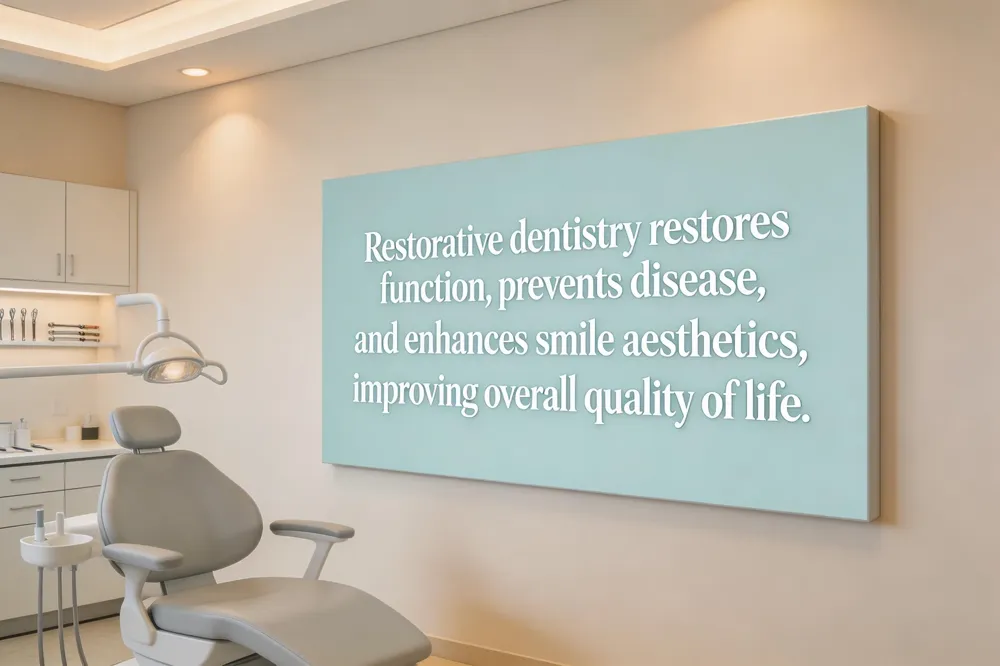 Restorative dentistry delivers three pivotal benefits that together elevate a patient’s overall quality of life.
Functional improvements – By repairing cavities, cracked teeth, or missing teeth with fillings, crowns, bridges, implants or dentures, restorative care restores natural chewing efficiency and speech clarity. Patients can enjoy a wider variety of foods without discomfort and speak confidently in social or professional settings.
Prevention of disease and decay – Early intervention stops the spread of decay, protects weakened tooth structure, and preserves jawbone density. Restorations create smooth, easy‑to‑clean surfaces that reduce plaque buildup, decreasing the risk of gum disease, infections, and systemic conditions such as heart disease or diabetes.
Aesthetic and psychological advantages – Modern materials (porcelain, zirconia, composite) mimic the translucency of natural teeth, allowing crowns, veneers, and implants to enhance smile appearance. A healthier, brighter smile boosts self‑esteem, encourages social interaction, and contributes to mental well‑being.
What are the benefits of restorative dentistry? Restorative dentistry repairs damaged or missing teeth, helping you regain normal chewing and speaking functions. By eliminating decay and reinforcing weakened teeth, it reduces pain and the risk of future infections or tooth loss. The treatments also protect surrounding oral structures, preserving bone density and preventing gum disease. In addition to functional benefits, restorative procedures can improve the aesthetic of your smile, boosting confidence. Overall, restorative care supports long‑term oral health and a higher quality of life for patients of all ages.
Is restorative dentistry worth it? Yes, restorative dentistry is worth it because it repairs damaged or missing teeth, preventing further decay, infection, and loss of surrounding bone. By restoring function with fillings, crowns, bridges or implants, it enables you to chew comfortably, speak clearly and enjoy a varied diet. The aesthetic improvements—such as a renewed smile—boost confidence and social comfort. Long‑term, these treatments protect oral health, reducing the risk of future problems and costly emergency care. Overall, the health, functional and emotional benefits outweigh the initial investment.
Restorative Care and Systemic Health
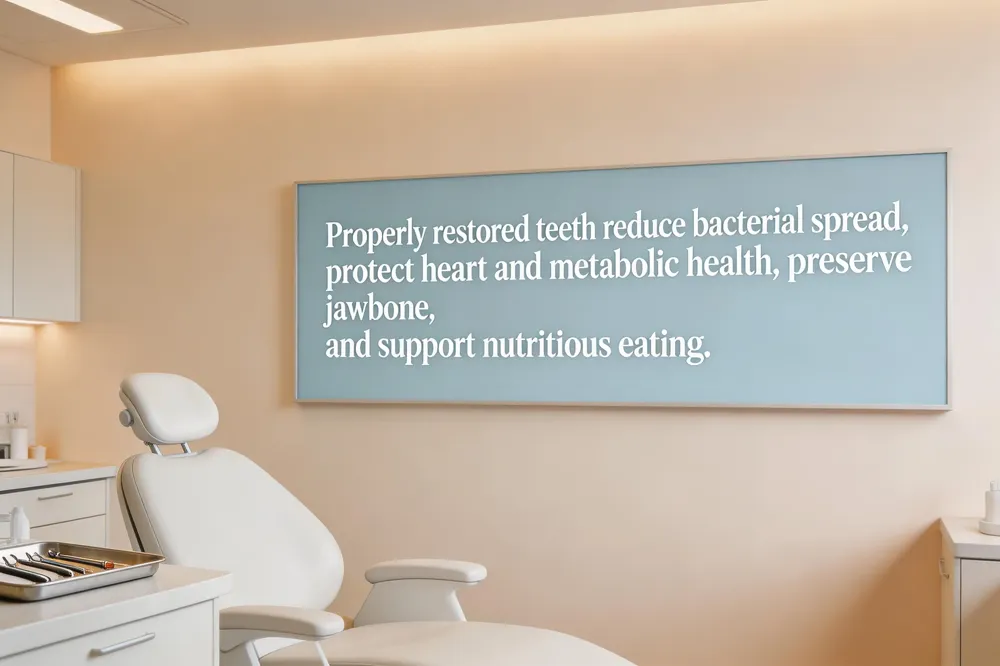 Restorative dentistry does more than fix a chipped tooth – it protects your whole body. Untreated cavities or gum disease can let bacteria enter the bloodstream, raising the risk of heart disease and worsening diabetes. By sealing decay with composite fillings, crowns or bridges, we stop infections at the source and help keep your cardiovascular and metabolic health in check.
Dental implants are a game‑changer for bone preservation. The titanium post fuses with the jawbone (osseointegration), stimulating bone growth and preventing the loss that normally follows tooth extraction. This maintains facial structure and provides a stable anchor for crowns or dentures.
When teeth are restored, chewing efficiency returns, allowing you to enjoy a varied, nutrient‑rich diet. Properly aligned teeth also improve speech clarity, so you can speak confidently without lisps or mumbled words.
What is the 3‑3‑3 rule for teeth? It advises brushing three times a day for three minutes each session and replacing your toothbrush every three months, promoting optimal oral hygiene.
Does NJ Family Care pay for braces? Yes, for members under 21 when orthodontic care is medically necessary and prior authorization is obtained through the Liberty Dental Plan; adult or non‑essential orthodontics are not covered.
Modern Materials and Technologies
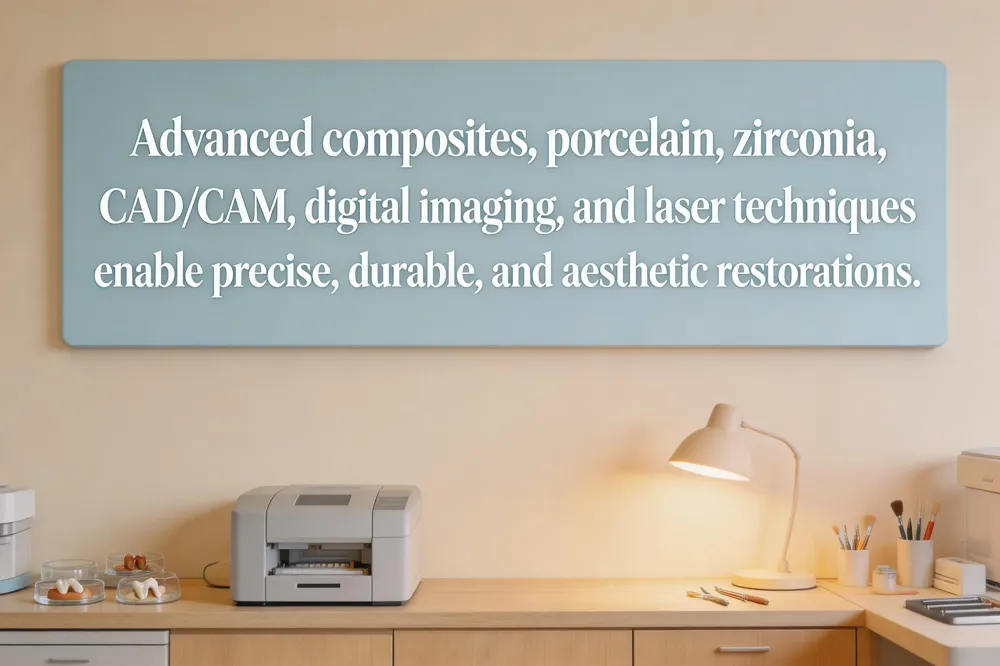 Restorative dentistry today relies on a palette of high‑performance materials—composite resins that mimic natural enamel, ultra‑strong porcelain and zirconia for crowns, bridges and veneers, and titanium posts for implants. These materials are shaped with precision using CAD/CAM technology, allowing the lab to mill a restoration in‑office and place same‑day crowns that fit perfectly and look natural. Digital X‑rays and 3‑D imaging give the dentist a crystal‑clear view of decay, bone loss and tooth structure, enabling accurate diagnosis and treatment planning without excess radiation. Minimally invasive laser procedures further reduce discomfort and healing time by precisely removing decayed tissue and preparing the tooth for a restoration.
Dental restoration procedure – A dental restoration repairs damaged, decayed, or missing teeth to restore function, health, and appearance. The dentist first removes any decay or damaged tissue, then rebuilds the tooth using materials such as composite resin for fillings, porcelain or metal‑ceramic for crowns, or custom‑made inlays and onlays. For larger defects or after root‑canal treatment, a crown is placed to cover the entire tooth, while bridges or implants replace missing teeth by anchoring artificial crowns to adjacent teeth or to titanium posts in the jawbone. The chosen restoration is bonded or cemented into place, providing a durable, natural‑looking solution that prevents further decay. Follow‑up care includes proper oral hygiene and regular check‑ups to ensure the restoration remains strong and functional.
Finding a Restorative Dentist in Totowa, NJ
 Totowa residents have several family‑oriented dental offices that combine modern technology with personalized, comfortable care. Best Choice Dental at 418 Union Blvd offers a full suite of preventive, restorative and cosmetic services—including digital X‑rays, crowns, bridges, implants, Invisalign and whitening—under Dr. Richard J. Gryzmolowicz. The practice emphasizes a welcoming environment and tailors treatment plans to each age group, and appointments can be booked at (973) 595‑5955. Dental Arts of Totowa (547 Union Blvd) provides porcelain veneers, white fillings, sapphire™ whitening, implants and Botox for TMJ relief, using low‑dose digital imaging to enhance diagnosis; call (973) 942‑3233 for scheduling. Perfect Smiles (9 Furler Street) focuses on gentle, pain‑free procedures with Dr. Ryan C. Maher, offering same‑day emergencies, sedation options and a wide restorative menu. Totowa Family Dental delivers comprehensive care from cleanings to crowns and implants, leveraging modern scanners and a family‑first philosophy. Finally, Little Falls Family Dental (1540 US Hwy 46) extends its services to Totowa patients, featuring emergency slots and a $69 new‑patient package. All locations are easily reachable within Passaic County and accept most insurance plans, ensuring that quality restorative dentistry is convenient and affordable for every family member.
Financial Aspects and Insurance Coverage
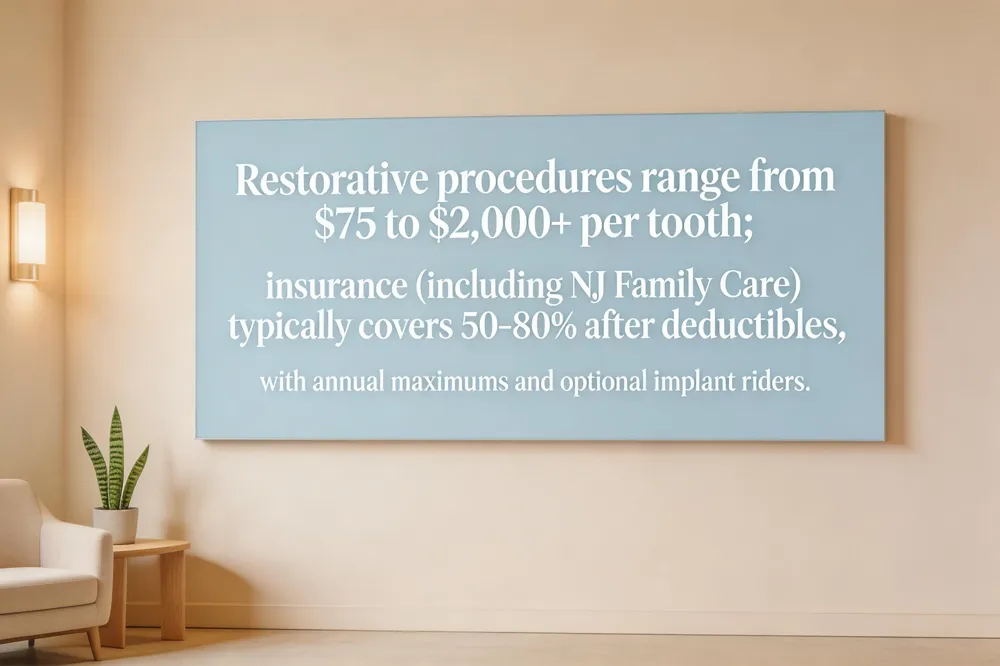 Restorative dentistry can be a worthwhile investment in your health and confidence, and understanding the financial side helps you plan wisely. Typical costs for common procedures in the United States range from $75–$350 for a routine exam, cleaning, and X‑rays, to $90–$250 for a composite (tooth‑colored) filling. Crowns vary by material: metal $500–$1,500, porcelain‑fused‑to‑metal $600–$1,800, and all‑ceramic $800–$2,000 per tooth. Root canal therapy runs $300–$1,200, and full‑arch dentures cost $1,200–$3,500. Major restorative dental insurance plans cover a large portion of high‑cost services such as crowns, bridges, dentures, and root canals—typically 50‑80 % after deductibles, with annual maximums of $1,500–$2,000. Some plans also offer optional riders for implants. In New Jersey, NJ Family Care (Medicaid) includes coverage for essential restorative services, including Root canal therapy, crowns, and both complete and partial dentures, alongside routine exams, cleanings, and preventive care. Knowing your plan’s coverage limits, copay structures, and any waiting periods lets you make informed decisions and keep your smile healthy without unexpected expenses.
A Brighter, Healthier Future Through Restorative Care
Restorative dentistry restores chewing, speech and nutrition while reducing infection risk and benefits heart and diabetes health. Choosing a skilled, family‑focused dentist—like Totowa’s Best Choice Dental—ensures personalized, comfortable care using modern CAD/CAM and digital imaging. Ongoing maintenance with proper hygiene, regular check‑ups and tailored advice keeps your smile healthy for life.