A Lifetime of Healthy Smiles Starts With Routine Dental Visits
Dental visits are the cornerstone of preventive dentistry, protecting teeth and health. Brushing, flossing, fluoride use and diet work best when reinforced by cleanings that remove hidden plaque and tartar, reducing cavities, gum disease and even heart or diabetes complications. Early habits formed in childhood—first visit by age 1, bi‑annual check‑ups, sealants and fluoride treatments—set a lifetime foundation for a healthy smile. The ADA, CDC and AAPD recommend at least exams each year for most patients, with more frequent visits for groups. At Best Choice Dental we combine care with imaging and fluoride applications to keep every family member on track.
Early Childhood Dental Care
| Recommendation | Details |
|---|---|
| First dental visit | By 12 months of age (first birthday) |
| Routine recall | Every 6 months (twice per year) |
| Preventive services | Fluoride varnish, sealants, early caries detection |
| Education focus | Oral‑hygiene instruction, dietary counseling, gum disease screening |
| Technology used | Low‑dose digital X‑rays, ultrasonic scalers |
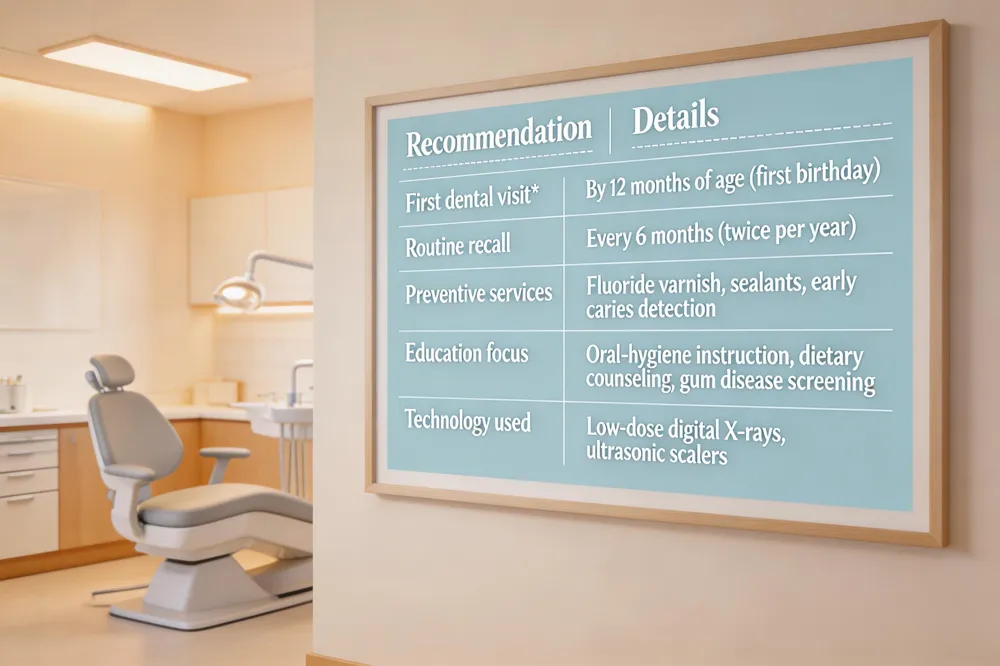 The American Academy of Pediatric Dentistry (AAPD) recommends that every child's first dental visit occur no later than the first birthday, establishing a dental home for ongoing, family‑centered care. During this appointment the dentist performs a comprehensive oral health assessment, offers anticipatory guidance, and may apply fluoride varnish or sealants to prevent early childhood caries. After the initial visit, routine exams are advised every six months—two appointments per year—to monitor growth, clean teeth, and catch decay early. If a child shows signs of cavities, orthodontic concerns, or other issues, the schedule can be adjusted to more frequent visits. Consistent check‑ups also provide opportunities for personalized oral‑hygiene education, dietary counseling, and early detection of gum disease or oral cancer. At Best Choice Dental in Totowa, NJ, we use gentle, advanced technology—such as low‑dose digital X‑rays and ultrasonic scalers—to make each visit comfortable while delivering the preventive care that keeps your child's smile healthy for life.
Adolescents, Young Adults, and Orthodontic Care
| Aspect | Frequency / Details |
|---|---|
| Orthodontic adjustments | Every 4–6 weeks (braces) or 6–10 weeks (clear aligners) |
| Unscheduled visits | As needed for broken brackets, bent wires, or emergencies |
| Retention (retainer) follow‑up | Every 4–6 weeks initially, then every 3–6 months |
| General dental exam | Annual exam and cleaning |
| Brushing guideline | 2–3 times daily, 2 minutes each (informal “3‑3‑3 rule” as reminder) |
| Home care habits | Soft‑bristle brush, daily floss, oil‑pulling, fluoride toothpaste, replace brush every 3 months |
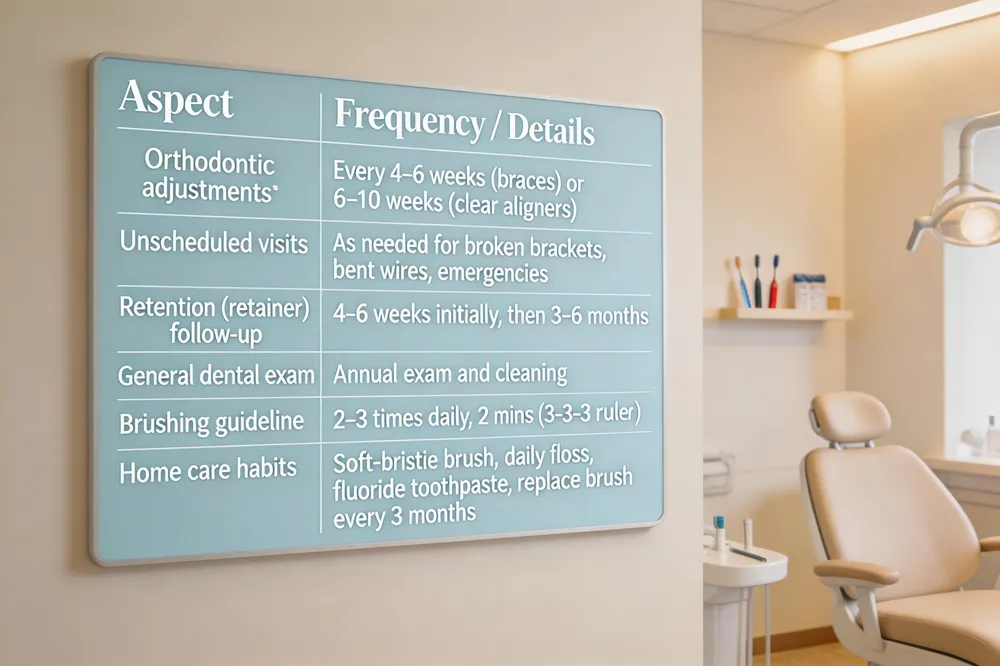 Adolescents and young adults benefit from a combined preventive and orthodontic approach. While you have braces, you’ll generally see your orthodontist every 4–6 weeks for adjustments, wire changes, and bracket repairs. Clear‑aligner systems may stretch visits to 6–10 weeks, but unscheduled appointments are still needed for broken brackets or bent wires. After appliances are removed, a retainer is fitted and follow‑up visits continue every 4–6 weeks during the first months of retention, then shift to every 3–6 months, with an annual dental exam and cleaning for overall health.
The “3‑3‑3 rule” suggests brushing three times, three minutes each, then waiting three hours before bed; it’s an informal reminder, not an official guideline, while most dentists still advise twice‑daily brushing for two minutes.
Natural oral‑care habits for teens include brushing twice with a soft‑bristle brush, flossing daily, oil‑pulling daily, a diet rich in whole foods, limiting sugary snacks, staying hydrated, and avoiding tobacco. At home, use a fluoride toothpaste, replace your toothbrush every three months, and consider a fluoride mouth rinse if you have a dry mouth.
Adults – General Population and Risk‑Based Recall
| Factor | Typical Recommendation |
|---|---|
| Risk assessment tool | Delta Dental’s LifeSmile Score™ |
| Standard recall interval | Every 6 months (low‑risk) |
| High‑risk recall | Every 3–4 months based on individualized risk |
| Insurance coverage | 2 preventive exams/cleanings per year (often 100 % covered) |
| Average cost per visit | $80–$200 (out‑of‑pocket) |
| Systemic health link | Periodontal disease associated with heart disease, diabetes, stroke |
 Best Choice Dental uses evidence‑based risk‑assessment tools such as Delta Dental’s LifeSmile Score™ to personalize recall intervals, ensuring each patient receives the optimal frequency for their oral‑health profile.
Most dental insurance plans cover two preventive exams and cleanings per year, often at 100 % of the cost; out‑of‑pocket expenses for a standard visit range from $80‑$200. By catching problems early, routine check‑ups reduce the need for costly restorative work and lower overall dental spending (the U.S. spends over $137 billion annually on dental care).
Oral health is linked to systemic conditions—untreated gum disease can exacerbate heart disease, diabetes, and stroke. Regular visits allow dentists to screen for these connections, reinforcing the role of a healthy smile in overall well‑being.
Q: How often should you realistically go to the dentist?
A: At least twice a year, with more frequent visits for high‑risk factors.
Visit Best Choice Dental in Totowa, NJ for a comfortable, technology‑driven experience that tailors care to your unique needs.
High‑Risk Groups and Systemic Health Connections
| High‑risk group | Specific concerns | Suggested recall |
|---|---|---|
| Pregnancy | Hormonal changes → increased gum inflammation | Every 3–4 months |
| Diabetes | Impaired healing, higher infection risk | Every 3–4 months |
| Smokers | Tobacco‑related inflammation, faster progression | Every 3–4 months |
| Older adults | Dry mouth (xerostomia), receding gums | Every 3–4 months (or as needed) |
| Systemic link | Untreated periodontal disease ↑ risk of heart disease, stroke, poor diabetes control |
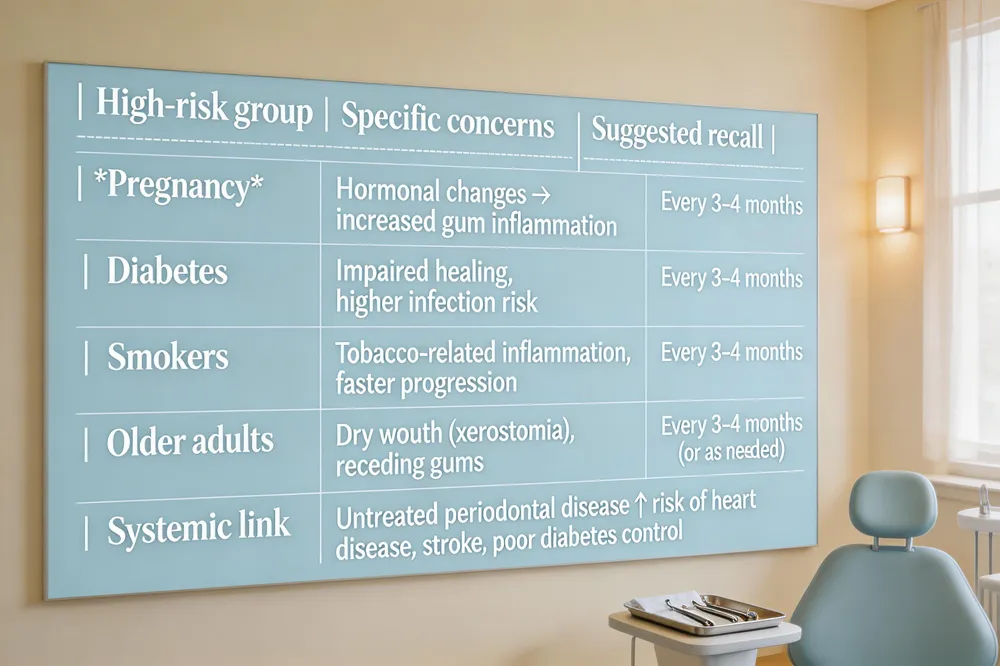 Pregnancy, Diabetes, Smoking, and Older Adults – Hormonal changes in pregnancy, impaired healing in diabetes, tobacco‑related inflammation, and age‑related dry mouth all increase the risk of gum disease and cavities. Our practice uses digital X‑rays and ultrasonic scaling to catch problems early for these groups.
Links Between Gum Disease and Systemic Health – Research shows untreated periodontal disease raises the odds of heart disease, stroke, and poor diabetes control. A thorough exam at each visit lets us screen for these links and refer you when needed.
Tailored Recall Intervals & Preventive Education – Based on your risk profile, we may recommend cleanings every 3‑4 months (high‑risk) or annually (low‑risk). Personalized education on brushing, flossing, diet, and fluoride use supports prevention.
Dental Insurance for High‑Risk Patients – Most plans, including Health Partners Medicaid, cover two preventive cleanings per year with $0 copays for covered services. Complex procedures may require cost‑share, but we help you maximize benefits.
FAQ
- HealthPartners Medicaid dental coverage: Covers routine cleanings, exams, X‑rays, and basic treatments with $0 copays; advanced work may have a percentage cost.
- Wisdom‑tooth removal: Covered only when medically necessary (infection, cysts) – otherwise it’s out‑of‑pocket.
- How often should you visit?: Standard is every six months; high‑risk patients may need 3‑4‑month recalls, low‑risk can extend to yearly.
- Do you really need a six‑month visit?: Not a strict rule – frequency should match your individual risk and dentist recommendation. Six‑month visit is common but not mandatory.
Senior Care, Dry Mouth, and Denture Maintenance
| Issue | Management strategy |
|---|---|
| Dry mouth (xerostomia) | Saliva substitutes, prescription rinses, hydrated diet, regular fluoride treatments |
| Denture fit | Pressure‑spot checks, relining, adjustments at each visit |
| Fluoride protection | Professional fluoride varnish or gel applications |
| Oral cancer screening | Performed at every routine visit |
| Recall interval | Typically every 3–4 months for high‑risk seniors, otherwise every 6 months |
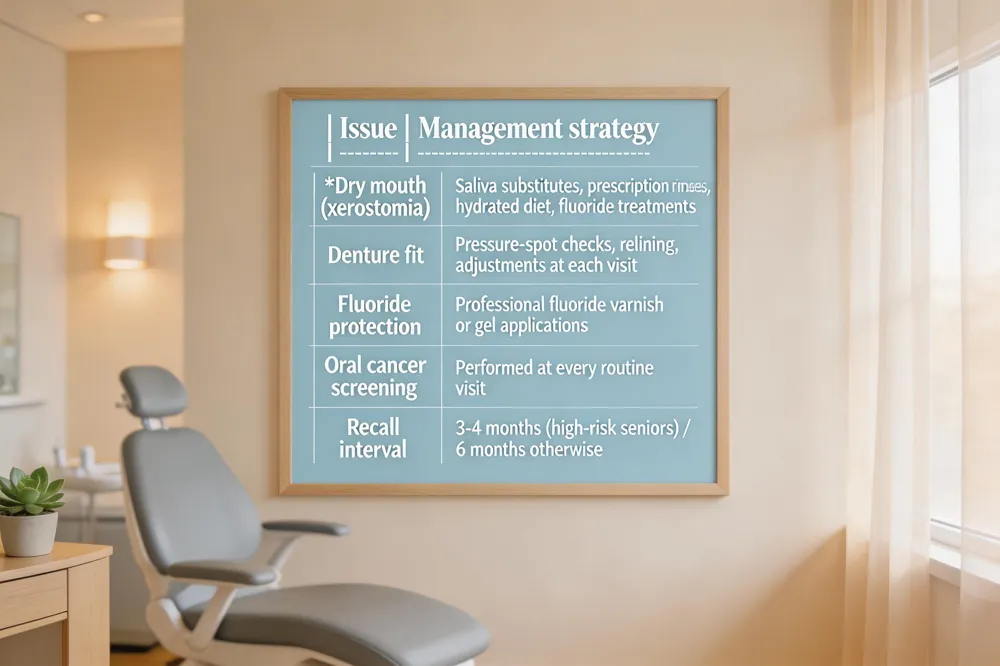 Age‑related oral changes—thinning enamel, receding gums, and reduced saliva—make seniors prone to decay and gum disease. Dry mouth (xerostomia) is managed with saliva substitutes, prescription rinses, hydrated diets, and regular fluoride treatments that protect vulnerable teeth. Proper denture fit is essential; we check pressure spots, adjust relines, and perform oral cancer screenings at every visit, ensuring early detection of lesions. Maintaining oral health helps control chronic diseases such as diabetes and heart disease, because gum inflammation can worsen systemic conditions.
Oral hygiene definition
Oral hygiene is the practice of keeping the mouth clean and free of disease by regularly removing dental plaque and food debris. It involves daily brushing with fluoride toothpaste, flossing, and routine dental check‑ups, preventing cavities, gingivitis, and serious systemic impacts.
Routine dental care vs basic dental care
Basic care includes daily home habits—brushing, flossing, low‑sugar diet—while routine care adds professional exams, cleanings, X‑rays, and early‑intervention planning. Together they keep seniors’ smiles healthy.
How many ways to take care of your teeth
- Brush twice daily with a soft‑bristle brush and fluoride toothpaste.
- Floss daily.
- Use antimicrobial or fluoride mouthwash.
- Eat a low‑sugar diet and stay hydrated with fluoridated water.
- Schedule regular dental check‑ups and cleanings.
What do most dental plans cover
Most plans cover preventive services—exams, cleanings, X‑rays, sealants, fluoride—often at 100 % cost, and provide partial coverage for basic restorations, with lower rates for major procedures.
Practical Home Care & Natural Strategies
| Daily habit | Details |
|---|---|
| Brushing | Twice daily, 2 minutes, soft‑bristle brush, fluoride toothpaste |
| Flossing | Once daily or use interdental cleaners |
| Mouthwash | Fluoride or antiseptic (e.g., chlorhexidine) |
| Diet | Low‑sugar, nutrient‑rich foods; stay hydrated |
| Natural adjuncts | Oil‑pulling with coconut oil, turmeric‑neem herbal rinse |
| Professional care | Schedule routine check‑up and cleaning at least twice a year |
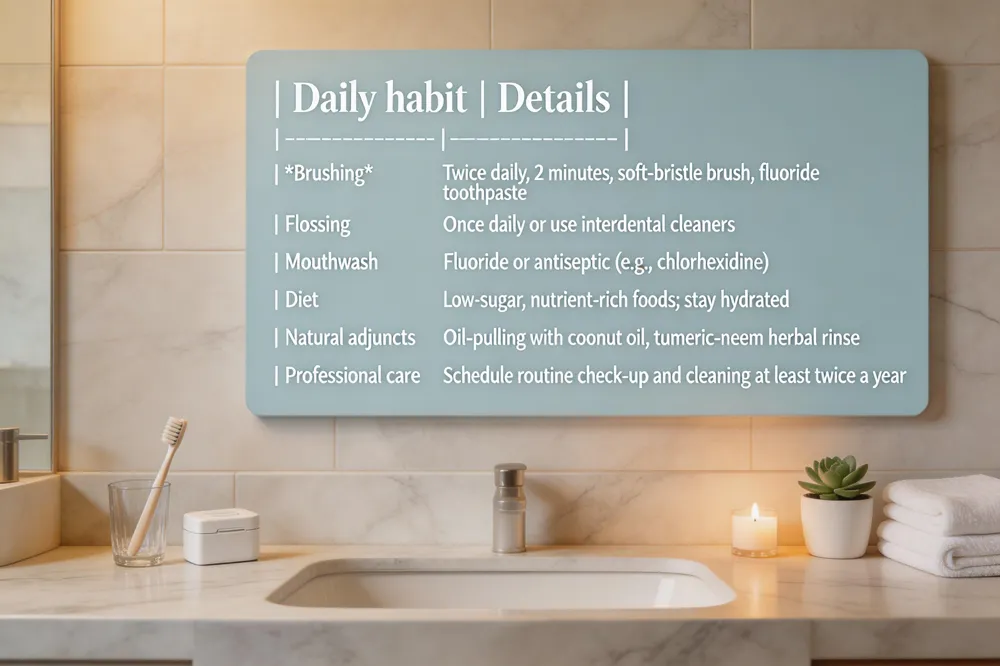 Taking care of your teeth at home starts with a solid 6‑step routine: (1) brush twice daily for two minutes with a soft‑bristle brush and fluoride toothpaste, (2) floss or use an interdental cleaner each day, (3) rinse with a fluoride or antiseptic mouthwash, (4) keep a sugar‑low, nutrient‑rich diet, (5) stay well hydrated and consider sugar‑free gum after meals to boost saliva, and (6) incorporate natural adjuncts such as oil‑pulling with coconut oil or herbal rinses like turmeric‑neem. These habits reduce plaque, neutralize acid, and support gum health, but they do not replace professional cleanings. At Best Choice Dental we use advanced ultrasonic scalers, digital X‑rays, and personalized fluoride treatments to catch issues early—so schedule your routine check‑up as soon as possible.
Building Lifelong Oral Health, One Visit at a Time
Regular dental check‑ups protect every stage of life. Children benefit from early cavity detection, fluoride sealants and habit formation; teens gain orthodontic monitoring and gum‑health checks; adults receive biannual cleanings that lower the risk of gum disease, heart disease and diabetes complications; seniors get dry‑mouth management, denture adjustments and bone‑health screening. Our practice tailors recall intervals to each patient’s risk profile, and we invite families to experience personalized, comfortable care in a trusted, family‑oriented office.