Introduction: The New Standard in Quick Dental Restorations
Modern Solutions for Busy Lives
Today's families and professionals in New Jersey face increasingly busy schedules. Finding time for essential dental care can be challenging, especially when a procedure like getting a crown traditionally requires multiple appointments spread over several weeks. At Best Choice Dental, we believe comprehensive dental care should fit seamlessly into your life. That is why we are committed to adopting advanced technologies that prioritize your time and comfort, transforming lengthy treatments into convenient, single-visit experiences.
The Single-Visit Revolution with CEREC
A prime example of this patient-focused approach is our use of CEREC (Chairside Economical Restoration of Esthetic Ceramics) technology. This innovative CAD/CAM system revolutionizes restorative dentistry. Instead of the traditional multi-step process—which involves messy impressions, temporary crowns, and a long wait for a lab-fabricated restoration—CEREC enables us to design, create, and place a custom, permanent ceramic crown in just one appointment, often in about two hours. This streamlined process eliminates the uncertainty and inconvenience of temporary restorations.
A Streamlined, Comfortable Experience
The CEREC process is designed with your comfort in mind. It begins with a precise digital scan of your tooth, replacing uncomfortable traditional impression materials. Our dentists then use specialized software to design your restoration, ensuring a perfect fit and a natural appearance that matches your surrounding teeth. Finally, a high-quality ceramic crown is milled right in our office. This efficient workflow allows you to walk out with a fully restored, confident smile in a single, comfortable visit, reflecting our dedication to providing personalized, advanced care for every patient.
| Technology Component | What It Replaces | Key Patient Benefit |
|---|---|---|
| Digital Intraoral Scanner | Messy Impression Putty | Enhanced comfort, no gag reflex trigger |
| CAD/CAM Design Software | Manual Lab Specifications | Precision fit for natural feel and function |
| In-Office Milling Machine | External Dental Laboratory | Same-day permanent restoration, no temporaries |
Understanding CEREC and the CAD/CAM Breakthrough
Explaining the Technology: What CEREC Stands For
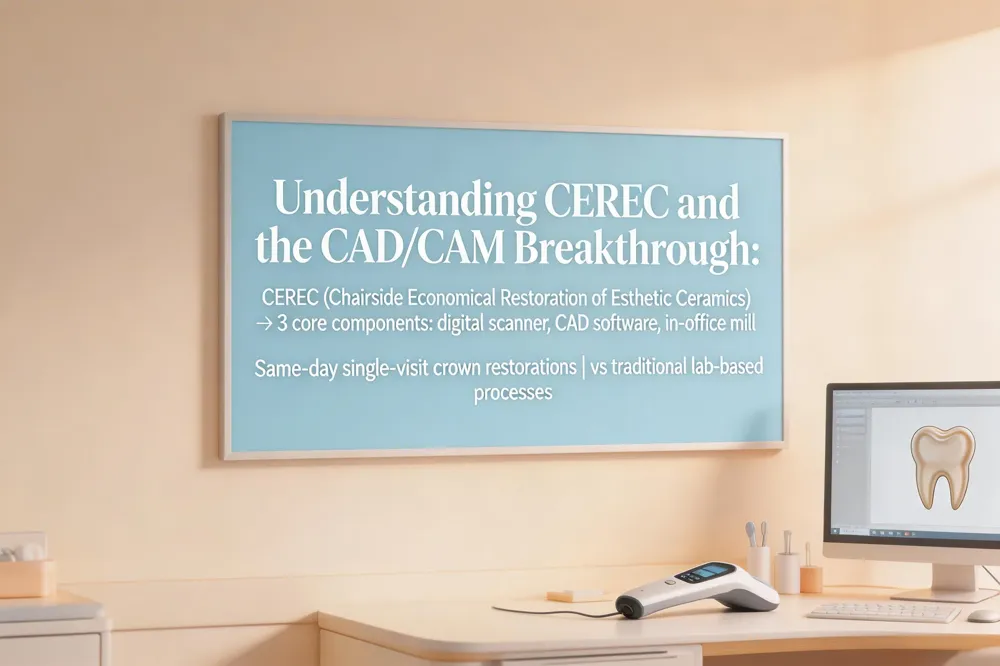
CEREC is an acronym for Chairside Economical Restoration of Esthetic Ceramics. It represents a complete in-office system for creating dental restorations. The CEREC technology allows for the design, fabrication, and placement of custom-made restorations like crowns, inlays, and CEREC veneers during a single dental appointment. This eliminates the traditional wait for a lab-made restoration.
Clarifying the Connection Between CEREC and CAD/CAM
CEREC is a proprietary brand of equipment that utilizes CAD/CAM technology. CAD stands for Computer-Aided Design, while CAM stands for Computer-Aided Manufacturing. Therefore, CEREC is a specific form of CAD/CAM dentistry, but not all CAD/CAM systems in dentistry are CEREC. The CEREC system uniquely integrates a digital scanner, design software, and a milling machine into one streamlined, chairside workflow.
Overview of the Integrated CEREC System
The CEREC process relies on three key components working together seamlessly.
- The Digital Scanner: This handheld intraoral camera captures precise, three-dimensional images of your tooth. It replaces the need for uncomfortable, traditional putty impressions.
- The Design Software: The digital scan is used to create a virtual 3D model. Your dentist then uses specialized CAD software to design a custom restoration that matches your tooth's shape, size, and color.
- The In-Office Milling Machine: The finalized digital design is sent to a compact milling unit right in the treatment room. This machine carves your restoration from a solid block of high-quality, tooth-colored ceramic material in a matter of minutes.
This integrated system is what enables the convenience and precision of same-day dental restorations.
A Brief Comparison of CAD/CAM Systems in Dentistry
| Feature | CEREC System | Other In-Office CAD/CAM Systems | Traditional Lab-Based Process |
|---|---|---|---|
| Primary Location | Entirely in dental office | Often in dental office | Impressions sent to external lab |
| Time to Completion | Single visit, ~2 hours | Often single visit | Multiple visits over several weeks |
| Impression Method | Digital intraoral scan | Digital intraoral scan | Physical putty or paste molds |
| Material Options | Primarily ceramics, composites | Varies by system | Wide range (metal, ceramic, etc.) |
| Temporary Crown Needed? | No | Often no | Yes, while lab makes final crown |
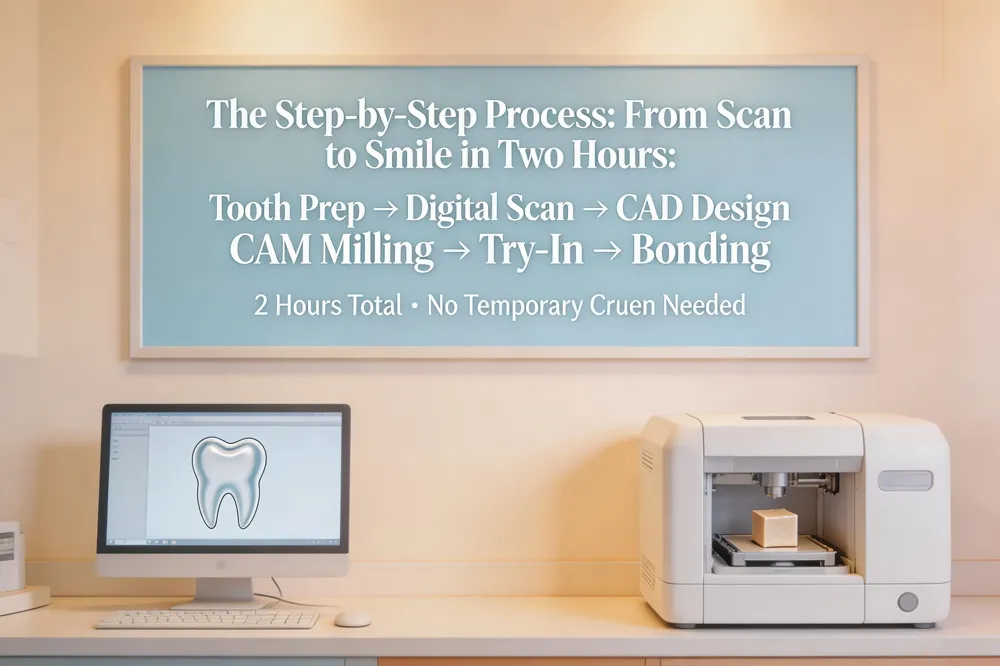
The Step-by-Step Process: From Scan to Smile in Two Hours
How long does it take to get a CEREC crown?
The entire CEREC process is designed for efficiency. From the initial scan to the final bonding of your new restoration, the procedure is typically completed in a single appointment. Most visits take about two hours to complete. This streamlined approach eliminates the typical two-to-three-week wait associated with traditional, lab-made crowns. You can walk out with a permanent, custom-fitted crown the same day you come in.
What is the first step in the CAD/CAM dental restoration process?
The process begins with a thorough evaluation of your tooth. After applying a local anesthetic for your comfort, your dentist will gently prepare the tooth by removing any decay or damage. This step is often more conservative than with traditional methods, as the digital technology allows for a precise fit that helps preserve more of your healthy, natural tooth structure. Once the tooth is prepared, the dentist takes a digital scan using a small, handheld intraoral camera.
This digital scan replaces the need for uncomfortable, gooey impression molds. The camera captures a highly accurate 3D image of your tooth and bite, which is immediately sent to a computer. This digital model forms the foundation for designing your new restoration, ensuring a level of precision that manual impressions cannot match. It's a faster and more comfortable experience, especially for patients with a sensitive gag reflex.
Detailed breakdown of the single-visit procedure
After the digital scan is complete, your dentist moves to the design phase. Using advanced CAD (computer-aided design) software, your dentist custom-designs your new crown, inlay, or onlay on a computer screen. The software allows for meticulous adjustments to the shape, size, and contours of the restoration to ensure a perfect fit with your surrounding teeth and your natural bite pattern.
The aesthetic details are also handled here. The shade and color of the ceramic material can be selected to match your natural tooth color seamlessly. Once the virtual design is perfect, the digital file is sent directly to an in-office milling machine. This is where the CAM (computer-aided manufacturing) part of the process takes over. The machine receives the design data and begins to create your physical restoration.
In-office milling from a ceramic block (15-20 minute milling time)
The milling unit contains solid blocks of high-quality ceramic, composite, or zirconia material. Using the digital design as a guide, the machine's diamond burs precisely sculpt your custom crown from one of these blocks. For a standard ceramic crown, this milling process typically takes only about 15 to 20 minutes. Advanced milling units can produce certain types of crowns in as little as 4 to 5 minutes.
The ceramic materials used are durable, stain-resistant, and biocompatible. They are milled from a single, solid block, which contributes to their strength and uniform appearance. This in-office fabrication gives your dental team complete control over the quality and timing of your restoration, removing the delays and potential inconsistencies of an external dental lab.
Final customization, bonding, and bite adjustment
Once milled, the crown is removed from the machine. Your dentist will then perform final customizations. This may involve staining, glazing, or polishing the crown to perfect its translucency and shade so it blends invisibly with your natural teeth. The crown is then carefully tried in your mouth to check the fit, color, and your bite alignment.
Any minor adjustments are made at this stage to ensure optimal comfort and function. When everything is perfect, your dentist permanently bonds the crown to your prepared tooth using strong dental adhesive. A final check of your bite ensures everything feels natural. After a brief setting time, you can resume normal activities, enjoying a fully restored smile in just one visit.
| Step | Activity | Key Details |
|---|---|---|
| 1. Preparation & Scan | Tooth prepared, digital impression taken | Replaces messy molds, preserves tooth structure |
| 2. CAD Design | Crown designed on computer software | Custom fit, color match, and bite alignment designed |
| 3. CAM Milling | Crown milled from ceramic block | Takes approx. 15-20 minutes in-office |
| 4. Try-in & Adjust | Crown fitted and checked in mouth | Ensures comfort, fit, and proper bite |
| 5. Bonding | Crown permanently cemented to tooth | Final step for a secure, long-lasting restoration |
Unpacking the Benefits: Why Patients Choose CEREC
What are the main benefits of choosing a CEREC crown?
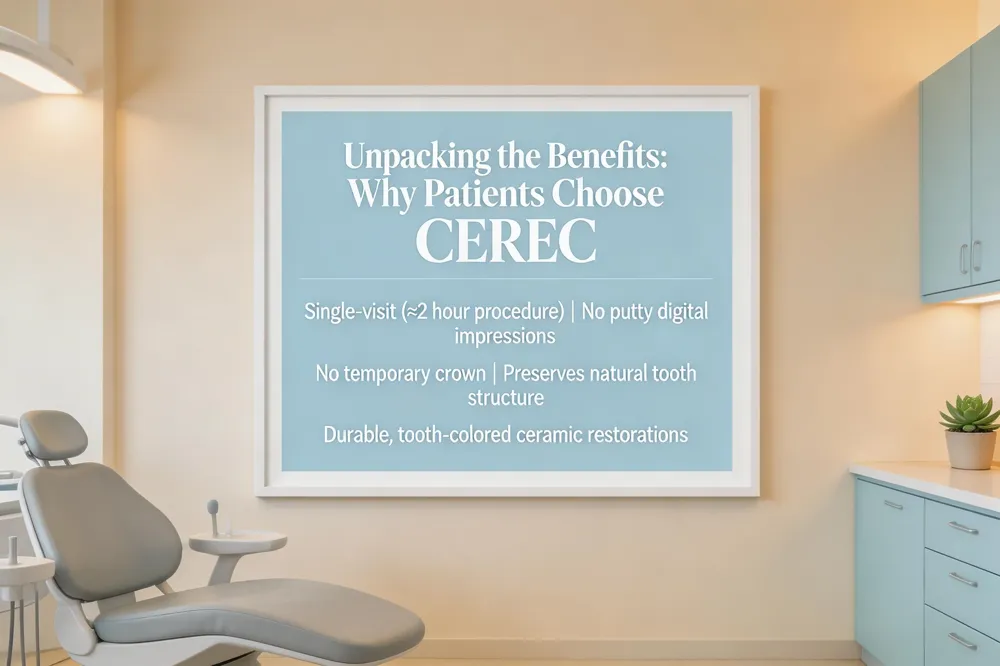
Choosing a CEREC crown offers exceptional convenience and efficiency for your dental care. The entire CEREC procedure, from digital scanning to final placement, is completed in a single appointment, often in just about two hours. This eliminates the need for multiple visits over several weeks and the waiting period for a lab-made restoration.
This single-visit approach also removes the requirement for a temporary crown. Temporary crowns can be uncomfortable, may become loose, and carry a risk of fracture or bacterial leakage. With CEREC technology, you leave our office with a permanent, high-quality restoration firmly in place.
Your comfort is a primary focus. The process uses a handheld digital scanner to create precise 3D images of your tooth, replacing the traditional, messy impression putty. This is especially beneficial for patients with a sensitive gag reflex, making the experience much more pleasant.
The technology supports a minimally invasive approach. The digital design and precise milling allow our team to preserve more of your healthy, natural tooth structure compared to some traditional methods. This conservative preparation helps maintain the long-term health and strength of your tooth.
Finally, CEREC crowns are milled from solid blocks of high-strength ceramic or porcelain. These materials are color-matched to your natural teeth, stain-resistant, and biocompatible. The result is a durable, natural-looking restoration that supports normal chewing function and blends seamlessly with your smile for years to come.
| Patient Priority | CEREC Solution | Key Outcome |
|---|---|---|
| Saving Time | Single-visit procedure | Crown in ~2 hours, not weeks |
| Avoiding Discomfort | Digital impressions | No gag-inducing putty molds |
| Immediate Results | No temporary crown | Permanent restoration placed same day |
| Tooth Preservation | Minimally invasive design | More healthy tooth structure saved |
| Aesthetic Goals | Custom ceramic milling | Natural color and seamless blend |
Balancing the Equation: Considerations and Cost Analysis
What is the average cost of a CEREC crown, and does insurance cover it?
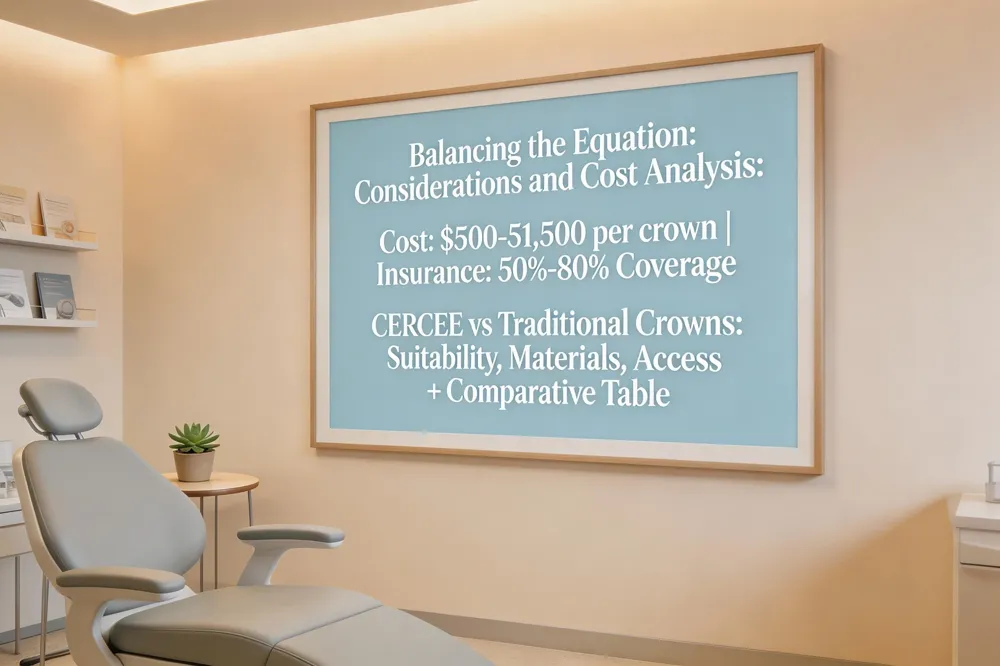
CEREC crowns have a cost profile similar to traditional, lab-made crowns. The typical price per crown ranges from $500 to $1,500. While the upfront investment is comparable, the single-visit nature of CEREC crowns can offer long-term savings by eliminating the need for multiple appointments and the associated costs of temporary crowns.
Most dental insurance plans treat CEREC crowns the same as traditional restorations. Coverage often falls between 50% and 80% of the cost, after your annual deductible is met. It is always advisable to consult with your insurance provider and your dental practice to confirm your specific benefits and out-of-pocket responsibility.
Many modern dental practices offer flexible payment plans or financing options. This helps patients manage the investment in their oral health comfortably, making advanced, convenient care more accessible.
What are some potential drawbacks or considerations for same-day CAD/CAM crowns?
The convenience of CEREC crowns is substantial, but certain clinical and practical factors are important to consider. For complex cases—such as teeth with fractures extending deep below the gumline or situations requiring very large bridges—traditional laboratory fabrication may still be recommended for optimal precision.
Material choice is another consideration. While high-strength ceramics are used, some traditional crown types, like porcelain-fused-to-metal, may offer slightly greater fracture resistance for patients with very heavy bite forces or bruxism (teeth grinding).
Technology access can also be a factor. Not every dental practice offers CEREC technology, as it requires a significant investment in specialized training and in-office milling equipment. This can affect availability in some areas.
Are CEREC crowns worth the potential higher cost compared to traditional crowns?
Determining value depends on your personal priorities. For many patients, the benefits of CEREC technology justify the investment. The single-visit process saves considerable time, eliminating the need to take multiple days off work or arrange additional childcare. It also removes the discomfort and inconvenience of wearing a temporary crown, which can sometimes become loose or dislodged.
You receive a permanent, precisely fitted restoration in one appointment, which provides immediate stability and protection for your tooth. When weighing the costs, consider this long-term value: the convenience, comfort, and immediate return to normal function often make CEREC crowns a highly worthwhile choice.
Are there any general limitations or disadvantages associated with CAD/CAM dentistry?
While CAD/CAM technology is highly advanced, it operates within certain parameters. The process relies on extremely accurate digital impressions. In some clinical situations, such as with limited mouth opening or excessive moisture, obtaining a perfect scan can be challenging, though this is uncommon.
For aesthetic perfection on highly visible front teeth, some dental professionals note that master lab technicians can sometimes achieve more nuanced color layering and characterization than can be milled from a single block of ceramic. However, for the vast majority of restorations, CEREC provides an excellent, natural-looking match.
The technology is designed for efficiency and precision. Its limitations are generally specific to unusual or highly complex dental situations, which your dentist will identify during your consultation.
| Consideration | CEREC Crowns | Traditional Lab-Made Crowns | Key Detail for Patients |
|---|---|---|---|
| Appointments | Single visit (1-2 hours) | Multiple visits (2+ weeks) | Saves significant time & scheduling hassle. |
| Temporary Crown | Not required | Required for 2-3 weeks | Eliminates risk of discomfort or dislodgement. |
| Tooth Preparation | Often more conservative | Can require more reduction | Preserves more of your natural tooth structure. |
| Material Options | Primarily high-strength ceramics | Wider range (e.g., PFM, gold) | CEREC materials are aesthetic & [biocompatible](. /innovations-in-dentistry-cerec-crowns-and-invisalign-explained#understanding-cerec-technology-same-day-crowns-for-enhanced-patient-experience). |
| Ideal For | Most standard crowns, busy patients | Very complex cases, specific material needs | Dentist assesses suitability during exam. |
| Insurance Coverage | Typically similar to traditional | Standard coverage applies | Confirm details with your provider and practice. |
The Cutting Edge: Latest CEREC Innovations
What are some of the latest technologies and materials used for dental crowns?
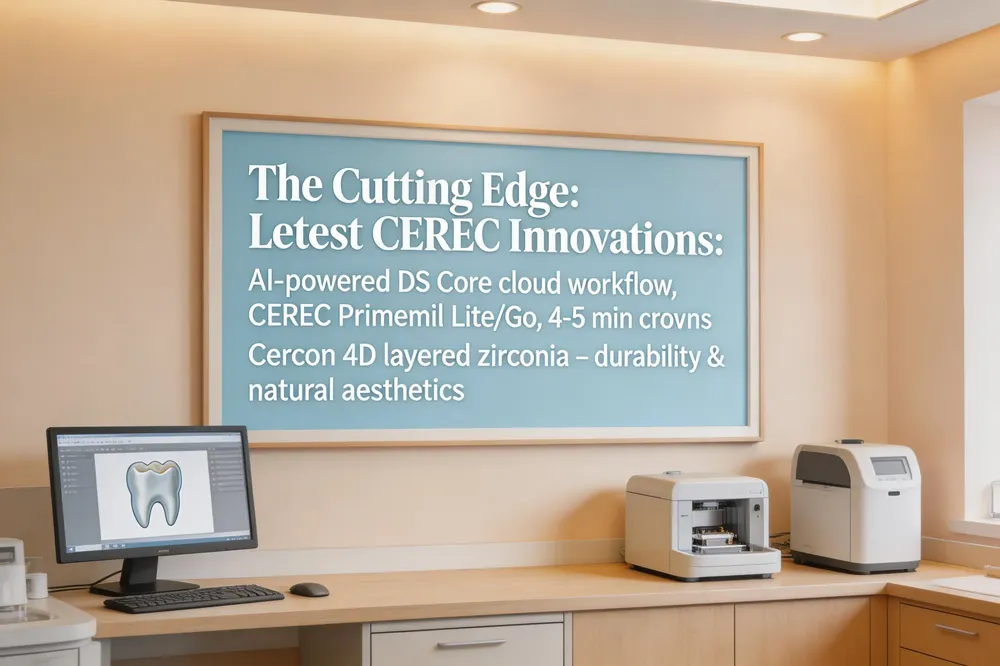
A leading innovation is the widespread adoption of same-day crowns via CAD/CAM technology like CEREC. Regarding materials, high-strength, aesthetic ceramics like zirconia—particularly high-translucent and layered zirconia—are increasingly popular for their combination of durability and natural appearance. The field is moving rapidly towards more accessible, intelligent, and faster solutions that benefit both dental practices and their patients.
Introduction of AI-Powered Workflow Integration
Recent advancements have seen the integration of AI directly into the CEREC workflow. A prime example is the DS Core cloud platform, which allows dentists to manage the entire restoration process from any device with a web browser. This system provides AI-powered margin and design proposals for dental restorations, making the process more efficient and consistent.
The cloud-based nature of DS Core offers greater flexibility. It supports exporting designs in the STL file format and is compatible with select third-party digital scanners. This means your dentist can streamline their workflow and offer you even more precise, customized care.
New Milling Units for Practice Accessibility
To make single visit dentistry more accessible, new milling units have been introduced. The CEREC Primemill Lite is a budget-friendly option designed for growing practices. It handles a wide range of work, including bridges, veneers, and implant restorations.
The CEREC Go is another new unit, specifically built as an easy-to-use wet-grinder for composite and hybrid ceramic restorations. Its simple setup requires no furnace and operates solely with a DS Core subscription, making it ideal for dentists new to digital dentistry.
Super-Fast Milling Modes for Efficiency
Speed is a hallmark of modern CEREC technology. New milling modes allow for incredibly rapid fabrication. A Super Fast Grinding Mode can produce a composite or hybrid ceramic crown in as little as 4 minutes and an inlay in about 2 minutes, requiring no post-milling heat treatment.
For zirconia crowns, a Super Fast Milling Mode is available, capable of milling a crown in approximately 5 minutes. This dramatic reduction in chairside milling time means you spend less time in the dental chair while still receiving a high-quality, permanent restoration.
Advanced Materials Like High-Strength Zirconia
Material science continues to advance, offering stronger and more aesthetic options. New CEREC Cercon 4D zirconia blocks feature a flexural strength of over 1,100 MPa. They utilize a 3D layering technology that replicates the natural gradient of a tooth, from dentin to enamel, for a highly lifelike appearance.
These advanced materials also allow for more conservative tooth preparation. They support minimal wall thicknesses of just 0.5 mm for crowns and 0.6 mm for bridges, meaning less of your natural tooth structure needs to be removed to accommodate a strong, beautiful restoration.
| Technology Area | Key Product/Feature | Capability or Benefit |
|---|---|---|
| Workflow Platform | DS Core Cloud | AI design proposals, management from any browser, STL export support |
| Milling Units | CEREC Primemill Lite | Budget-friendly, handles bridges, veneers, implant work |
| Milling Units | CEREC Go | Simple wet-grinding for composites, requires only DS Core subscription |
| Processing Speed | Super Fast Milling/Grinding | Crowns in 4-5 minutes, inlays in ~2 minutes |
| Material Science | Cercon 4D Zirconia | Over 1100 MPa strength, 3D layered aesthetics, 0.5 mm minimal thickness |
Conclusion: Embracing Modern, Patient-Centered Care
A Patient-First Approach to Modern Dentistry
The CEREC same-day crown system exemplifies the commitment to patient-centered, modern dental care. By integrating advanced CAD/CAM technology directly into our practice, we prioritize your time, comfort, and long-term oral health. This approach allows us to provide efficient, high-quality restorations that fit seamlessly into busy family schedules, minimizing disruption and maximizing convenience.
Delivering Value and Quality to the Totowa Community
For patients in Totowa seeking reliable and swift dental solutions, CEREC technology represents a significant advancement. It transforms a traditionally multi-visit process into a single, streamlined appointment, eliminating the wait for a lab-made crown and the discomfort of a temporary restoration. This efficiency, combined with the precision of digital impressions and the strength of ceramic materials, offers a compelling value proposition: exceptional care that is both time-saving and built to last.
Your Personalized Path to a Healthier Smile
Every patient's dental needs are unique. The experienced team at Best Choice Dental is here to provide a thorough consultation to determine if a CEREC restoration is the ideal solution for you. We will carefully evaluate your specific situation, discuss all your options, and craft a personalized treatment plan focused on achieving the best possible outcome for your smile and oral health.
| Modern Dental Priority | How CEREC Technology Addresses It | Patient Benefit in Totowa |
|---|---|---|
| Time Efficiency & Convenience | Single-visit treatment completed in about two hours | Reduces time off work/school, fits busy schedules |
| Advanced Comfort | Digital scans replace messy impression putty | More pleasant experience, ideal for sensitive gag reflexes |
| Aesthetic, Natural Results | Ceramic material is custom color-matched to your teeth | Restorations blend seamlessly for a confident smile |
| Minimally Invasive Care | Precise digital design preserves more healthy tooth structure | Supports long-term tooth health and integrity |
| Immediate, Durable Solution | Strong, milled ceramic crown placed permanently in one day | No temporary crown; you leave with a finished restoration |