A Quick Overview of Dental Sealants
Dental sealants are thin, resin‑based coatings painted onto the chewing surfaces of molars and premolars. The material bonds to enamel after a brief acid‑etch, creating a smooth barrier that blocks food particles and bacteria from the deep pits and fissures that are hard to clean with a toothbrush. First permanent molars, often called "six‑year molars," erupt around age six and immediately develop deep grooves that trap plaque, making them the most cavity‑prone teeth in a child's mouth. By sealing these grooves, sealants can reduce the risk of decay by up to 80% in the first two years and continue to provide protection for several years, while also making daily brushing easier. At Best Choice Dental in Totowa, our pediatric team uses state‑of‑the‑art light‑curing technology to apply sealants quickly, painlessly, and without drilling. We combine sealant placement with regular fluoride treatments, thorough oral‑hygiene education, and routine check‑ups to ensure lasting protection and a comfortable, personalized experience for every child.
How Sealants Work, What They’re Made Of, and Their Safety Profile
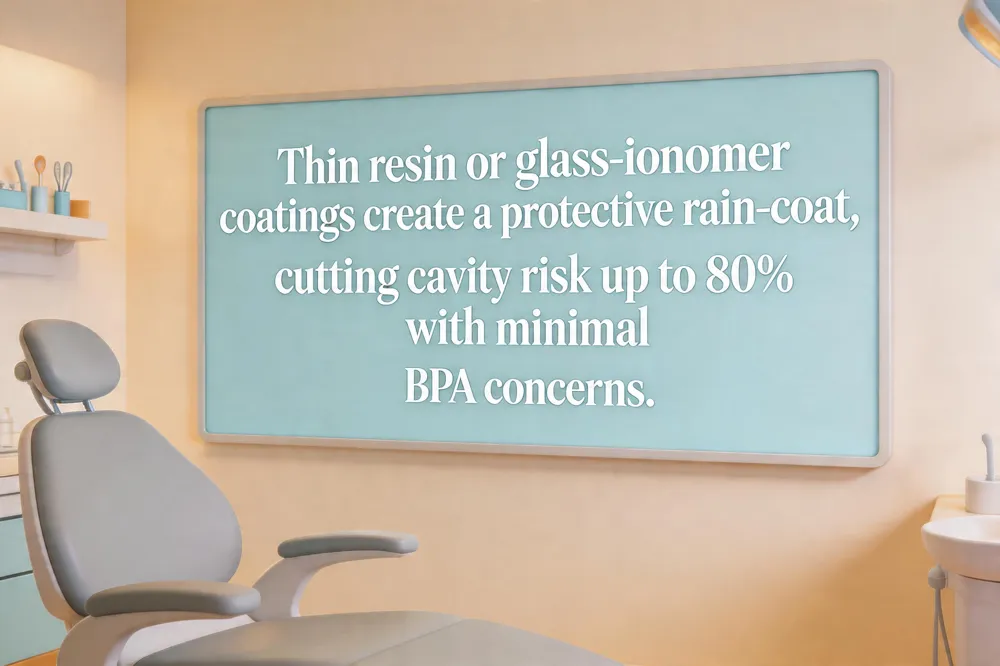 Dental sealants are thin, resin‑based or glass‑ionomer coatings that create a smooth barrier over the deep pits and fissures of molars and premolars. Resin‑based sealants are made from medical‑grade plastic resins such as bis‑GMA or UDMA, often with tiny filler particles for strength. Glass‑ionomer sealants contain a blend of glass powder and polyacrylic acid, releasing fluoride that further protects enamel.
When the tooth is cleaned and etched with a mild acid, the sealant bonds tightly to the enamel and is cured with a blue LED light, instantly sealing the grooves and blocking bacteria and food particles from lingering. This “rain‑coat” effect reduces cavity risk by up to 80% in the first two years and by about 50% for up to four years.
Safety data are reassuring: modern sealants contain very low or no BPA‑related compounds, and extensive research shows no long‑term health risks. Allergic reactions are extremely rare; any swelling, redness, or itching should be reported promptly. The procedure is painless, non‑invasive, and takes only a few minutes per tooth, making it ideal for children in Totowa’s pediatric offices such as Best Choice Dental. Regular six‑month check‑ups ensure the sealant remains intact and allow re‑application if needed, complementing daily brushing, flossing, and fluoride treatments for comprehensive oral health.
Timing, Rules of Thumb, and the 3‑3‑3 Oral‑Health Framework
 When it comes to keeping your child’s smile healthy, timing and simple habits matter as much as the latest technology. At Best Choice Dental in Totowa, we combine state‑of‑the‑art sealant placement with clear, easy‑to‑follow oral‑health rules.
The 3‑3‑3 rule for oral health – Brush for roughly three minutes, three times a day, and follow a three‑step routine: brush, floss (or clean between teeth), and, when recommended, rinse with a fluoride‑containing mouthwash. Consistent brushing removes plaque, limits acid attacks, and builds lifelong habits that lower cavity risk.
The Rule of 7 for primary molars – Around a child’s seventh birthday the first permanent molars erupt behind the primary molars. This marks the transition from primary to permanent dentition and signals the ideal time for sealant placement. By age 7 most children have a full set of primary teeth, and the new permanent molars become the cornerstone for future orthodontic and preventive care.
Why age 6 and age 12 are critical – The first permanent molars (the “six‑year molars”) usually emerge at age 6, and the second molars (the “twelve‑year molars”) appear near age 12. Applying sealants immediately after eruption protects the deep pits and fissures before they become worn down by chewing and before brushing skills are fully developed. Studies show sealants can reduce cavity risk by up to 80 % when placed at these ages.
Connecting oral‑health habits to sealant effectiveness – Sealants create a smooth barrier that makes daily brushing and flossing easier, but they do not replace good oral hygiene. Regular six‑month check‑ups at our office let us inspect sealant integrity, re‑apply if needed, and reinforce the 3‑3‑3 routine. Combining sealants with fluoride treatments and proper diet maximizes protection and keeps your child’s teeth cavity‑free for years to come.
Our pediatric team uses gentle, light‑cured resin sealants that bond quickly without drilling or anesthesia, and we tailor each visit to your child’s comfort. Ask us about enrollment in local school‑based sealant programs or schedule an appointment to protect those critical molars today.
Cost, Insurance, and Financial Support for Families
 Dental sealants are an affordable, painless way to protect your child’s molars. Most families pay around $20‑$50 per tooth out‑of‑pocket, and in New Jersey practices such as Best Choice Dental, Totowa, and NÜVA Smile typically fall within this range. Because sealants are classified as preventive care, the majority of dental insurance plans—including private plans, Medicaid, and the Children’s Health Insurance Program (CHIP)—cover them at 100 % after any deductible, often costing families nothing at the point of service. Coverage can vary slightly from one New Jersey office to another, so it’s a good idea to confirm benefits with your insurer before scheduling. The upfront expense is offset by long‑term savings: each sealed tooth can prevent up to 80 % of cavities, avoiding costly fillings, crowns, or extractions that can run into hundreds of dollars per case. By investing a modest amount now, families reduce future dental bills and keep their children’s smiles healthy for years to come.
Pros and Cons for Kids and Adults – What to Expect
 Dental sealants are a quick, painless way to protect the deep pits and fissures of molars {
Kids – pros and cons
Dental sealants are a quick, painless way to protect the deep pits and fissures of molars {
Kids – pros and cons
- Pros: Clinical studies show up to an 80 % reduction in cavity risk when sealants are placed on newly erupted first molars (around age 6) and second molars (around age 12). The procedure takes only a few minutes per tooth, requires no drilling or anesthesia, and the thin resin coating can last five to ten years with proper care. Most dental insurance plans, including many public programs, cover the cost, making it a cost‑effective preventive measure](https://www.cdc.gov/oral-health/prevention/about-dental-sealants.html).
- Cons: Sealants do not replace daily brushing, flossing, or fluoride treatments. They may chip or wear over time, so regular six‑month check‑ups are needed for inspection and possible touch‑ups. Some parents worry about BPA, but modern sealants contain only trace amounts far below safety thresholds](https://www.cdc.gov/oral-health/prevention/about-dental-sealants.html).
Adults – benefits and considerations
- High‑risk adults—those with deep grooves, a history of cavities, dry mouth, or limited fluoride exposure—can also gain up to an 80 % reduction in decay for the first two years](https://www.cdc.gov/oral-health/prevention/about-dental-sealants.html). The procedure is non‑invasive and quick, often covered for high‑risk patients.
- Longevity is similar to children (5‑10 years), but periodic monitoring is essential](https://www.cdc.gov/oral-health/prevention/about-dental-sealants.html). Sealants complement, not replace, regular oral‑hygiene habits and professional cleanings.
Combined with fluoride Using sealants together with regular fluoride treatments provides the greatest protection, as fluoride strengthens enamel while sealants block bacteria from the hardest‑to‑clean grooves.
At Best Choice Dental in Totowa, NJ, our pediatric and adult teams use the latest light‑curing technology to place durable, BPA‑free sealants—helping families enjoy healthier smiles with minimal disruption.
Practical Tips, Community Programs, and Ongoing Care
 School‑based sealant programs are a proven, cost‑effective way to protect children’s molars, especially in lower‑income communities. In New Jersey, these programs have saved families more than $11 per sealed tooth and could prevent over three million cavities nationwide, translating into up to $300 million in avoided treatment costs. By partnering with local schools, Best Choice Dental helps families in Totowa access free or low‑cost sealant placement for first and second permanent molars as soon as they erupt (around ages 6 and 12).
Regular dental check‑ups are essential to monitor sealant integrity. During six‑month visits, our dentists inspect each sealant for wear or chip, re‑apply if needed, and assess overall oral health. Fluoride treatments are routinely offered alongside sealants, providing a chemical shield that works hand‑in‑hand with the physical barrier of sealants. Parents are encouraged to reinforce daily brushing with fluoride toothpaste and flossing, while limiting sugary snacks that fuel decay.
Best Choice Dental’s Totowa office combines advanced curing‑light technology with a gentle, child‑friendly approach, ensuring the sealant procedure is quick, painless, and stress‑free. Our team also provides education on home care, coordinates with school sealant initiatives, and helps families navigate insurance coverage so that every child can enjoy a cavity‑free smile.
Putting It All Together – A Healthier Smile for Your Child
Dental sealants provide a quick, painless, and highly effective barrier that can cut cavity risk by up to 80 % on the deep pits and fissures of molars. When applied right after a tooth erupts, the sealant “locks out” plaque and food particles that brushing alone can miss, while also complementing fluoride treatments for even stronger protection. The key timing milestones are age 6 (the first permanent molars, often called the “six‑year molars”) and age 12 (the second permanent molars, or “twelve‑year molars”). Some dentists also follow the “Rule of 7,” recommending a check‑up at seven years to confirm the sealants are intact and the child's oral‑health habits are on track. At Best Choice Dental in Totowa, NJ, our friendly pediatric team uses the latest light‑curing technology to place sealants safely and comfortably. Call today to schedule an appointment and give your child the lasting, cavity‑free smile they deserve.