Understanding Dental Stress and the Power of Visualization
Dental stress is a common response to the sights, sounds, and anticipation of pain in the dental chair, and it can lead to avoidance of routine care, worsening oral health over time. When anxiety spikes, heart rate, blood pressure, and cortisol rise, making procedures feel more uncomfortable and sometimes increasing the need for medication. Guided imagery—sometimes called visualization—offers a simple, non‑pharmacologic tool that taps the parasympathetic nervous system, lowering those physiological markers while shifting attention to calming scenes such as a beach or forest. At Best Choice Dental in Totowa, we seamlessly integrate short, audio‑guided imagery sessions into the waiting‑room and treatment flow, complementing our advanced technology and personalized care plans to help every patient feel safe, relaxed, and ready for a healthier smile.
Guided Imagery: Science‑Backed Stress Relief
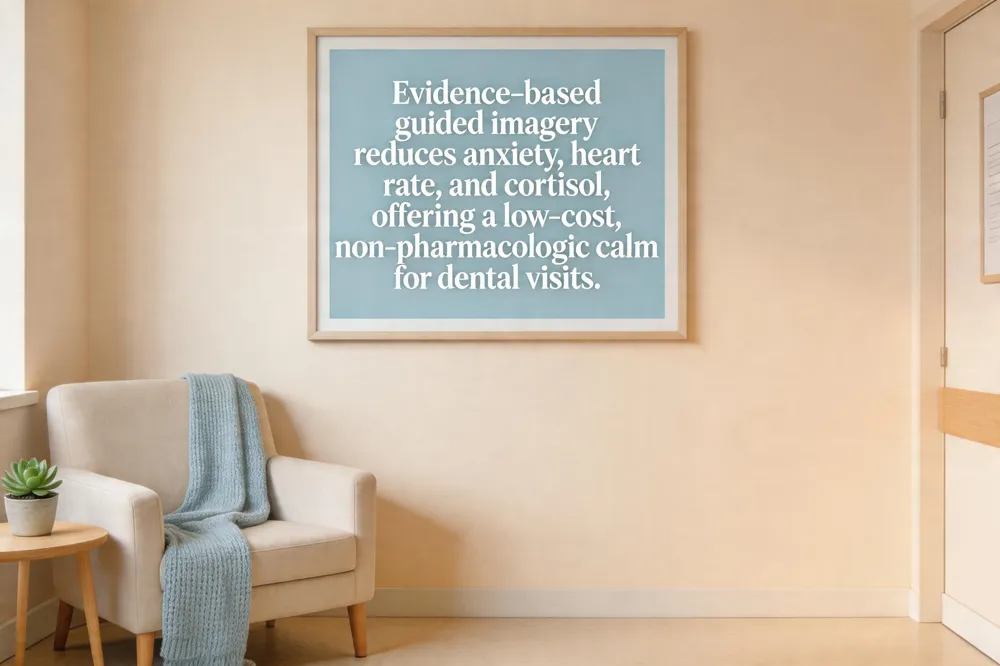 Guided imagery—visualizing a calm beach, forest, or any soothing scene—has a solid research base for easing dental anxiety. Systematic reviews in the Journal of Dental Research report a 15‑30% drop in anxiety scores when patients practice guided imagery before treatment, and a 2020 review showed lower heart rate, blood pressure, and cortisol levels during appointments. Physiologically, the technique activates the parasympathetic nervous system, dampening the fight‑or‑flight response and reducing pain perception.
Implementation in practice – At Best Choice Dental in Totowa, NJ, a brief 5‑minute audio script is offered in the waiting room or via a tablet on the dental chair. The script invites patients to engage all senses—seeing waves, hearing birds, feeling a gentle breeze—creating an immersive distraction that can lower the need for pharmacologic sedation. Staff are trained to cue the script, combine it with deep‑breathing, and personalize the imagery to each patient’s preferences.
FAQs
- Does guided imagery reduce stress? Yes—research shows it lowers anxiety, blood pressure, and perceived pain by shifting attention and triggering parasympathetic activation.
- How long does guided imagery take? Sessions typically last 5‑10 minutes; a single brief session fits easily into a standard appointment.
- What are some examples? Imagine waves lapping on a shore, the scent of pine, the warmth of sunlight, or a favorite childhood memory.
- What is the 3‑3‑3 rule? Notice three things you see, three you hear, and three you feel, a quick grounding technique that can be used anytime during a visit.
By integrating guided imagery, Best Choice Dental offers a low‑cost, non‑pharmacologic tool that enhances comfort, promotes regular oral‑health visits, and supports a relaxed, family‑focused dental experience.
Practical Relaxation Techniques for the Dental Chair
 At Best Choice Dental in Totowa, NJ, we combine gentle, family‑oriented care with modern technology to make every visit comfortable. Our team offers several easy‑to‑use relaxation tools that you can start using right away.
Deep breathing – Before you settle into the chair, inhale slowly through the nose for a count of four, hold for four, and exhale through the mouth for six. This simple rhythm activates the parasympathetic nervous system, lowering heart rate and cortisol.
Hand signals – Let us know when you need a brief pause. Raising your left pointer finger signals the team to stop momentarily, giving you a chance to regroup without feeling rushed.
Music and distraction – Soft instrumental music or a favorite audiobook played through headphones can mask drill sounds and keep your mind occupied.
3‑3‑3 grounding – Notice three things you can see, three you can hear, and three you can move touch. This quick sensory reset reduces nervousness in real time.
How to stay calm during a dental procedure – Talk openly with your dentist about fears, use a hand signal for breaks, schedule appointments at a relaxed time, avoid caffeine, sip calming herbal tea, practice deep breathing, and ask about nitrous oxide or topical anesthetic for added comfort. Regular preventive visits also prevent complex, painful work that fuels anxiety.
How to reduce stress at the dentist – Begin with deep breathing or a brief meditation, bring headphones for soothing music, use the hand‑signal system, try progressive muscle relaxation or guided imagery, and discuss nitrous oxide or counseling if needed.
What is the 3‑3‑3 rule for anxiety? – It’s a grounding technique: identify three things you can see, three you can hear, and three you can feel. This discreet method quickly shifts focus away from anxious thoughts, helping you stay present and relaxed throughout the appointment.
Managing Dental Anxiety Across Ages
 Dental anxiety in children – Many children develop fear from past painful experiences, the sound of dental tools, or learned worries. A calm, child‑friendly environment and open communication help prevent fear from becoming entrenched. At Best Choice Dental in Totowa, NJ we use age‑appropriate language, positive reinforcement, and comfort items, and our staff are trained in behavior‑management techniques to keep young patients relaxed and on track for lifelong oral health.
How to deal with severe dental anxiety? – Severe anxiety often requires a blend of self‑help techniques and professional support. Practicing deep‑breathing, progressive muscle relaxation, or guided imagery (visualizing a peaceful beach or forest) before and during appointments lowers physiological stress. Patients are encouraged to discuss a clear stop signal with the dentist. Options such as nitrous oxide, oral sedatives, or a referral for cognitive‑behavioral therapy are available. Regular, short check‑ups build trust and gradually desensitize the patient.
What can I take for anxiety before dental work? – Oral benzodiazepines (e.g., diazepam/Valium) taken 20‑40 minutes before the visit provide light‑to‑moderate sedation. For milder anxiety, low‑dose antihistamines (diphenhydramine) or nitrous oxide inhalation are effective with rapid recovery. Our team tailors medication plans, monitors safety, and ensures patients can drive home comfortably.
Nitrous oxide for dental anxiety – Laughing gas delivers fast‑acting, adjustable sedation that keeps patients conscious while reducing fear and gag reflexes. It wears off quickly after the mask is removed, making it a safe, non‑invasive choice for both adults and children. Best Choice Dental integrates nitrous oxide and guided‑imagery scripts into the pre‑appointment routine, creating a relaxed, stress‑free experience for every family member.
Identifying and Addressing Dental Anxiety Symptoms
 Dental anxiety often shows up with physical signs such as sweating, a racing heartbeat, or an upset stomach. Some patients experience low blood pressure that can lead to fainting, while others notice a sudden rise in blood pressure. Emotionally, visible distress, crying, panic, or a lingering sense of dread are common, and behavioral cues may include avoidance of appointments or masking fear with humor or aggression.
The roots of dental anxiety are multifactorial. An innate “fight‑or‑flight” response makes the mouth feel especially vulnerable, and past painful experiences—especially in childhood—can create lasting fear triggers. Media portrayals of scary dentists, genetic pain sensitivity, and a perceived loss of control also amplify worry.
Dental fear is more than nervousness; it can be an intense dread of drills, needles, or loss of control, often linked to previous trauma or broader anxiety disorders. Untreated, it leads to missed check‑ups, allowing minor issues to become serious problems.
Feeling anxious before an appointment is normal. We recommend informing our team of any fears, choosing a relaxed day, avoiding caffeine, and practicing deep‑breathing or sipping calming tea. At Best Choice Dental in Totowa, NJ, we use gentle communication, soothing environments, and evidence‑based techniques such as guided imagery, deep breathing, nitrous‑oxide sedation, and immersive visualization VR to help patients feel safe and comfortable. Open dialogue and a personalized plan turn a stressful visit into a caring, confidence‑building experience.
Integrating Guided Imagery into Family‑Oriented Dental Care
 At Best Choice Dental in Totowa, NJ, guided imagery is woven into the everyday workflow to create a calm, patient‑centered experience for every age group. Before a procedure, the dental team offers a brief, 2‑minute pre‑appointment script or audio recording that invites patients to picture a peaceful beach, forest, or any personal sanctuary. This simple practice activates the parasympathetic nervous system, lowering heart rate and cortisol levels before the chair even reclines.
Patient education is a cornerstone of the program. During the initial consultation, staff explain how guided imagery works, demonstrate a few sensory details (visual, auditory, tactile) and provide a take‑home handout or app link for daily practice. Patients learn to use the technique at home and can rehearse it during the waiting room, turning a traditionally stressful moment into a brief mindfulness session.
Holistic approaches complement guided imagery. The practice combines deep‑breathing exercises, soothing music, aromatherapy, and optional low‑cost VR or immersive visualization eyewear for patients who benefit from a richer sensory distraction. This multimodal strategy aligns with ADA recommendations and research showing a 15‑30 % reduction in anxiety scores and a decrease in perceived pain.
Dental anxiety management – Recognizing fear through open conversation and simple rating tools, the staff then employ behavioral techniques (deep breathing, guided imagery, progressive muscle relaxation). For moderate‑to‑severe cases, topical anesthetic gels, nitrous‑oxide, oral sedation, or IV sedation are available, always in a transparent, supportive environment that encourages patients to signal when they need a break.
What is the 3‑3‑3 rule for toothaches? It advises taking three 200 mg ibuprofen tablets (600 mg total) every three hours, for no more than three days, to control inflammation and pain.
What is the 50‑40‑30 rule in dentistry? This aesthetic guideline suggests the apparent contact dimensions between central incisors, central‑to‑lateral incisors, and lateral‑to‑canine should approximate a 50 %‑40 %‑30 % proportion for a harmonious smile.
Your Path to a Calm, Healthy Smile
Guided imagery and visualization are proven, non‑pharmacologic tools that lower heart rate, cortisol and and perceived pain during dental care. Research shows a 15‑30% drop in anxiety scores and reduced need for sedation when patients picture soothing scenes—such as a beach or forest—while breathing deeply. At Best Choice Dental in Totowa, NJ, we offer a quick pre‑appointment script, optional audio recordings, and personalized visual cues to help you relax before and during treatment.
Ready to try it? Call us at (973) 555‑1234, email hello@bestchoicedental.com, or visit our website to download a free guided‑imagery file. Our friendly team will walk you through the steps and schedule a calm, comfortable visit.