Introduction
Plaque is a soft, sticky film of bacteria that forms on teeth within minutes after eating. If it isn’t removed, it begins to mineralize and can harden into tartar (calculus) in as 24–48 hours—a substance so firm that a toothbrush or floss can’t break it down. Even with diligent brushing and flossing, a significant amount of biofilm remains hidden in hard‑to‑reach spots such as the gum line, between teeth, and behind back molars. These areas are perfect breeding grounds for bacteria that cause gum inflammation, cavities, and bad breath. Professional dental cleanings use ultrasonic scalers and hand tools to safely and tartar, polish away surface stains, and apply fluoride or sealants for added protection. By eliminating the hidden plaque and tartar that home care misses, cleanings break the cycle of inflammation, lower the risk of gum disease, and catch early signs of decay or oral cancer—providing a stronger, healthier smile and supporting overall wellness.
The Essential Role of Annual Dental Check‑ups
 Annual dental check‑ups are a cornerstone of preventive oral health, even for patients who brush and floss diligently. During a comprehensive exam, the dentist screens for early signs of decay, gum disease, and oral cancer—issues that often develop silently beneath the surface. Professional cleanings remove plaque and tartar that a toothbrush cannot reach, especially along the gum line and behind molars, reducing the risk of cavities, gingivitis, and periodontitis. Skipping these appointments allows plaque to harden into calculus, irritates gums, and can lead to tooth loss, persistent bad breath, and higher treatment costs. Moreover, untreated gum inflammation has been linked to systemic conditions such as heart disease, diabetes, and adverse pregnancy outcomes.
Are annual dental checkups necessary? Yes. They enable early detection of problems, allow professional scaling and polishing, and help build a detailed oral health history for accurate future diagnoses. At Best Choice Dental in Totowa, NJ, we recommend a thorough exam and cleaning every 6–12 months, tailored to each patient’s risk factors.
Teeth cleaning from dentist is good or bad? Professional cleanings are overwhelmingly beneficial, removing plaque and tartar, brightening smiles, freshening breath, and preventing costly procedures. Temporary sensitivity may occur but is short‑lived.
What happens if you skip dental cleanings? Plaque hardens into tartar, leading to gum disease, hidden cavities, tooth loss, and increased systemic health risks.
Do I need dental cleaning if I brush everyday? Even with diligent brushing, professional cleaning removes hidden plaque and tartar that home care cannot eliminate, protecting gums and enamel.
Dental exam vs cleaning A dental exam (by the dentist) detects disease through visual, tactile, and radiographic assessment, while a cleaning (by a hygienist) removes plaque/tartar, polishes teeth, and reinforces preventive care. Both are essential components of a personalized, comfortable oral‑health plan at our family‑oriented practice.
Cost, Insurance, and Choosing a Practice
 At Best Choice Dental in Totowa, a routine professional cleaning costs $95 for adults and $75 for seniors—well below the national average of roughly $200. With dental insurance or a family plan, out‑of‑pocket expenses often drop to $50‑$70, and new patients may receive bundled exam and X‑ray discounts. Without insurance, a typical exam plus cleaning runs between $120 and $200, while a full check‑up with X‑rays averages $120‑$180 locally, matching national expectations.
Choosing the right dentist begins with confirming board certification, an active New Jersey license, and ADA membership. Look for a practice that offers comprehensive services—from preventive cleanings and digital X‑rays to cosmetic procedures and orthodontics—so your care can evolve without changing providers. Read online reviews, ask for personal referrals, and verify that the office accepts your insurance and provides transparent pricing. A convenient way to gauge comfort is to schedule a consultation, meet the friendly staff, and tour the modern, family‑oriented facility at 418 Union Blvd., Totowa.
By combining affordable, insurance‑friendly pricing with a reputable, full‑service practice, you can maintain optimal oral health while minimizing long‑term costs.
Tailored Care for High‑Risk and Special Populations
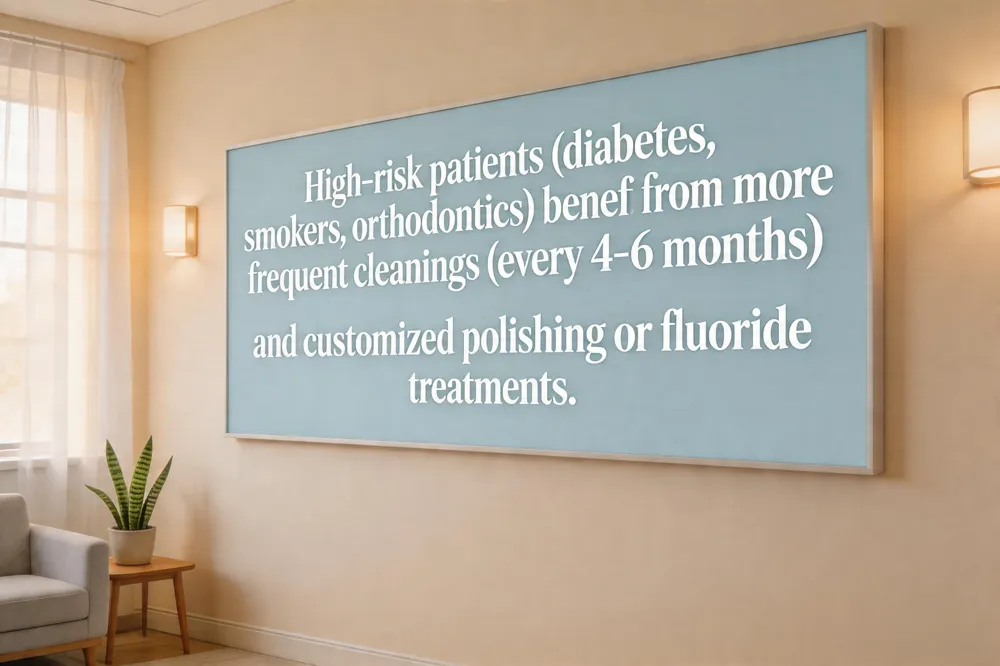 At Best Choice Dental we recognize that patients with diabetes, a history of gum disease, orthodontic appliances, or other risk factors need a preventive plan that goes beyond the standard twice‑year visit. Diabetes can accelerate plaque buildup and gum inflammation, so we offer more frequent cleanings, usually every four months, to keep tartar under control and to catch early signs of gingivitis or periodontitis before they threaten systemic health. Our hygienists use ultrasonic scalers and digital imaging to remove hardened calculus and to assess pocket depths with pinpoint accuracy, while our dentists coordinate with your medical provider to ensure that oral‑health strategies support overall diabetes management.
For high‑risk patients—smokers, those on medications that dry the mouth, or anyone with a history of rapid staining—quarterly appointments provide the extra protection needed to maintain fresh breath, a bright smile, and healthy gums.
Polishing is a personalized choice. While it smooths the enamel and removes surface stains for a whiter appearance, it is not required for oral health. If you prefer to skip polishing, simply let your hygienist know; we will focus on scaling, fluoride treatment, and a thorough exam to keep your teeth strong and your mouth comfortable.
Inside the Dental Visit: Procedures and Tools
 Dental check‑up procedure
At Best Choice Dental the visit begins with a brief health questionnaire and a review of your oral‑care history. A hygienist then performs a thorough cleaning: scaling removes plaque and tartar (which hardens within 24‑48 hours and cannot be brushed away), polishing smooths the surfaces, and a fluoride varnish may be applied. If needed, digital X‑rays are taken to reveal hidden decay or bone loss. After the cleaning, the dentist conducts a comprehensive exam of teeth, gums, tongue, throat, and jaw, discusses the X‑ray findings, and offers personalized oral‑health advice. Appointments typically last 45‑60 minutes and are scheduled twice a year.
Dental check‑up procedure
At Best Choice Dental the visit begins with a brief health questionnaire and a review of your oral‑care history. A hygienist then performs a thorough cleaning: scaling removes plaque and tartar (which hardens within 24‑48 hours and cannot be brushed away), polishing smooths the surfaces, and a fluoride varnish may be applied. If needed, digital X‑rays are taken to reveal hidden decay or bone loss. After the cleaning, the dentist conducts a comprehensive exam of teeth, gums, tongue, throat, and jaw, discusses the X‑ray findings, and offers personalized oral‑health advice. Appointments typically last 45‑60 minutes and are scheduled twice a year.
Types of dental examination
- Routine check‑up: visual inspection, cleaning, and symptom review.
- Periodontal charting: measures gum‑pocket depth to catch early gingivitis or periodontitis.
- Radiographic imaging: bite‑wing or panoramic X‑rays and hidden decay, bone loss, and other conditions.
- Intra‑oral photography/digital scanning: creates detailed records for monitoring changes and planning restorative work.
Teeth cleaning advantages and disadvantages Advantages include removal of plaque/tartar, prevention of cavities and gum disease, fresher breath, brighter smile, early detection of oral cancer, and long‑term cost savings. Disadvantages are usually mild: temporary tooth sensitivity, brief gum irritation, and possible out‑of‑pocket costs if insurance coverage is limited.
Cleaning of teeth by dentist is called? The standard prophylactic procedure is called a prophylaxis cleaning. When disease below the gum line is addressed, the term scaling and root planing (deep cleaning) is used.
Why does dental cleaning hurt so much? Discomfort can arise when hardened tartar is scraped from inflamed gums or when thin enamel exposes nerve endings. Anxiety can amplify sensations. Regular six‑month visits keep tartar buildup low, allowing a gentler cleaning; let the team know if you’re uncomfortable so a numbing gel or technique adjustment can be provided.
Oral Health and Overall Wellness
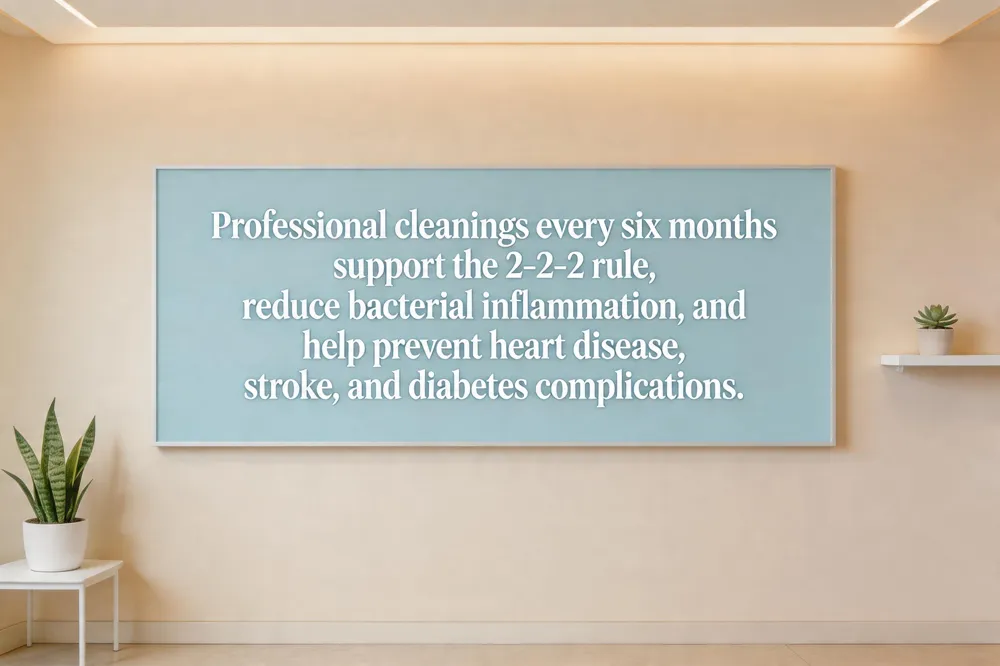 Plaque that hardens into tartar within 24‑48 hours can only be removed with professional scaling, and the American Dental Association recommends a cleaning every six months. These bi‑annual visits prevent cavities and gum disease, lower bacterial inflammation, and give the dentist a chance to spot early decay, cracked fillings, or oral cancer—saving time, discomfort, and money. Research shows that untreated gum disease raises the risk of heart disease, stroke, and poorly controlled diabetes, so regular cleanings also protect systemic health.
During each appointment our team performs a thorough oral‑cancer and lymphoma screening, checking the tongue, gums, roof of the mouth, and neck for abnormal lesions or swollen lymph nodes. Early signs of lymphoma may appear as painless ulcers or persistent swelling, which we can detect and promptly refer for medical evaluation.
Simple preventive rules keep your smile healthy between visits: the 2‑2‑2 rule (brush twice daily for two minutes, floss or use interdental cleaners daily, and see your dentist twice a year) and the 3‑3‑3 rule (brush for about three minutes, three times a day, and spend three to five minutes total on interdental cleaning). At our Totowa practice we combine digital X‑rays, ultrasonic scalers, and personalized coaching to make these habits easy and effective for the whole family.
Conclusion
Even with perfect brushing and flossing, plaque can hide in hard‑to‑reach spots, harden into tartar within 24‑48 hours, and irritate the gums. Professional cleanings at Best Choice Dental remove that stubborn buildup, polish away surface stains, apply fluoride or sealants, and include a thorough exam that can catch cavities, gum disease, or oral cancer before they become serious. By seeing us twice a year—or more often if you have risk factors such as diabetes, orthodontic appliances, or a history of gum disease—you keep the bacterial load low, protect your smile’s brightness, and reduce the chance of systemic health issues linked to oral inflammation. Our friendly team uses digital X‑rays, ultrasonic scalers, and intra‑oral cameras to make every visit comfortable and effective. Call (973) 942‑3233 or use our online form to schedule your next preventive appointment and experience personalized, compassionate care designed for the whole family. We look forward to helping you achieve lasting oral health and a confident smile.