Why Crown Choice Is a Bigger Decision Than You Think
Choosing between a CEREC same‑day crown and a traditional lab‑fabricated crown affects more than just the look of your smile. Patient convenience is a major factor—CEREC crowns are designed, milled and placed in a single visit, eliminating temporary crowns and the hassle of multiple appointments, while traditional crowns typically require two‑to‑three visits over a few weeks. Financial considerations also play a role; CEREC crowns often cost a comparable $1,000‑$1,800 per tooth, but the single‑visit workflow can offset travel time, time‑off‑work, and temporary‑crown fees, whereas traditional crowns may be cheaper per unit but involve additional lab charges and appointments. Material durability is similar when high‑strength ceramics (zirconia, lithium disilicate) are used, with both types lasting 10‑15 years or more with proper care. Our practice’s advanced CAD/CAM technology ensures precise digital scans, accurate milling, and a marginal fit under 100 microns, giving you a reliable, comfortable restoration regardless of the crown type you select.
Cost and Appointment Time – The Bottom‑Line Comparison
 CEREC same‑day pricing – In Pittsburgh, PA a CEREC crown costs $1,300‑$1,800; a traditional lab crown $1,200‑$1,600. Insurance covers 50 % after deductible, so out‑of‑pocket costs are similar; the modest premium reflects the convenience of a visit.
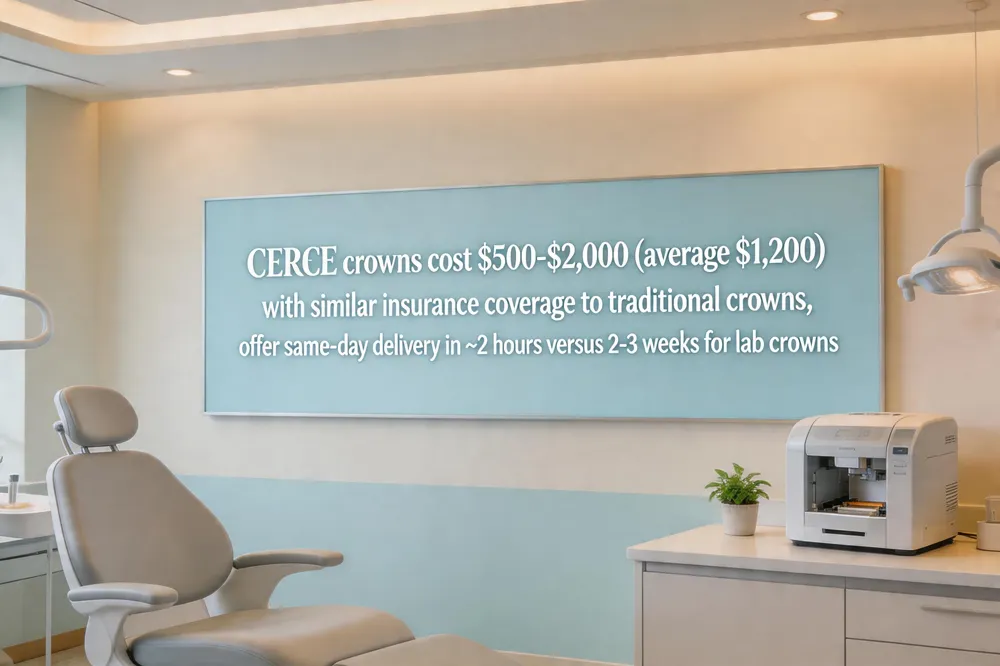
CEREC cost without insurance – $500‑$2,000 total, most patients $800‑$1,500. Higher prices include scanning and in‑office milling; fees for anesthesia or additional work may apply.
CEREC cost with insurance – After benefits patients often owe $200‑$700 (coverage 30‑60 %). We verify benefits and offer financing.
CEREC vs traditional – Traditional crowns $800‑$2,500; CEREC $500‑$2,000 (average $1,200). Both are similarly covered; CEREC removes the need for crowns and visits.
How long does a CEREC machine take? About two hours from scan to milling, versus 2‑3 weeks for a lab crown.
Why two weeks? The lab must design, fabricate and ship a restoration.
Is $2,000 a lot? It falls within the national average; insurance and financing can lower the out‑of‑pocket amount, making it an investment for a 15‑20‑year restoration.
Longevity by Material – How Long Do Different Crowns Really Last?
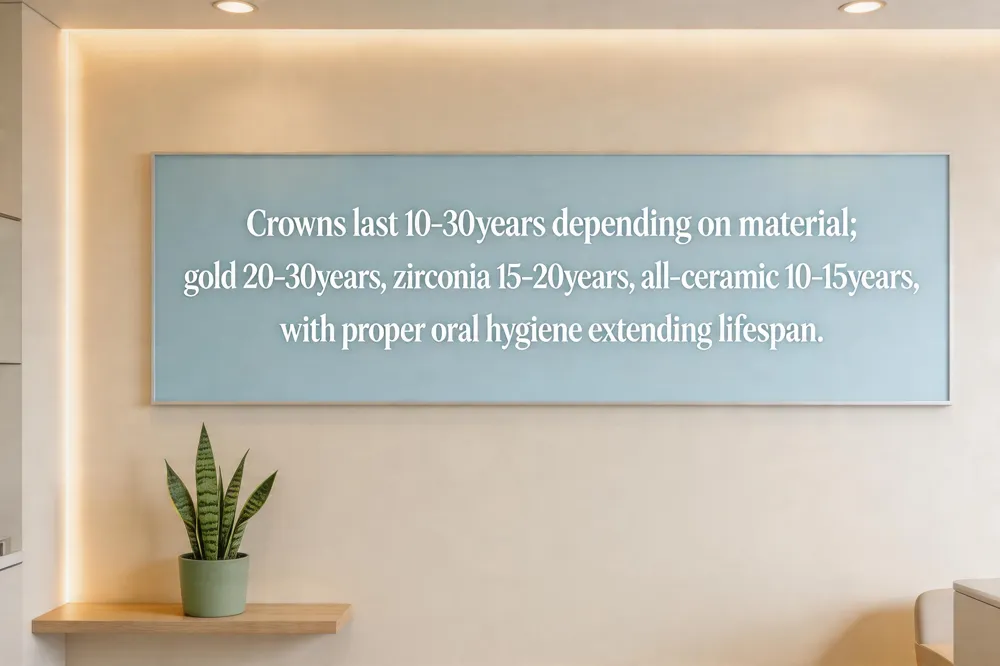 Dental crowns generally last 10‑15 years, but with diligent oral hygiene they can survive 20 years or more. Porcelain crowns average 10‑15 years (up to 30 years with excellent care), while all‑ceramic and lithium‑disilicate crowns survive 10‑15 years and may reach 20 years. Zirconia crowns are the most durable, often lasting 15‑20 years (90‑95 % survival at 5‑10 years) and are ideal for molars that endure heavy chewing. Gold crowns, a metal alloy, can remain functional for 20‑30 years, making them a gold‑standard for posterior teeth. Crowns placed after a root canal or on a molar follow the same material‑based timelines, with strong ceramics or metal offering the longest service. Traditional lab‑fabricated crowns typically survive 10‑20 years; CEREC same‑day crowns match or exceed this, lasting 10‑30 years when cared for. The key to longevity is regular brushing, flossing, bi‑annual dental check‑ups, and a night guard for bruxism. At Best Choice Dental in Totowa, NJ, we blend advanced CEREC technology with personalized care to give each crown the best chance at lasting a lifetime.
CEREC Limitations – Disadvantages, Complaints, and When Traditional Crowns Are Preferred
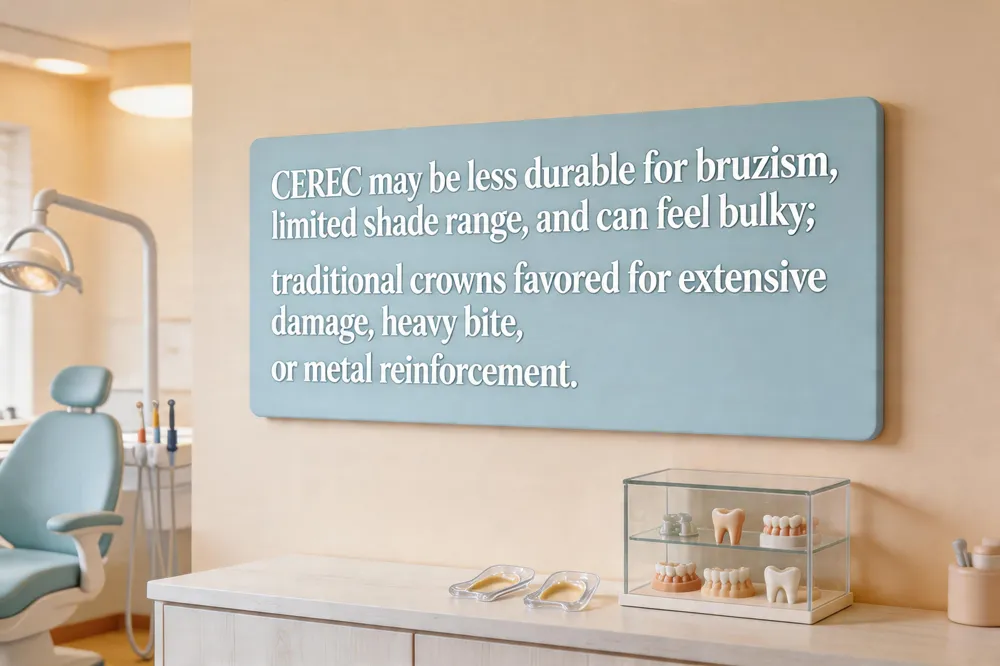 CEREC crowns are milled from a single block of high‑strength ceramic, which can be less durable than metal‑based or porcelain‑fused‑to‑metal restorations for patients who grind their teeth or have severely damaged teeth. The material’s limited shade range may make exact colour matching for front‑tooth cases more challenging than with lab‑crafted layered porcelain. Complex situations—such as extensive structural loss, large gaps, or difficult bite problems—often require a traditional laboratory‑fabricated crown that can incorporate metal reinforcement or custom shading. Cost is another factor: the CEREC system and premium ceramic blocks increase the price, and not all dentists have the required training, leading to variability in skill and outcomes. Patients sometimes report a bulky feel, minor fit adjustments, or faster wear in high‑stress molar areas. At Best Choice Dental in Totowa, we evaluate each case and recommend a traditional crown when durability, aesthetics, or budget considerations exceed what a same‑day CEREC restoration can reliably provide.
Clinical Performance, Patient Comfort, and Practitioner Adoption
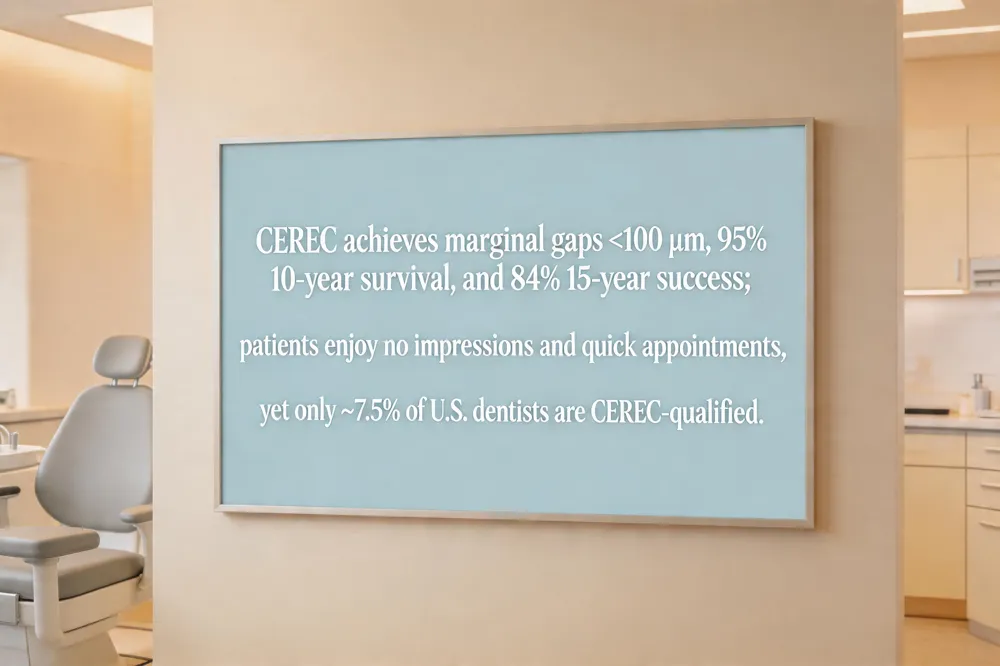 CEREC crowns are milled from a single high‑strength ceramic block, giving them a marginal gap of less than 100 µm—well under the 70‑120 µm range of conventional lab‑fabricated crowns. This precision reduces bacterial leakage and helps achieve the 95% 10‑year survival and 84% 15‑year success rates reported in clinical studies. Patients notice the difference immediately: the intra‑oral scanner eliminates messy putty impressions, shortens the appointment to about two hours, and removes the discomfort of a gag‑provoking tray. While most users are satisfied, a few report bulkiness or sensitivity when the tooth is severely compromised, and they may prefer a traditional metal‑reinforced crown for heavy‑bite areas. Regarding adoption, only about 7‑8 % of U.S. dentists (roughly 7.5 %) are CEREC‑qualified, making same‑day crowns a specialty service. At Best Choice Dental in Totowa, we assess each case individually, offering CEREC for straightforward, aesthetic restorations and traditional crowns when extra strength or a metal core is needed.
Practical Guidance for Patients – From Oral‑Hygiene Rules to Decision‑Making
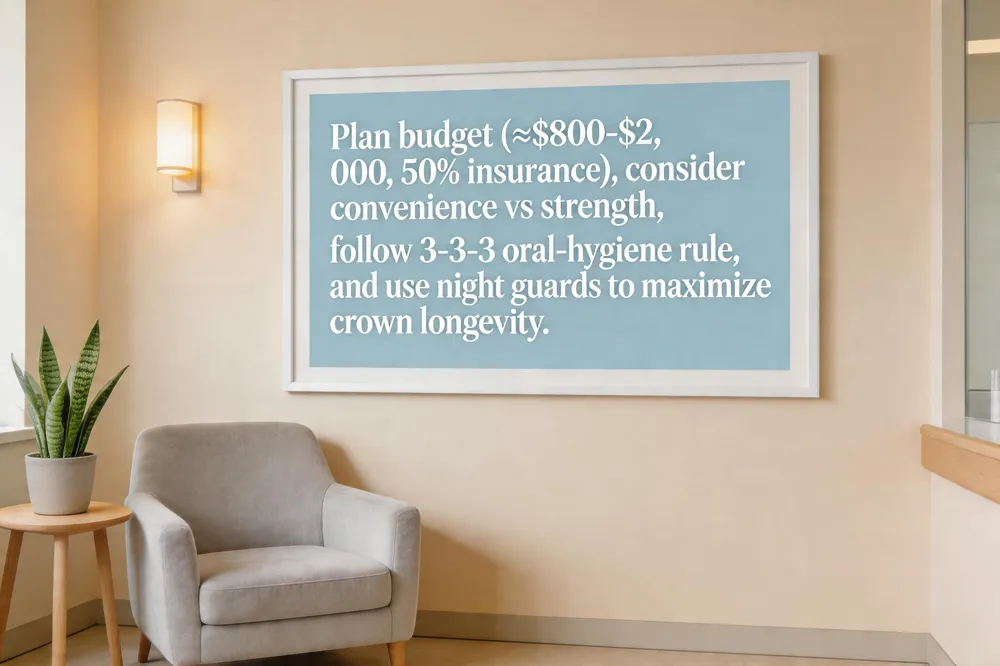 Budget planning is essential. A crown typically costs $800‑$2,000, and many plans cover about 50 % after the deductible. Best Choice Dental in Totowa offers financing options such as CareCredit and payment plans, so you can spread out the expense without compromising quality.
Choosing between CEREC and traditional crowns depends on your case. CEREC provides a same‑day, metal‑free ceramic restoration with excellent aesthetics and a precise fit, ideal for front teeth and patients seeking convenience. Traditional lab‑fabricated crowns may be better for severely damaged teeth, heavy bite forces, or when a metal substructure is needed.
Long‑term maintenance includes the 3‑3‑3 rule, regular dental check‑ups, flossing, and a night guard if you grind. Proper care can extend a crown’s life to 15‑30 years.
FAQs:
- What is the 3‑3‑3 rule for teeth? Brush three times a day, three minutes each, and avoid eating or drinking for three hours before bedtime.
- Is $2,000 a lot for a dental crown? It falls within the national average; insurance and financing can reduce out‑of‑pocket costs, making it a reasonable investment for a durable restoration lasting 15‑20 years.
- CEREC crowns complaints: Some patients experience bulkiness, fit issues on extensively damaged teeth, or faster wear on posterior teeth. Limited material options and higher technology fees can also be concerns, so we evaluate each case individually.
Balancing Convenience, Cost, and Longevity for Your Smile
When you choose a crown, you’re weighing the ease of a same‑day CEREC restoration against the proven strength of traditional lab‑fabricated options. CEREC’s chair‑side CAD/CAM workflow gives you a precise, metal‑free ceramic crown in a single visit, preserving more natural tooth structure and eliminating temporary crowns—perfect for busy families in Totowa. Traditional crowns still offer a broader material palette, such as gold or porcelain‑fused‑to‑metal, which may be preferred for heavily loaded molars. Both approaches are covered by most dental insurances; we help you navigate benefits and offer financing plans to keep out‑of‑pocket costs manageable. Ultimately, diligent oral hygiene, regular check‑ups, and protective night guards are the keys to maximizing the lifespan of any crown, and our team is dedicated to guiding you every step of the way.