Setting the Stage for a New Smile Era
In 2026, cosmetic dentistry in the United States is being reshaped by three powerful forces: ultra‑thin, minimally invasive veneers, AI‑driven design, and precise laser technologies. Digital Smile Design (DSD) platforms now combine 3‑D intra‑oral scans, facial analysis and machine‑learning algorithms to generate a personalized veneer blueprint in seconds, allowing patients to preview their future smile with augmented‑reality overlays before any tooth is touched. Laser‑based procedures—ranging from gum contouring and crown lengthening to enamel sculpting—provide micron‑level accuracy, seal blood vessels as they cut, and often eliminate the need for anesthesia, resulting in less pain, minimal bleeding and a rapid return to daily activities. These innovations align with a growing patient demand for natural‑looking, durable results that respect existing tooth structure and gum health. Market data shows the U.S. cosmetic dentistry sector will surpass $18 billion by 2026, driven by a 14 % annual growth rate and a 19 % patient‑reported increase in whitening and veneer procedures. Together, AI and laser tools enable faster, more predictable outcomes, higher satisfaction scores, and a comfortable, patient‑centered experience that defines the "Hollywood Smile 2.0" era.
AI‑Powered Smile Design and Virtual Planning
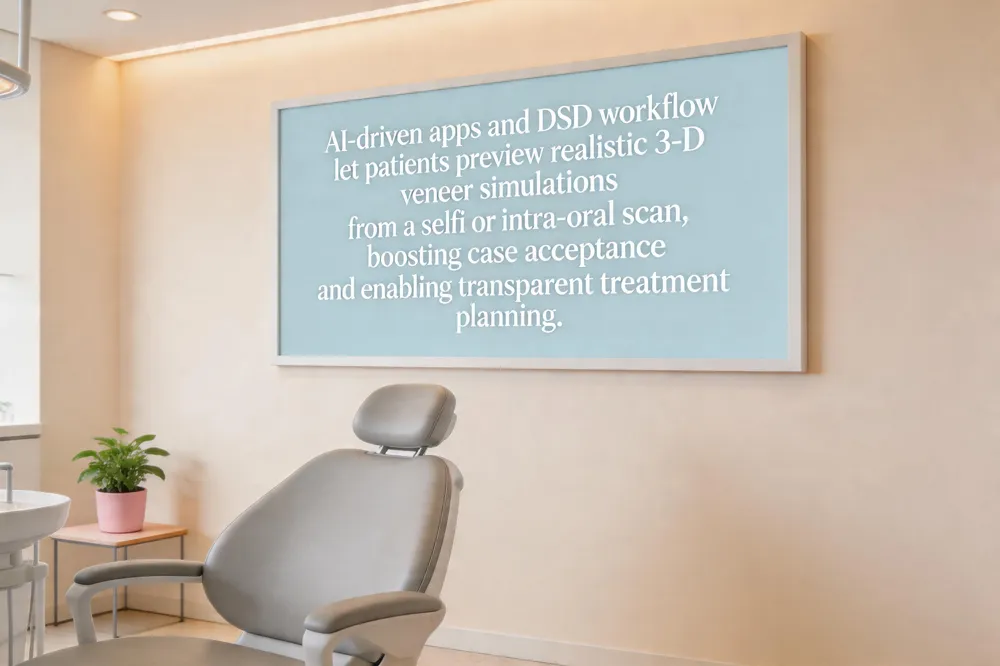 In 2026 the smile‑makeover journey often begins with a digital preview. AI‑driven apps such as Teethsi | Veneers AI, Toothfairy, and Smile Designer Pro let patients upload a selfie or intra‑oral scan and instantly generate a realistic 3‑D simulation of porcelain or composite veneers, complete with customized shade, shape and translucency. Many of these tools are free – the online “Virtual Smile Design” portals offered by dental labs, the Free Smiles Simulation website, and the DSD App (available at no charge on iOS) all provide automatic veneer mock‑ups after a single well‑lit photo upload.
The professional Digital Smile Design (DSD) workflow builds on the same technology: a high‑resolution 3‑D intra‑oral scan is combined with facial analysis, AI‑matched shade cameras, and CAD/CAM planning to produce a step‑by‑step treatment blueprint that can be shown to patients on a tablet or via augmented‑reality overlays. This visual communication reduces guesswork, boosts case acceptance, and lets patients see the final result before any tooth preparation begins.
By integrating AI‑generated previews, free online design tools, and the full DSD protocol, practices can offer a transparent, personalized, and comfortable planning experience that aligns perfectly with today’s “Hollywood Smile 2.0” expectations.
Laser Dentistry: Benefits, Risks, and Insurance
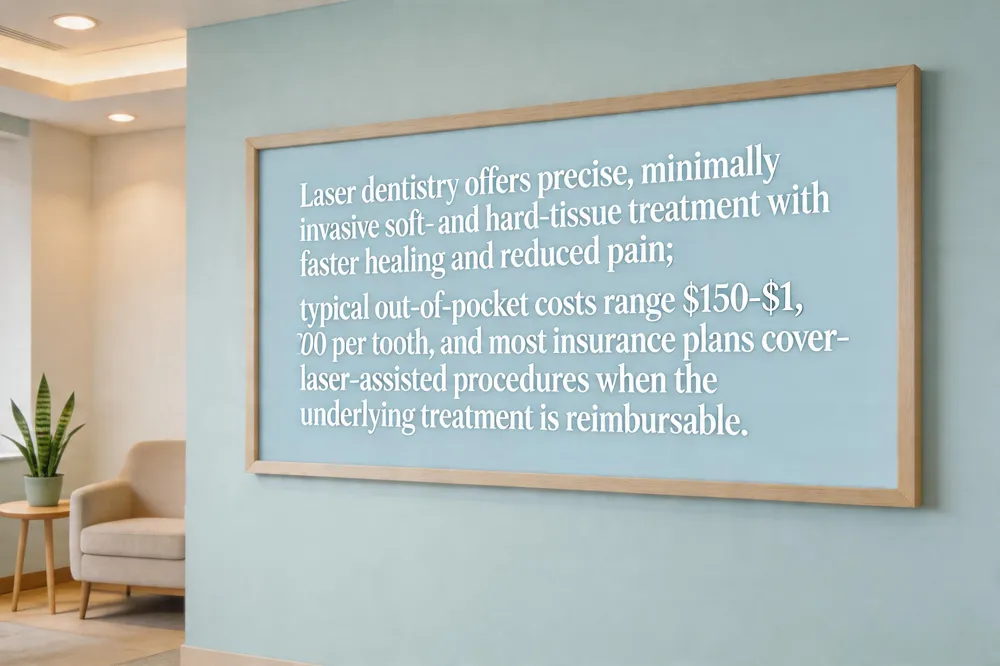 Laser dentistry has become a cornerstone of modern, minimally invasive smile make. Using focused light energy, lasers can precisely remove soft‑tissue or enamel with micron‑level accuracy, preserving surrounding structures and often eliminating the need for sutures. The technology’s ability to cauterize as it cuts reduces bleeding, swelling, and postoperative discomfort, making procedures such as gum contouring, frenectomies, and laser‑assisted cavity removal especially appealing for anxious or pediatric patients.
Side effects and safety – Most patients experience only temporary gum redness, slight swelling, or mild discomfort that resolves within a few days. In rare cases, excessive heat can irritate the pulp or cause a minor tissue burn if the laser is not properly calibrated. Protective eyewear and calibrated power settings are standard safety protocols to prevent eye injury and ensure tissue health.
Pros and cons – Benefits include faster healing, reduced pain, and the ability to treat both soft and hard tissues in a single visit. However, the high upfront cost of laser units and the need for specialized training can be a barrier for some practices. Lasers also cannot treat teeth that already have large restorations, and some procedures still require traditional rotary instruments.
Insurance and cost – Most dental insurance plans reimburse laser‑assisted procedures when the underlying treatment is covered (e.g., gum contouring, cavity fillings). Purely cosmetic laser services, such as laser whitening, are typically excluded. Out‑of‑pocket costs for laser treatments range from $150 to $350 per tooth, with more complex cases reaching $500‑$1,200. At Best Choice Dental in Totowa, NJ, we provide transparent estimates and help patients explore insurance benefits or flexible financing to keep smile upgrades affordable.
Veneer Fundamentals: Rules, Costs, and Materials
What is the 4‑8‑10 rule for veneers?
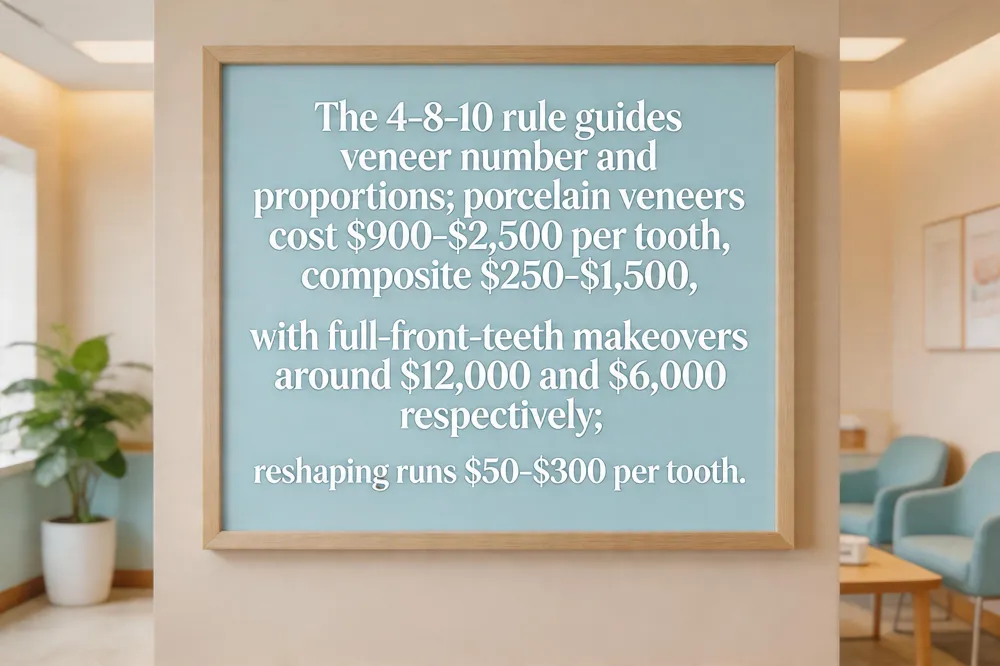
The 4‑8‑10 rule is a cosmetic‑dentistry guideline that helps determine both the number of veneers needed and the ideal tooth proportions for a natural‑looking smile. It suggests treating four teeth (typically the central incisors), eight teeth (the four front teeth on each arch from canine to canine), or ten teeth when the veneers extend to the first premolars. The rule also defines preferred widths: central incisors around 4 mm, lateral incisors about 8 mm, and canines roughly 10 mm. Using this guideline prevents an overly “perfect” look while creating balanced, symmetrical proportions. The exact number and dimensions are always customized to each patient’s anatomy and aesthetic goals.
How much do veneers cost?
Veneers typically cost between $900 and $2,500 per tooth for porcelain and $250 to $1,500 per tooth for composite resin, with national averages around $1,500 and $800 respectively. A full‑smile makeover (about 8 front teeth) runs roughly $12,000 for porcelain or $6,000 for composite veneers. Prices vary by location, dentist experience, and any preparatory work such as tooth reshaping or treating decay. Dental insurance usually does not cover veneers because they are cosmetic, although necessary underlying treatment may be reimbursed. Most practices in New Jersey, including Best Choice Dental in Totowa, offer flexible financing and in‑office payment plans to spread the cost.
What are the costs of tooth reshaping (contouring)?
Tooth reshaping, also called contouring or enameloplasty, typically costs between $50 and $300 per tooth in New Jersey, with most patients paying around $150 to $200 for a single tooth. The national average is about $215 per tooth, but prices can range from as low as $142 to as high as $435 depending on the dentist’s experience and the complexity of the work. More extensive reshaping or treating multiple teeth can push the cost up to $200‑$300 per tooth, and in rare cases where significant enamel removal is needed, the total bill may exceed $1,000 for several teeth. Because the procedure is cosmetic, it is usually not covered by insurance.
Where can I find affordable veneers in New Jersey?
Family‑oriented offices that combine advanced technology—AI‑driven digital smile design, 3‑D‑printed trial veneers, and laser‑assisted enamel contouring—often provide the best value. Best Choice Dental in Totowa, Morristown, and nearby Mountain Lakes clinics offer composite veneers (the most budget‑friendly option) and same‑day placement at lower prices. Look for promotions such as a $1,195 veneer package at New Smile Dental, and ask about financing plans or interest‑free payment options. A complimentary consultation lets you compare estimates, see AI‑generated smile simulations, and choose the practice that matches your aesthetic goals and budget.
Choosing the Right Cosmetic Dentist
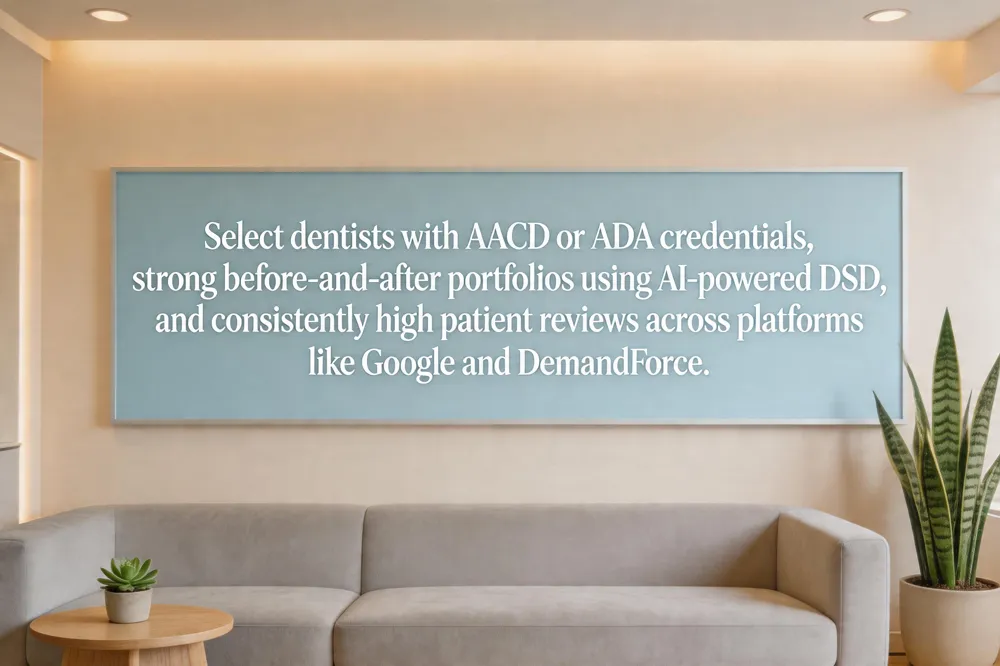 Selecting a cosmetic dentist in New Jersey begins with confirming reputable credentials and professional memberships. Look for dentists who belong to the American Academy of Cosmetic Dentistry (AACD), the American Dental Association, and state‑specific societies such as the New Jersey Dental Association. These affiliations signal adherence to rigorous standards and ongoing education.
Next, review the practice’s portfolio and patient testimonials. High‑quality before‑and‑after photos, especially those generated with digital smile design (DSD) and 3‑D intra‑oral scans, demonstrate consistency in achieving natural, balanced results. Reading reviews on Google, Birdeye, and DemandForce helps gauge patient satisfaction, communication style, and post‑procedure care.
Top cosmetic dentists in New Jersey include Dr. Peter E. Ciampi, DDS, renowned for AI‑designed veneers and a prolific portfolio of smile makeovers; Dr. Edward DeFabio and Dr. Erica DeFabio of DeFabio Dental Design, who have completed over 1,500 transformations using 3‑D‑printed trial veneers; Dr. Yash Kapadia, a board‑certified prosthodontist at Beautiful Smiles in Millburn, celebrated for full‑arch aesthetic reconstructions; and the Morristown team led by Dr. Richard J. Carrara, D.M.D., consistently rated 5.0 on Google for their blend of digital impressions, laser gum contouring, and patient‑centric care.
Aesthetic Smiles of NJ receives a 4.9‑star rating, with patients highlighting Dr. Romano’s thorough explanations, gentle technique, and natural‑looking veneer results. While a few comments note higher costs, the overwhelming consensus is that the practice delivers personalized, technologically advanced cosmetic dentistry worth the investment.
To summarize, choose a dentist who holds strong credentials, showcases a robust portfolio, leverages AI‑powered DSD and laser technologies, and enjoys positive, consistent patient reviews across reputable platforms.
Oral Hygiene Essentials and Long‑Term Care
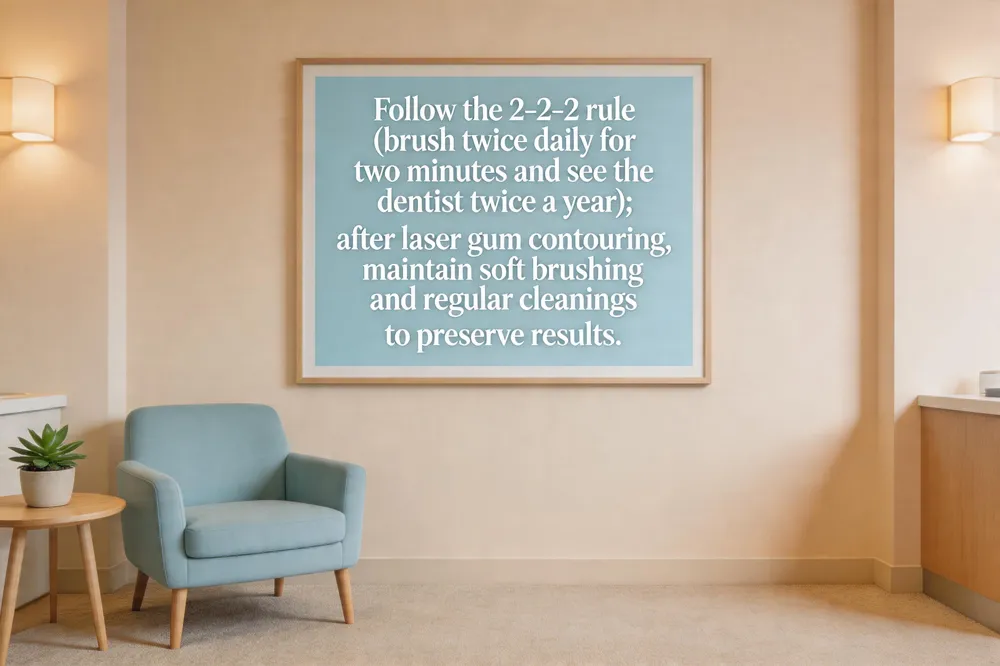 Keeping your smile bright and ready for a Hollywood‑Smile makeover starts with solid daily habits and smart preventive care. The 2‑2‑2 oral hygiene rule is a simple, three‑step guide: brush twice a day, spend two minutes each time, and see your dentist for a professional cleaning twice a year. This routine removes plaque, prevents gum disease, and creates a clean canvas for whitening or veneers.
After laser gum contouring, most patients enjoy lasting results because the laser precisely removes excess tissue and simultaneously cauterizes the area. The gum does not typically grow back; only a thin layer may regrow if the procedure was very shallow or if oral hygiene lapses. Proper post‑procedure care—soft brushing, gentle rinses, and regular check‑ups—helps preserve the new smile line.
Laser dentistry offers several advantages: pinpoint accuracy, minimal bleeding, reduced pain, faster healing, and often no need for sutures or anesthesia. It works for soft‑tissue shaping, cavity removal, and even tooth whitening. The downsides include high equipment costs, the need for specialized training, and limitations on treating teeth with existing restorations or deep interproximal cavities. Balancing these pros and cons with your aesthetic goals ensures a comfortable, long‑lasting result.
Finally, schedule professional cleanings at least twice a year and consider fluoride varnish or remineralizing pastes to protect enamel after whitening or veneer placement. Consistent preventive measures keep your smile healthy and ready for any cosmetic upgrade.
Celebrity Smiles and Public Perception
 The glittering smiles of celebrities like Taylor Swift and Donald Trump have sparked endless speculation about the secret behind their flawless looks. While neither star publicly confirms specific dental work, dentists often point to the consistent shape, length and brightness of their smiles as tell‑tale signs of high‑quality porcelain veneers. In Swift’s case, before‑and‑after images show a transition from a slightly uneven, youthful grin to a uniformly proportioned, ultra‑white smile—changes achievable through a blend of professional whitening, minor orthodontics and ultra‑thin, AI‑designed veneers. Trump’s grin, too, displays a uniform shade, seamless gap closure and a lack of natural wear patterns, suggesting thin ceramic shells bonded to the front of his teeth.
Media exposure amplifies these expectations, prompting patients to seek “celebrity‑level” results. Modern practices meet that demand with digital smile design (DSD) that uses 3‑D intra‑oral scans and AI‑assisted simulations, allowing patients to preview veneer outcomes before any tooth preparation. laser‑assisted gum contouring and minimally invasive enamel reshaping further enhance aesthetics while preserving natural tooth structure. By combining cutting‑edge technology with personalized care, we help you achieve a radiant, natural‑looking smile that rivals any star—without the need for extensive orthodontics or invasive surgery.
Integrating Technology in Practice: From 3D Printing to Same‑Day Restorations
 In 2026 the modern cosmetic dental office blends cutting‑edge tools with a patient‑first philosophy, turning a smile makeover into a comfortable, efficient experience.
3D‑Printed and Final Veneers – Using high‑resolution intra‑oral scanners, we capture a digital replica of your teeth and facial features. AI‑driven design software then creates a virtual veneer blueprint, allowing you to “test drive” the shape, translucency and shade on a 3‑D‑printed trial veneer. Once you approve the look, the same digital file is sent to a bench‑top printer that fabricates ultra‑thin, nano‑ceramic veneers in a single day, preserving as much natural enamel as possible.
Same‑Day CAD/CAM Milling Workflows – For patients who prefer a quicker turnaround, our CAD/CAM system mills porcelain or lithium‑disilicate restorations directly from the digital design. The mill can produce a precise veneer or crown in under an hour, eliminating multiple visits and temporary restorations while maintaining a marginal fit within 20 µm.
Eco‑Friendly Whitening and Nanotech Gels – Our in‑office whitening employs nanotechnology‑enhanced peroxide gels that embed remineralizing nano‑hydroxyapatite, delivering a bright shade change with minimal sensitivity. All products are packaged in recyclable containers and feature transparent ingredient lists, reflecting our commitment to sustainability without compromising results.
AI‑Driven Predictive Analytics for Longevity – Before any restoration is placed, AI algorithms analyze your bite dynamics, enamel thickness and oral habits to forecast wear patterns and color stability over the next decade. This data guides material selection—choosing between zirconia, lithium‑disilicate, or hybrid composites—and informs personalized after‑care recommendations, such as fluoride varnish or remineralizing pastes, to protect your new smile.
Together, these technologies ensure that every smile makeover is precise, minimally invasive, environmentally responsible, and built to last—delivered with the friendly, comfortable care you deserve.
Looking Ahead: A Smile Future Powered by Innovation
In 2026 the cosmetic‑dentistry landscape is being reshaped by ever‑more sophisticated AI. Platforms now analyze facial symmetry, tooth shade, and bite dynamics in seconds, producing ultra‑precise veneer designs and predictive diagnostics that improve outcomes and cut chair‑time. Family‑oriented practices across New Jersey and the broader United States are pairing this AI power with laser and 3D‑printing technologies. Laser gum contouring, laser‑assisted enamel shaping, and laser‑activated whitening deliver painless, minimally invasive results, while in‑office 3D printers and CAD/CAM milling enable same‑day veneers, crowns, and surgical guides—turning what once required weeks into a single visit. This rapid, high‑tech workflow is only as successful as the patient’s understanding of the process. Practices are therefore prioritizing education: clear visual simulations via digital smile design, AR/VR previews, and easy‑to‑read after‑care guides ensure patients know what to expect, how to protect their new smile, and why preventive care (fluoride, remineralizing pastes) is essential. When cutting‑edge tools meet informed patients, the result is a personalized, comfortable experience that turns a dream smile into a lasting reality.