Why Dry Mouth Matters for Asthmatic Children
Reduced saliva, or xerostomia, removes the mouth’s natural defense that washes away food particles, neutralizes acids, and supplies minerals for enamel repair. When asthma medications—especially inhaled corticosteroids, beta‑agonist bronchodilators, and anticholinergic agents—dry the oral tissues, the risk of dental caries rises sharply because bacteria and in a dry environment thrive. These same drugs can also irritate the throat and promote oral thrush, while frequent mouth breathing during attacks further depletes moisture. Over time, chronic dry mouth can lead to frequent cavities, gingivitis, enamel erosion, and even changes in jaw development such as high palates or posterior crossbites. Regular dental check‑ups every six months, fluoride treatments, and simple home measures like rinsing after each inhaler dose, sipping water throughout the day, and chewing sugar‑free xylitol gum help protect teeth and keep the oral environment healthy for children with asthma.
Understanding the Link Between Asthma Medications and Dry Mouth
 Bronchodilators and inhaled corticosteroids reduce saliva production, creating a dry‑mouth environment that lets cavity‑causing bacteria thrive. Mouth‑breathing, common during asthma attacks, and the acidic propellants in many inhalers further irritate oral tissues and accelerate plaque buildup. Residual medication left on the tongue or palate can also promote Candida overgrowth, leading to oral thrush.
Do inhalers ruin teeth? Inhalers that contain steroids or β‑agonists lower salivary flow and may expose teeth to acidic or sweet residues, increasing decay and gum disease risk. However, routine rinsing with water after each dose, staying hydrated, and chewing sugar‑free gum can protect the smile. Regular dental visits at our office—equipped with digital imaging and laser‑preventive care—ensure early detection and personalized treatment.
What is the fastest way to hydrate a dry mouth? Sip water frequently throughout the day, using small sips rather than large gulps. Pair this with a fluoride‑rich saliva substitute or xylitol‑sweetened gum to stimulate natural flow. Avoid caffeine and alcohol, and keep a bedroom humidifier running at night.
Miracle cure for dry mouth at night? There is no single miracle, but a humidifier, bedtime water rinse, and an over‑the‑counter saliva gel or spray provide immediate relief. If symptoms persist, our pediatric dentists can prescribe stronger saliva‑stimulating agents and apply fluoride varnish to safeguard enamel.
Our practice offers comprehensive preventive care—bi‑annual cleanings, fluoride treatments, and orthodontic screening—to keep asthmatic children’s oral health thriving.
Everyday Habits to Boost Saliva and Protect Teeth
 Frequent water sipping and humidifier use
Staying hydrated is the cornerstone of dry‑mouth management. Encourage your child to sip water throughout the day, especially before and after inhaler use, and keep a water bottle handy at school and sports activities. A cool‑mist humidifier in the bedroom adds ambient moisture at night, reducing mouth‑breathing‑related dryness and keeping the oral tissues comfortable.
Frequent water sipping and humidifier use
Staying hydrated is the cornerstone of dry‑mouth management. Encourage your child to sip water throughout the day, especially before and after inhaler use, and keep a water bottle handy at school and sports activities. A cool‑mist humidifier in the bedroom adds ambient moisture at night, reducing mouth‑breathing‑related dryness and keeping the oral tissues comfortable.
Sugar‑free gum and xylitol lozenges Chewing sugar‑free gum or sucking on xylitol‑containing lozenges stimulates the salivary glands, flushing away inhaler residue and neutralizing acids that cause cavities. Xylitol also has anti‑cariogenic properties, making it a safe, child‑friendly option. Choose products without acidic flavorings to protect enamel.
Fluoride toothpaste and professional fluoride applications Brush twice daily with a fluoride toothpaste (pea‑size for ages 4 +). For children under three, use a smear of fluoridated paste. In‑office fluoride varnish or high‑fluoride gels, applied every six months, give an extra layer of protection when saliva is reduced. Our practice offers personalized preventive plans, digital imaging, and gentle, anxiety‑free care to keep your asthmatic child’s smile bright and healthy.
Chewing gum and asthma While gum does not treat asthma itself, it mitigates the dry‑mouth side effects of inhaled medications by boosting saliva flow, reducing cavity risk, and helping clear medication residue. It is a simple, complementary habit alongside proper inhaler technique and regular dental visits.
How to increase saliva naturally Sip water, use a humidifier, chew sugar‑free gum, and enjoy water‑rich fruits (cucumber, melon). Avoid caffeine, alcohol, and tobacco. If dryness persists, consult us about saliva substitutes or prescription options.
Home remedies for dry mouth Keep a spray bottle of plain water, rinse with an alcohol‑free mouthwash, and try a gentle baking‑soda‑salt rinse. Oil‑pulling with coconut oil for 10–15 minutes can also soothe oral tissues. Our dental team can guide you on the safest, most effective home strategies.
Dental Care Routine and Professional Preventive Measures
 A consistent home‑care routine combined with personalized preventive dentistry is the cornerstone of oral health for children with asthma.
Twice‑daily brushing with fluoride toothpaste – Begin brushing as soon as the first baby tooth appears and assist until about age eight. Use a smear of fluoride toothpaste for children under three and a pea‑size amount for those four and older. Brushing twice a day with a soft‑bristled brush removes plaque that thrives in the dry‑mouth environment created by inhaled bronchodilators and steroids.
Fluoride varnish and high‑fluoride toothpaste for high‑risk kids – Asthmatic children often experience xerostomia, which weakens the natural protective role of saliva. Our office applies fluoride varnish every six months and can prescribe high‑fluoride toothpaste (e.g., 5000 ppm) for children at elevated risk of caries or who use a spacer device and inhalers.
Regular six‑month dental visits and individualized care plans – Routine check‑ups allow us to detect early decay, monitor gingivitis, and provide professional cleanings. For children whose asthma medication heightens their risk, we may schedule visits every three to four months, apply additional topical fluoride, and tailor oral‑hygiene instructions.
Dental management of asthmatic patient – We coordinate care with the child’s physician, ensuring asthma is well‑controlled before appointments. A short‑acting bronchodilator with a spacer is used 10‑15 minutes prior to treatment. The child rinses the mouth after each inhaled steroid dose to reduce xerostomia, candidiasis, and caries. A calm environment, rubber‑dam isolation, and emergency inhaler access keep the visit safe and comfortable.
Dental extraction in asthmatic patient – Prior to extraction we verify recent pulmonary function or peak‑flow readings and give a bronchodilator 15 minutes beforehand. We favor local anesthesia with minimal or no vasoconstrictor, monitor oxygen saturation throughout, and are prepared to treat bronchospasm with inhaled medication. Post‑procedure observation and a brief reassessment of peak flow ensure a smooth recovery.
Dental check‑ups frequency – Six‑month examinations are standard for early caries detection and dry‑mouth management. High‑risk children may benefit from more frequent visits (every three to four months) for fluoride varnish, sealants, and intensive oral‑hygiene counseling.
Our practice combines advanced technology—digital imaging, laser‑assisted cleanings, and laser‑stoneite drying—with a friendly, personalized approach to keep asthmatic children smiling confidently.
Special Considerations: Nighttime and School Settings
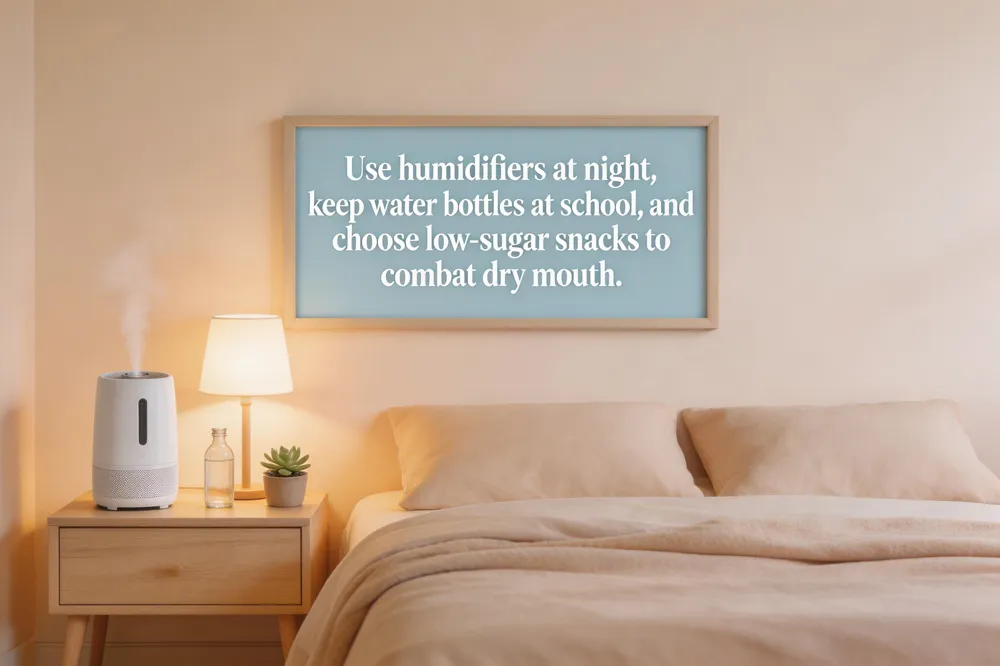 Managing dry mouth for asthmatic children is easiest when you create a comfortable oral‑care environment both at home and at school.
Use a bedroom humidifier – A cool‑mist humidifier adds ambient moisture, reducing overnight mouth‑breathing and xerostomia. Keep it running while the child sleeps to keep oral tissues hydrated.
Keep a water bottle handy at school – Frequent sips of plain water (or sugar‑free drinks) throughout the day “ flushes food particles, stimulates saliva flow, and prevents the sticky feeling of a dry mouth.
Choose low‑sugar, low‑acid snacks – Offer fresh fruits, vegetables, cheese, or yogurt instead of candy, soda, or citrus fruits. These options limit acid attacks and bacterial growth when saliva is reduced.
Fastest way to cure dry mouth – Sip water continuously, chew sugar‑free gum or xylitol lozenges, and use an OTC saliva‑containing mouthwash such as Ifizers and avoid alcohol‑based mouthwashes.
Dry mouth guidelines – Stay hydrated, avoid caffeine/alcohol, use fluoride toothpaste and regular dental check‑ups, and discuss medication side‑effects with the pediatrician.
Fix dry mouth from asthma medicine – Rinse the mouth with water after each inhaler, keep a water bottle nearby, chew sugar‑free gum, consider saliva substitutes, and talk to the doctor about adjusting the inhaler formulation if needed.
When to Seek Professional Help and Advanced Options
 Persistent xerostomia that does not improve with water rinsing, sugar‑free gum, or a humidifier deserves a dental visit. Our pediatric team can evaluate saliva flow, apply high‑strength fluoride varnish, and discuss prescription stimulants such as pilocarpine or cevimeline.
Saliva substitutes for dry mouth – Over‑the‑counter options like Biotene spray or gel, XyliMel lozenges, and glycerin‑based mouth sprays moisten the mouth several times daily (wait 15 min before eating). For severe cases we may prescribe saliva‑stimulating medication and combine it with fluoride treatments to protect enamel.
Naturopathic treatment for dry mouth – We recommend sipping herbal teas, using xylitol‑sweetened gum, and a gentle salt‑baking soda rinse to mimic saliva. Oil‑pulling with coconut oil, omega‑3 supplements, and a cool‑mist humidifier can further relieve dryness.
Sjögren’s syndrome dry mouth treatment – Management includes frequent hydration, prescription stimulants, fluoride varnish, and regular dental check‑ups to prevent decay. Avoid caffeine, alcohol, and sugary foods, and discuss any medication adjustments with your dentist or physician.
Key Takeaways for Parents
• Rinse after every inhaler dose – a quick swish of water (or a fluoride mouth‑wash) removes medication residue and helps keep the mouth moist. • Maintain hydration and use a humidifier – encourage regular sips of water throughout the day and place a cool‑mist humidifier in the child’s bedroom to combat mouth‑breathing‑related dryness. • Incorporate fluoride and sugar‑free gum – brush twice daily with fluoride toothpaste, consider professional fluoride varnish, and let the child chew xylitol‑sweetened, sugar‑free gum after meals to stimulate saliva and protect enamel. • Schedule regular dental visits – aim for a check‑up at least every six months (or more often if recommended) so the dentist can monitor for early caries, apply preventive fluoride, and adjust care plans as needed.