Why Asthma Matters for Your Child’s Teeth
Asthma and its treatments create a perfect storm for oral health. Inhaled steroids and β‑agonists dry the mouth, lower saliva, and leave acidic residues that fuel plaque, enamel erosion, and cavities. Mouth‑breathing during attacks further reduces moisture, while steroid inhalers can trigger oral thrush. The main preventive goals are to keep the mouth moist, remove medication residue, and strengthen enamel. Brushing twice daily with an ADA‑approved fluoride toothpaste, flossing each night, rinsing after every inhaler use, and drinking fluoridated water are essential. Regular six‑month check‑ups let the dentist apply fluoride varnish, sealants, and monitor gum health. Close communication between the child’s pediatrician, pulmonologist, and dentist ensures asthma is well‑controlled before treatment and that any medication interactions are safely managed.
Understanding Asthma’s Impact on Oral Health
Key Impacts of Asthma on Oral Health
| Impact | Primary Cause(s) | Preventive Measures |
|---|---|---|
| Increased dental caries | Reduced saliva flow, medication residues, mouth‑breathing | Rinse after inhaler use, use spacer, drink fluoridated water, fluoride varnish |
| Gingival bleeding | Dry mouth, plaque accumulation | Twice‑daily brushing with soft bristles, flossing, professional cleanings |
| Dental erosion | Acidic inhaler particles, dry mouth | Post‑inhaler water rinse, avoid acidic drinks, use fluoride mouthwash |
| Dentofacial changes (e.g., higher palatal vault, crossbites) | Chronic mouth‑breathing | Early orthodontic evaluation (Rule of 7), monitor growth, intervene when needed |
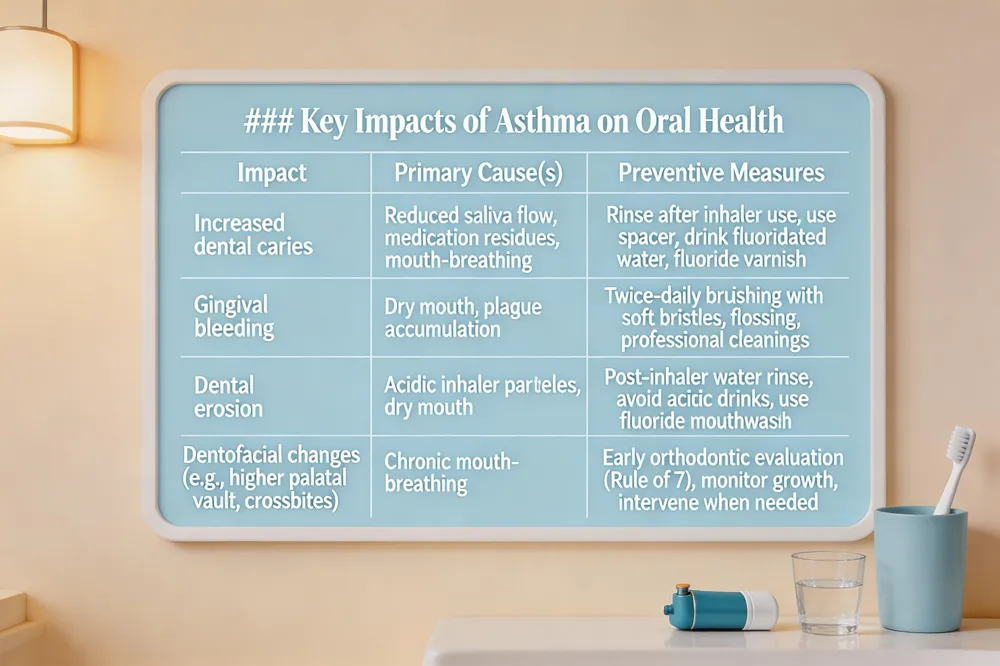 Because many asthmatic children also breathe through their mouths—especially at night—the risk of dry‑mouth‑related decay is further amplified. Rinsing the mouth with water or a fluoride mouthwash after each inhaler use, using a spacer device, and drinking fluoridated water throughout the day are simple yet effective ways to counteract these effects.
How does asthma affect your teeth? Asthmatic participants have a significantly higher mean number of teeth with dental caries, gingival bleeding, and dental erosion than non‑asthmatics (p < 0.05). The reduced saliva flow, medication residues, and mouth‑breathing all work together to accelerate decay and gum inflammation.
What is the rule of 7 in pediatric dentistry? The Rule of 7 recommends that children receive their first orthodontic evaluation by age 7. By this time, the first permanent molars and incisors have usually erupted, allowing the pediatric dentist to check for crowding, overbites, underbites, and crossbites. Early assessment is especially important for asthmatic children, who may develop dentofacial changes such as a higher palatal vault or posterior crossbites linked to chronic mouth‑breathing.
At our practice we offer comprehensive preventive care—including fluoride varnish, sealants, and personalized oral‑hygiene coaching—to protect at‑risk teeth. Our advanced technology (digital X‑rays, air‑polishing, and laser dentistry) allows us to detect early decay and enamel wear with minimal radiation exposure. We coordinate closely with your child’s pediatrician or pulmonologist, keep an inhaler on hand during every visit, and tailor sedation plans (nitrous oxide or ketamine) to ensure a calm, safe experience. With regular six‑month check‑ups, soft‑bristled brushes, fluoride toothpaste, and diligent post‑inhaler rinsing, we can keep your asthmatic child’s smile healthy and bright.
Daily Oral‑Hygiene Routine for Asthmatic Children
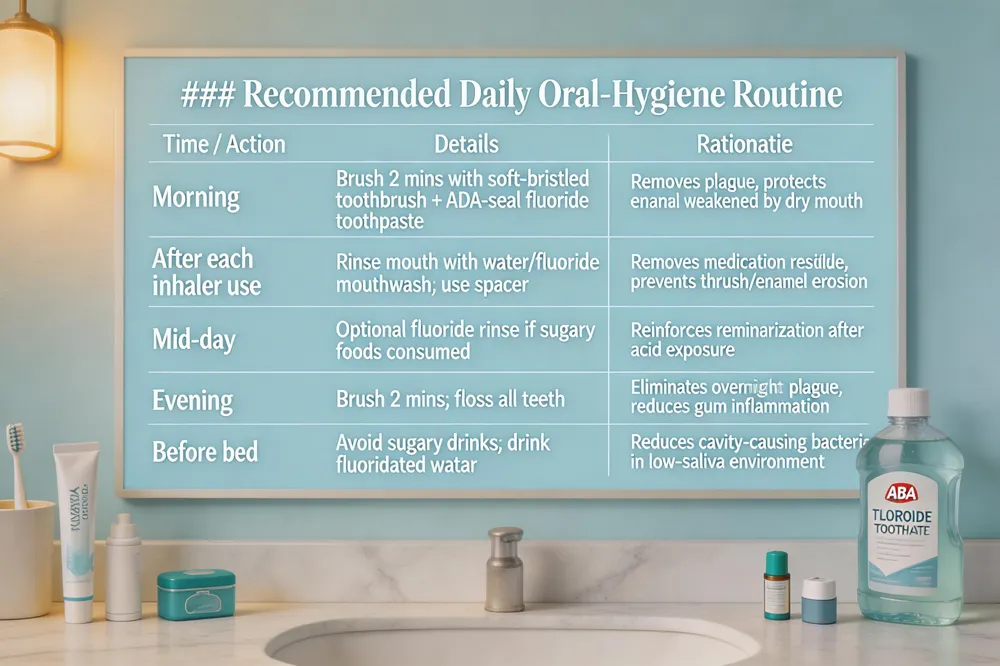
Recommended Daily Oral‑Hygiene Routine
| Time / Action | Details | Rationale |
|---|---|---|
| Morning | Brush 2 minutes with soft‑bristled toothbrush + ADA‑seal fluoride toothpaste | Removes plaque, protects enamel weakened by dry mouth |
| After each inhaler use | Rinse mouth with water (or fluoride mouthwash); use spacer when possible | Removes medication residue that can erode enamel and cause thrush |
| Mid‑day | Optional fluoride rinse if sugary foods consumed | Reinforces remineralization after acid exposure |
| Evening | Brush 2 minutes; floss all teeth | Eliminates plaque that accumulates overnight, reduces gum inflammation |
| Before bed | Avoid sugary drinks; drink water or fluoridated water | Reduces substrate for cavity‑causing bacteria in low‑saliva environment |
 At our pediatric dental office we combine gentle, high‑tech care with a personalized routine that protects the teeth of children who use asthma inhalers. First, brush twice a day with a soft‑bristled toothbrush and a fluoride toothpaste bearing the ADA seal; two minutes each session is enough to remove plaque while preserving enamel that may be vulnerable from dry mouth. Nighttime flossing clears the spaces where plaque hides, reducing the risk of cavities and gum disease.
After every inhaler use, rinse the mouth with water (or a fluoride mouthwash) and, whenever possible, use a spacer device; this removes medication residue that can erode enamel and cause oral thrush. Limit sugary drinks and snacks—especially fruit juices, sodas, and sports drinks because they feed cavity‑causing bacteria that thrive when saliva is reduced.
What should kids with asthma avoid? They should steer clear of known asthma triggers such as tobacco smoke, strong odors, dust mites, pollen, pet dander, mold, sudden temperature changes, and, when identified, aspirin/NSAIDs or sulfite‑containing foods.
What is the 3‑3‑3 rule for teeth? The 3‑3‑3 rule (brush three times a day for three minutes, wait three hours after eating) is not evidence‑based. Dental professionals recommend brushing twice daily for two minutes, waiting 30‑60 minutes after acidic foods, and flossing daily for optimal protection.
Our team offers fluoride varnish, sealants, and regular cleanings using state‑of‑the‑art equipment to keep asthmatic children smiling confidently.
Preventive Dental Visits and Professional Care
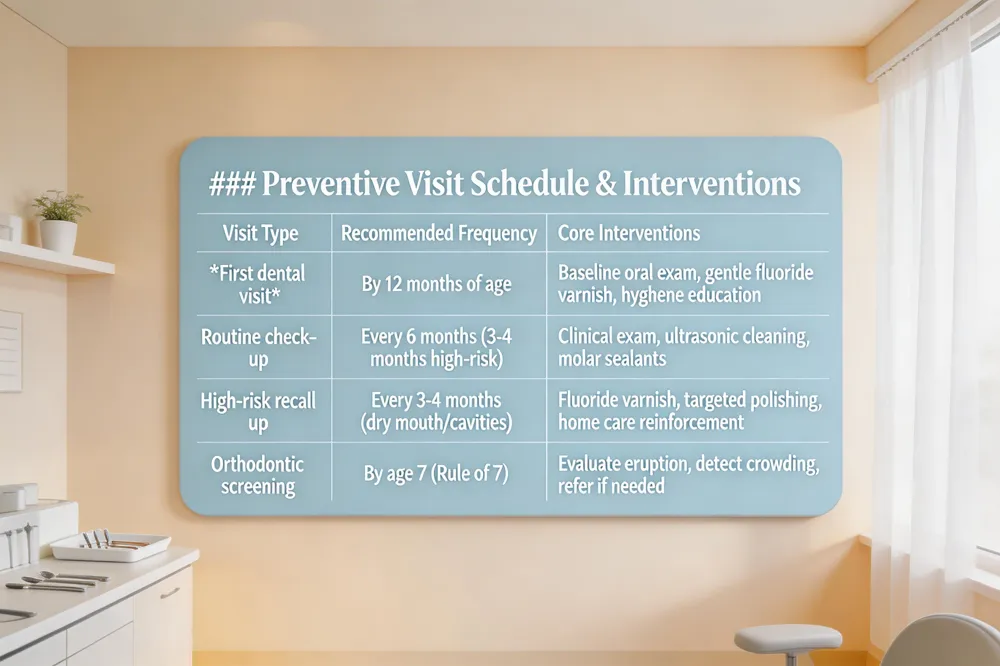
Preventive Visit Schedule & Interventions
| Visit Type | Recommended Frequency | Core Interventions |
|---|---|---|
| First dental visit | By 12 months of age | Baseline oral exam, gentle fluoride varnish, hygiene education |
| Routine check‑up | Every 6 months (or every 3‑4 months for high‑risk) | Clinical exam, ultrasonic cleaning, sealant placement on molars |
| High‑risk recall | Every 3‑4 months if dry mouth or recent cavities | More frequent fluoride varnish, targeted polishing, reinforcement of home care |
| Orthodontic screening | By age 7 (Rule of 7) | Evaluate eruption, detect crowding/crossbites, refer if needed |
 First Dental Visit by 12 Months
Our practice recommends that a child’s inaugural dental exam occur no later than the first birthday. Early evaluation lets us assess oral development, begin gentle fluoride varnish applications, and establish a personalized hygiene plan before cavities take hold.
Regular Six‑Month Check‑Ups (More Often if High‑Risk)
For most children, a semi‑annual visit is ideal. Those with asthma‑related dry mouth or a history of cavities may benefit from appointments every three to four months, allowing timely professional cleanings, sealant placement, and reinforcement of brushing techniques.
Fluoride Varnish, Sealants, and Professional Cleanings
We offer ADA‑approved fluoride varnish, high‑strength sealants on molars, and thorough ultrasonic cleanings—all performed with state‑of‑the‑art equipment to protect enamel and reduce plaque buildup.
Coordinating with Pediatrician/Pulmonologist
Our team communicates directly with your child’s medical providers, reviewing inhaler types, dosages, and asthma control status to tailor dental treatment safely.
AAPD Screening Recommendations
Following AAPD guidelines, we screen every patient for asthma, document triggers, and ensure rescue inhalers are on hand during visits.
Dental management of asthmatic patient pdf
The dental management of an asthmatic patient begins with a thorough medical history that identifies trigger factors, current medications, and the severity of the disease. Before treatment, the clinician should schedule appointments at times when the patient’s asthma is well‑controlled, avoid exposure to allergens (e.g., dust, strong odors) in the operatory, and ensure that rescue inhalers or a bronchodilator are readily available. During procedures, short‑acting β‑agonists should be used cautiously to prevent xerostomia and candidiasis, and any glucocorticoid therapy should be considered when assessing wound healing and infection risk. An emergency protocol must be in place, including immediate administration of a prescribed inhaler, supplemental oxygen, and, if needed, emergency services.
Dental management of asthmatic patient ppt
A dental‑patient management presentation for asthmatic patients should begin with an overview of asthma pathophysiology and the clinical signs that can affect oral care. It then outlines pre‑appointment precautions, such as confirming the patient’s latest inhaler dose, scheduling visits for late morning or afternoon, and avoiding materials that may trigger bronchospasm (e.g., dentifrices, sulfites, cotton rolls, fluoride trays, and methyl methacrylate). The slides emphasize the need for an emergency kit on hand, including a metered‑dose bronchodilator and supplemental oxygen, and provide a step‑by‑step protocol for treating an acute asthma attack in the dental chair.
Aapd asthma
The American Academy of Pediatric Dentistry (AAPD) advises that dental clinicians screen every patient for asthma and obtain a detailed medical history, including current medications, recent attacks, and trigger factors. Before treatment, the dental team should ensure the patient’s rescue inhaler is readily available, the clinic’s emergency kit contains albuterol and epinephrine, and that oxygen and suction equipment are on hand. If a patient experiences an acute asthmatic attack during a visit, the practitioner should seat them upright, administer supplemental oxygen, give a fast‑acting bronchodilator (e.g., albuterol), and, if the attack does not improve, provide intramuscular epinephrine (0.01 mg/kg) while calling emergency medical services.
Managing Dental Treatments Safely
Safe Treatment Modifications for Asthmatic Patients
| Procedure | Consideration | Modification / Precaution |
|---|---|---|
| Local anesthesia | Asthma severity, epinephrine sensitivity | Use plain lidocaine for poorly‑controlled asthma; limit epinephrine to 1:200 000, lowest dose |
| Nitrous oxide sedation | Active wheezing, airway reactivity | Confirm physician clearance; avoid if wheezing present; use supplemental O₂ |
| Ketamine sedation | Need for deeper sedation | Preferred for bronchodilation; avoid opioids/benzodiazepines unless cleared |
| Dental materials | Potential allergens (sulfites, strong odors) | Use low‑odor materials; avoid sulfite‑containing products; keep operatory ventilation high |
| Emergency protocol | Risk of acute asthma attack | Have rescue inhaler, spacer, O₂, epinephrine ready; seat upright, monitor SpO₂, call EMS if no improvement |
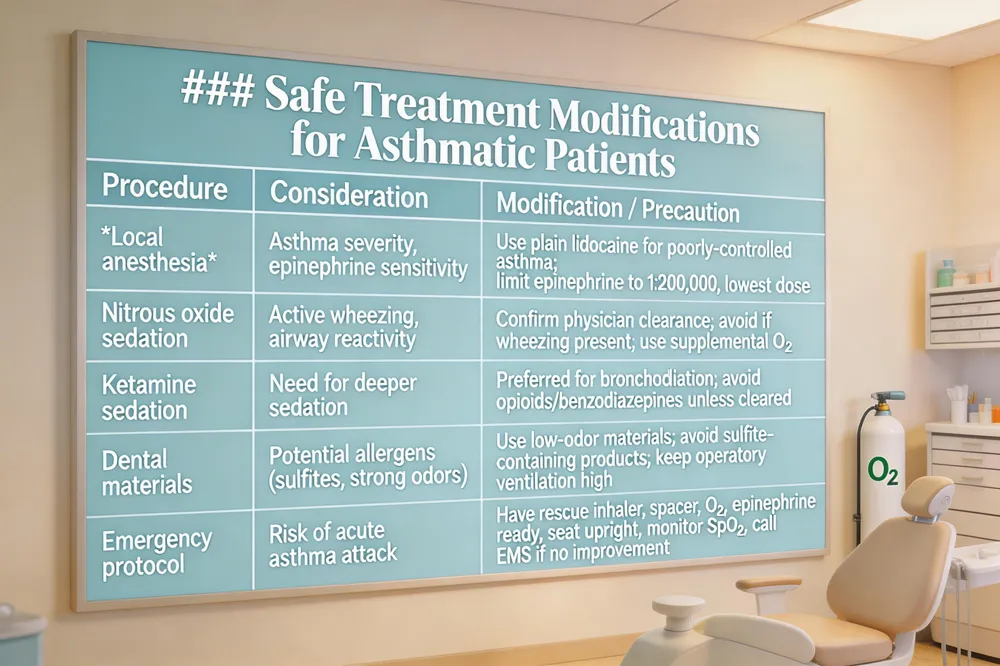 At our practice we combine advanced technology with a gentle, personalized approach to keep asthmatic children safe during every procedure.
Local Anesthetic & Vasoconstrictor Selection
We review the child’s asthma severity, recent attacks and medication list before any injection. Plain lidocaine is preferred for poorly‑controlled asthma; if epinephrine is needed for hemostasis we use the lowest effective concentration (1:200,000) and limit the dose. A short‑acting bronchodilator (e.g., albuterol) is given 10–15 minutes before the visit and pulse‑oximetry monitors oxygen saturation throughout.
Nitrous Oxide & Sedation
Nitrous oxide (laughing gas) with supplemental oxygen is safe for mild‑to‑moderate asthma, but we confirm clearance with the child’s physician and avoid it during active wheezing. For deeper sedation we use ketamine, which provides bronchodilation, while opioids and benzodiazepines are avoided unless medically cleared.
Emergency Preparedness
Our operatory is stocked with a rescue inhaler, spacer, oxygen delivery system and epinephrine. If an attack begins, we seat the child upright, administer the inhaler, and monitor SpO₂. Persistent wheeze, cyanosis or inability to speak triggers immediate emergency services and supplemental oxygen.
Medication Interactions to Avoid
Aspirin, other salicylates and most NSAIDs can provoke bronchospasm and are not prescribed; acetaminophen is the analgesic of choice. We also steer clear of beta‑blockers that could blunt bronchodilator effects.
By coordinating with your child’s pediatrician, using protective techniques (spacers, water rinses after inhaler use), and providing regular fluoride varnish and sealants, we ensure a safe, comfortable dental experience for every asthmatic patient.
Creating an Asthma‑Friendly Dental Environment
Features of an Asthma‑Friendly Dental Office
| Feature | Purpose | Implementation |
|---|---|---|
| HEPA filtration & air exchange | Remove dust, strong scents, allergens | Install high‑efficiency filters, maintain regular air turnover |
| Rescue inhaler & spacer at each operatory | Immediate access during attack | Tray‑mounted personal inhaler + stocked metered‑dose bronchodilator |
| Staff asthma training | Consistent emergency response | Review action plans, conduct drills, use checklist before each appointment |
| Stress‑reduction tools | Lower anxiety‑triggered bronchospasm | Child‑friendly waiting area, video distraction, brief breathing‑relaxation routine |
| Appointment timing | Schedule when asthma is best controlled | Prefer late morning/afternoon slots, avoid early morning when airway reactivity may be higher |
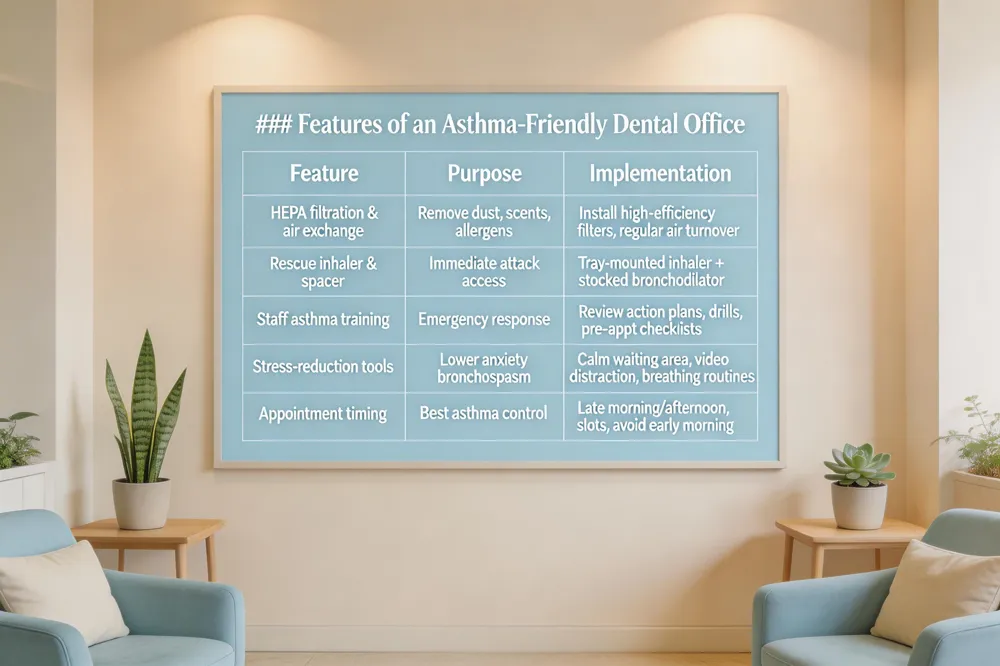 At our practice we design every visit to keep asthmatic children safe, comfortable, and confident.
Operatory ventilation and odor control – high‑efficiency particulate air (HEPA) filtration and a gentle air‑exchange system remove dust, strong cleaning scents, and other allergens that could trigger bronchospasm.
Rescue inhalers, spacers, and emergency meds are stocked in every operatory; a child’s personal inhaler is always placed on the tray and a metered‑dose bronchodilator with supplemental oxygen is ready for immediate use.
Staff training on asthma action plans – every team member reviews the child’s asthma severity, recent attacks, and medication list before treatment, and we practice a step‑by‑step emergency protocol that includes inhaler administration, oxygen delivery, and rapid referral if needed.
Stress‑reduction techniques for anxious children – we offer a calm, child‑friendly waiting area, use distraction tools (tablet videos, music), and provide a brief “breathing‑and‑relaxation” routine before the chair to minimize anxiety‑related asthma flares.
Dental management of asthmatic patient pdf – A thorough medical history guides scheduling when asthma is well‑controlled, avoids operatory irritants, and ensures rescue inhalers are on hand. Emergency procedures include immediate inhaler use, oxygen, and emergency services if required.
Dental management of asthmatic patient ppt – The presentation outlines asthma pathophysiology, pre‑appointment precautions (latest inhaler dose, late‑morning/afternoon slots), triggers to avoid (sulfites, certain dental materials), and a detailed emergency kit protocol with a checklist for each visit.
Our advanced technology, personalized care plans, and compassionate team work together to protect your child’s oral health while respecting their respiratory needs.
A Healthy Smile Is Within Reach – Even With Asthma
Children with asthma face a higher risk of cavities because inhaled medicines can dry the mouth and promote bacterial growth. The most effective daily routine includes brushing twice a day with a soft‑bristled toothbrush and ADA‑seal fluoride toothpaste, flossing at night, rinsing the mouth after each inhaler use, and drinking fluoridated water. Limiting sugary drinks and snacks and using a spacer with inhalers further protect enamel. Success relies on teamwork: parents keep the dentist informed about every asthma medication, dosage, and recent attacks; the dental team coordinates with the child’s pediatrician or pulmonologist to ensure asthma is well‑controlled before any procedure; and the child’s inhaler is always on hand at the office. By working together, we can prevent dry‑mouth complications, oral thrush, and decay. Schedule your child’s regular six‑month check‑up (or more often if high‑risk) at Best Choice Dental today—our friendly staff, advanced technology, and personalized care plan will keep your asthmatic child’s smile bright and healthy.