Why Nutrition Matters for Oral Health
At Best Choice Dental we know that what you eat directly influences the strength of your teeth and gum health. Calcium‑rich foods such as milk, cheese, yogurt, leafy greens and almonds provide the mineral base for enamel remineralization, while vitamin D from fortified dairy, fatty fish and sunlight helps the body absorb calcium efficiently. Phosphorus in meat, fish, nuts and grains works with calcium to rebuild tooth structure after acid attacks. Vitamin C‑rich fruits and vegetables support collagen for firm gum tissue, and vitamin A from sweet potatoes and carrots maintains the keratin layer of enamel. By choosing these options and limiting sugary, acidic snacks, you give your mouth the best defense against decay. Our team uses imaging and counseling to create a diet plan that complements your treatment, ensuring comfortable oral health.
Building Strong Teeth and Bones
 A balanced diet is a cornerstone of oral health at our practice, where we combine state‑of‑the‑art technology with personalized, comfortable care.
What foods support strong teeth and bones? Calcium‑rich options such as low‑fat milk, cheese, yogurt, fortified plant milks and leafy greens (kale, collard greens) supply the mineral backbone for enamel and bone. Vitamin D from fortified foods, sunlight, eggs and fatty fish (salmon, sardines) enhances calcium absorption. Crunchy fruits and vegetables—apples, celery, carrots—and nuts like almonds act as natural toothbrushes, boost saliva flow, and provide additional calcium and phosphorus for remineralizing enamel. Dental "superfoods" such as dark chocolate (in moderation), garlic, strawberries and green or black tea add antioxidants, fluoride and antimicrobial compounds that protect enamel and reduce gum inflammation.
What vitamins are important for strong teeth? Vitamins A, C, D and K are essential: A supports mucous membranes and saliva, C aids collagen formation for healthy gums, D promotes calcium uptake and bone density, and K directs calcium to teeth and bones. B‑complex vitamins, especially B12, also aid gum tissue repair.
What are the best foods for a healthy smile? Low‑fat dairy for calcium and casein, fortified soy or tofu for plant‑based options, crunchy fibrous produce for mechanical cleaning, fatty fish for vitamin D, nuts for phosphorus, and a modest amount of dark chocolate for antioxidants. Drinking fluoridated water throughout the day rinses food particles, neutralizes acids and completes an oral‑friendly diet.
Cavity‑Low Snacks for Kids and Adults
 At Best Choice Dental in Totowa, NJ we know that nutrition plays a key role in keeping smiles healthy. Our team combines state‑of‑the‑art digital imaging, gentle anesthesia, and personalized preventive care to help you maintain strong teeth, and diet is a powerful ally.
Low‑risk, saliva‑stimulating snacks – Crunchy, fibrous foods such as fresh apples, carrots, celery, and cucumbers act like natural toothbrushes while increasing saliva flow, which neutralizes acids and washes away food particles. Dairy options like cheese cubes, unsweetened Greek yogurt, and a glass of low‑fat milk provide calcium and phosphate that rebuild enamel. A handful of almonds, walnuts, or sunflower seeds supplies tooth‑friendly minerals without sticking to teeth. Chewing sugar‑free gum, especially xylitol‑sweetened, after snacking further boosts saliva and helps rinse the mouth.
Kid‑friendly choices that protect enamel – Cheese sticks, plain yogurt, and milk are calcium‑rich and low‑sugar, perfect for growing mouths. Apple slices, carrot sticks, and celery give a gentle scrubbing action. Whole‑grain popcorn or whole‑wheat crackers offer fiber and chew‑time without the high sugar of processed snacks. Pair these foods with water to rinse away residues.
By incorporating these cavity‑low snacks and visiting our office for regular cleanings, fluoride treatments, and personalized dietary counseling, families can enjoy vibrant, healthy smiles for life.
Fruit, Vegetables, and the Best Choices
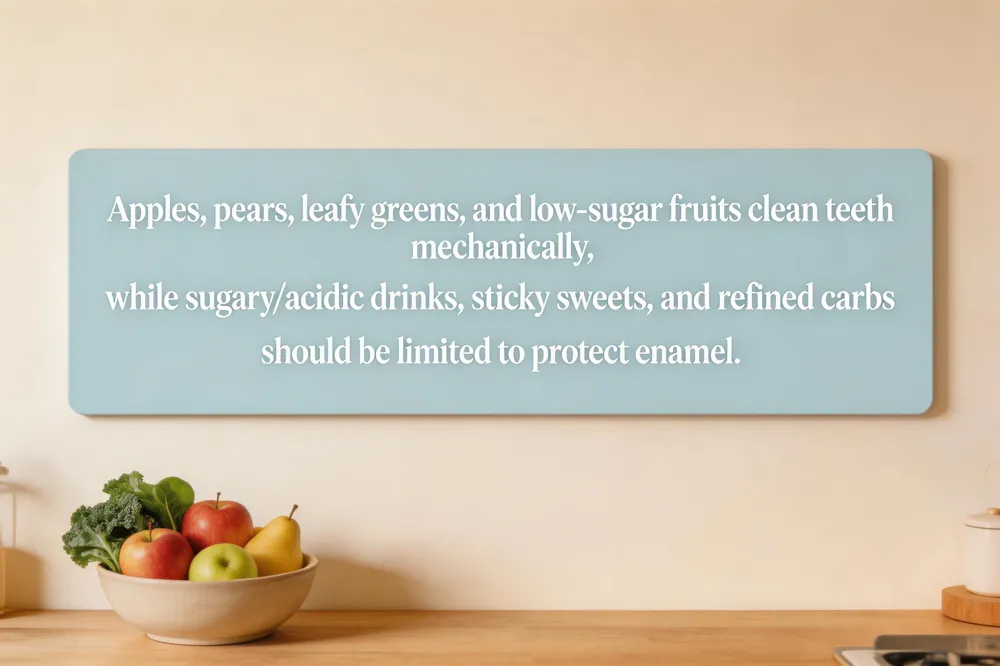 At Best Choice Dental in Totowa, we know that what you eat is a cornerstone of oral health. Which fruit is best for teeth and gums? Apples top the list – their crisp texture and high water content act like a natural toothbrush, scrubbing plaque and stimulating saliva that neutralizes acids, while vitamin C supports gum collagen. Pears offer similar benefits, and strawberries or kiwis add antioxidants but should be eaten in moderation because of their acidity. What foods should be avoided to protect teeth? Limit sugary and acidic drinks (sodas, sports drinks, sweetened coffee/tea), sticky sweets (candy, dried fruit), refined carbs (white bread, chips, pastries), and excess citrus juices. Alcohol and chewing ice also dry the mouth or cause micro‑fractures. What are the top foods that damage teeth? Carbonated sodas, sports drinks, and other acidic beverages erode enamel and feed bacteria; sticky treats and dried fruit cling to teeth; sweetened coffee/tea can stain and dry out the mouth; and crunchy starchy snacks trap food particles. What are the worst foods for children’s teeth? Sticky candies, gummy snacks, fruit‑flavored sugary foods, sugary drinks (including 100 % juice), and frequent starchy snacks are the biggest culprits for early childhood caries. Pairing tooth‑friendly choices—crunchy raw vegetables, leafy greens, dairy, nuts, and fluoridated water with regular brushing, flossing, and bi‑annual check‑ups at our state‑of‑the‑art clinic keeps smiles healthy for the whole family.
Avoiding Harmful Foods, Hydration, and Simple Rules
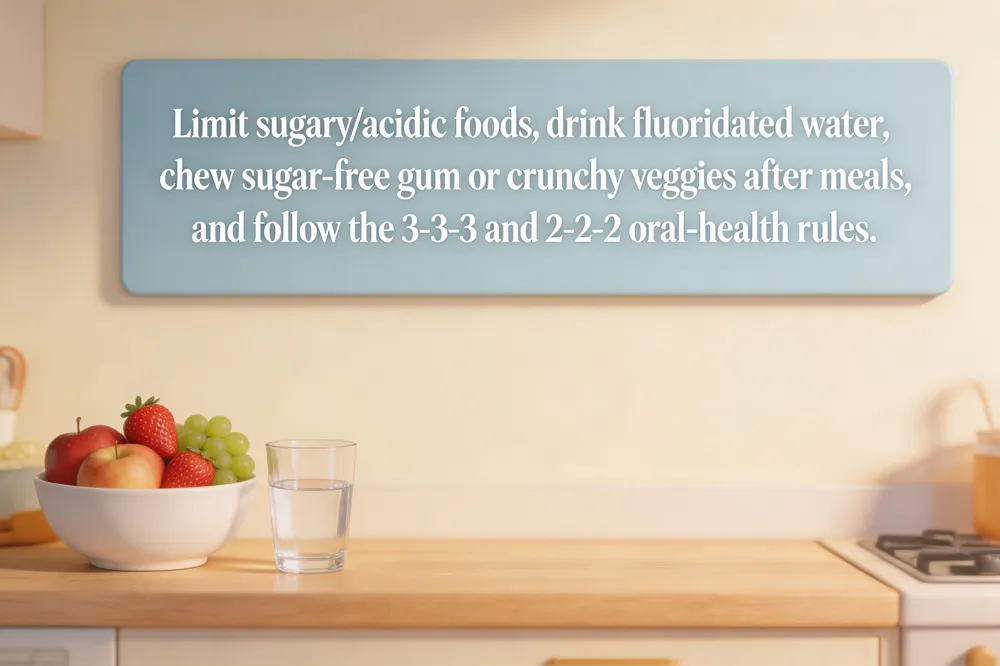 Limiting sugary and acidic foods and drinks—such as sodas, fruit juices, sticky candies, and refined snacks—reduces the fuel for plaque‑forming bacteria and protects enamel from erosion. Fluoridated water serves as “nature’s cavity fighter”: fluoride strengthens enamel, while water rinses food particles and keeps saliva flowing. Chewing sugar‑free gum or munching crunchy vegetables (celery, carrots, apples) after meals further stimulates saliva, which neutralizes acids and delivers calcium and phosphate for remineralization.
3‑3‑3 rule – a simple memory aid that suggests brushing three times a day for about three minutes each, and waiting roughly three hours after the last bite before bedtime so acids can be neutralized. While clinicians usually recommend twice‑daily brushing for two minutes, the principle of regular, thorough cleaning and allowing recovery time remains valuable.
2‑2‑2 rule – brush twice daily for two minutes, floss daily, and visit the dentist twice a year. This concise routine, combined with a nutrient‑dense diet rich in calcium, vitamin D, vitamin C, and phosphorus, supports strong teeth and gums for adults and children alike.
Professional Guidance and Resources
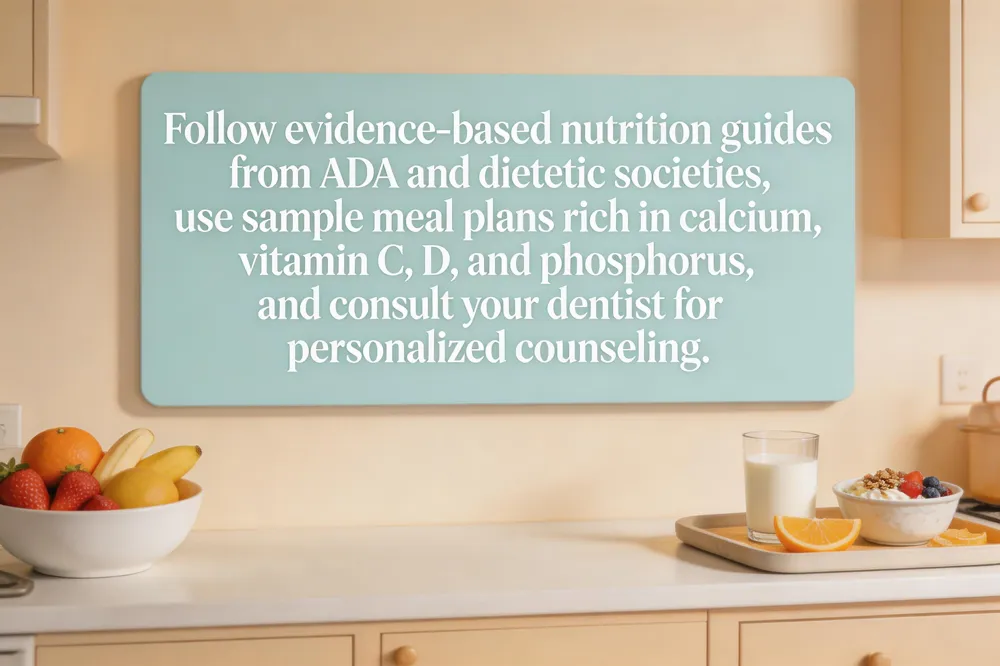 At Best Choice Dental we view nutrition as key to oral health. Is there a “diet plan” for dental health? Yes—choose calcium‑rich foods like cheese, milk, yogurt, leafy greens, almonds, and fatty fish. Add vitamin C‑rich berries, bell peppers, sweet potatoes and fruits and veggies that boost saliva. Drink fluoridated water throughout the day and limit sodas, candy and acidic drinks. A sample day: Greek yogurt with berries and almonds for breakfast; mixed‑green salad with grilled chicken for lunch; apple with almond butter as a snack; baked salmon with quinoa for dinner; carrot sticks with hummus before bed.
Where can I find oral‑health nutrition guidance? American Dental Association (ADA) website offers evidence‑based articles, printable fact sheets and a “Nutrition and Oral Health” hub. The Academy of Nutrition and Dietetics provides complementary resources, and our office gives counseling based on these guidelines.
Are there useful PDFs on nutrition and oral health? ADA and the National Maternal and Child Oral Health Resource Center publish PDFs on sugar intake, remineralization and diet‑related caries prevention.
What book covers nutrition for dental health? “Nutrition for Dental Health: A Guide for the Dental Professional” (Sroda, 2018) is a textbook recommended for clinicians and patients.
Putting It All Together for a Healthy Smile
A tooth‑friendly diet is built on calcium‑rich dairy (milk, cheese, yogurt), leafy greens, crunchy raw veggies, and nuts that supply calcium, phosphorus, and vitamin D while stimulating saliva to neutralize acids. Fluoridated water and polyphenol‑rich teas help remineralize enamel and curb harmful bacteria. Fiber‑filled fruits such as apples and pears act like natural toothbrushes, and vitamin C‑rich berries, broccoli, and bell peppers support gum collagen. Limit free sugars, sticky snacks, and acidic drinks, and choose water or unsweetened tea between meals to reduce acid exposure. These nutritional habits work best when paired with professional care—regular check‑ups, cleanings, and personalized counseling at our practice ensure early detection of problems and reinforce your at oral‑health plan. Schedule your next visit today to keep your smile strong and bright.