Introduction to Restorative Dentistry and Smile Renewal
What Is Restorative Dentistry?
Restorative dentistry is a branch of dental care focused on repairing or replacing damaged and missing teeth. Its goal is to restore not only oral health but also the natural function of teeth to ensure comfortable chewing, speaking, and overall well-being.
Restoring Function and Appearance
Beyond just fixing dental problems, restorative dentistry aims to bring back the natural look of your smile. Treatments are designed to blend seamlessly with your existing teeth, helping you feel confident while maintaining strong oral health.
Common Restorative Treatments
Patients benefit from a variety of restorative options tailored to their needs, including:
- Dental fillings that repair cavities and prevent further decay.
- Crowns that cover weakened or broken teeth.
- Bridges that fill gaps by connecting artificial teeth to neighboring ones.
- Dental implants, offering a permanent and natural-feeling tooth replacement.
- Dentures for replacing several or all missing teeth.
Each treatment is chosen to provide both functional improvements and aesthetic enhancements, ensuring long-lasting oral comfort and a renewed smile.
Understanding Types of Dental Restorations and Procedures
What are the types of dental restorations and dental restoration procedures?
Dental restorations are essential treatments designed to repair damaged teeth or replace missing teeth, improving both function and appearance. These restorations broadly fall into two categories:
Direct Restorations: These are applied directly to the tooth during a dental visit. Examples include:
- Fillings: Used to repair cavities and minor damage, often crafted from tooth-colored composite resin for a natural look.
- Dental bonding: A quick cosmetic fix where tooth-colored materials are applied to correct small chips, gaps, or imperfections.
Indirect Restorations: These are custom-made restorations created in a dental lab and subsequently fitted to the patient’s tooth. Common types include:
- Crowns: Caps that cover and protect large or severely damaged teeth, restoring strength and appearance.
- Bridges: Used to replace missing teeth by anchoring artificial teeth to neighboring natural teeth.
- Veneers: Thin shells applied to the front of teeth to improve color, shape, and alignment.
- Inlays and Onlays: Fit precisely into or onto teeth for moderate damage, serving as alternatives between fillings and crowns.
Additional important restorative procedures include:
- Root canal therapy: Removes infected pulp inside a tooth, preserving it while preventing further infection, generally followed by a crown for protection.
- Dental implants: Considered the gold standard for tooth replacement, implants replace both the tooth root and crown, supporting natural chewing and preserving jawbone health.
How do these restorations restore smile functionality and appearance?
By addressing issues like decay, damage, or missing teeth, restorative treatments:
- Restore natural chewing and speaking functions.
- Eliminate pain caused by dental problems.
- Improve aesthetics, helping patients regain a confident and natural smile.
- Preserve surrounding teeth and jawbone structure, preventing further oral health complications.
Together, these restorative options provide personalized solutions tailored to each patient's needs, enhancing both the health and beauty of their smiles.
Comprehensive Restorative Treatments: From Fillings to Full Mouth Restoration
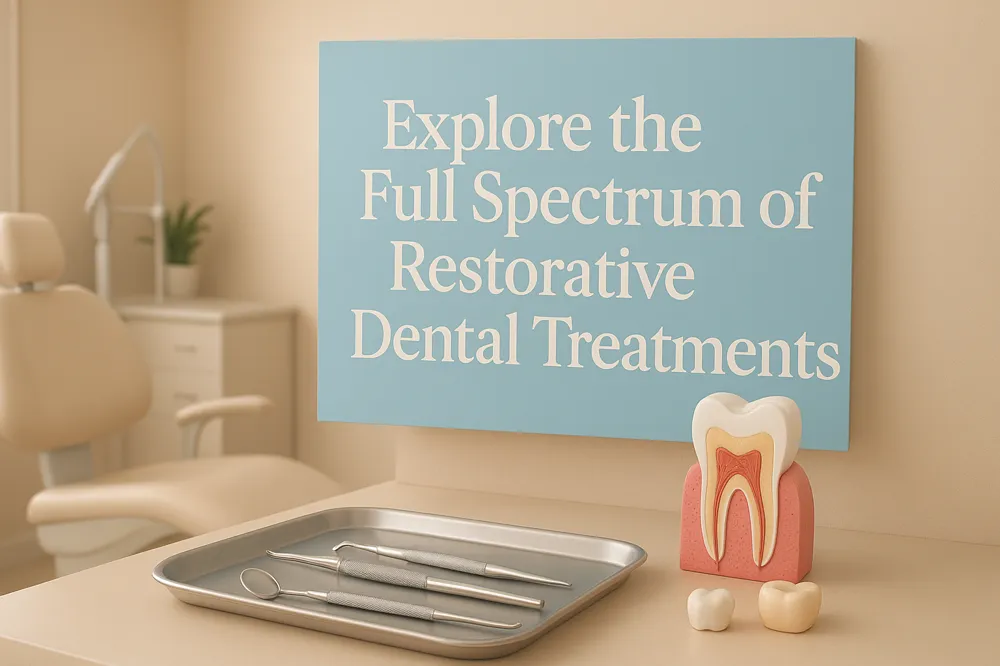
What are the different types of restorative dental treatments?
Restorative dental treatments range from basic to major procedures, all designed to repair damaged teeth or replace missing teeth, restoring both function and appearance.
Basic treatments include dental fillings and simple extractions. Fillings, often tooth-colored composites, seal cavities and prevent further decay. These procedures tend to be quick and usually completed in a single visit, addressing minor damage effectively.
Major restorative procedures cover crowns, bridges, dental implants, inlays and onlays, and root canal therapy. Crowns are caps placed over large cavities or fractured teeth after removing some enamel, providing strength and appearance. Inlays and onlays are custom-made restorations fitting into the tooth like puzzle pieces, used for moderate damage too large for fillings but not severe enough for crowns. Bridges span the gap created by missing teeth, anchored to adjacent teeth, while dental implants act as artificial roots fused to the jawbone, supporting crowns or bridges without affecting neighboring teeth. Root canal therapy treats infected pulp tissue, often followed by a crown to protect the tooth. Dentures, including implant-supported options, offer removable or fixed solutions for multiple missing teeth.
These treatments improve chewing, speaking, eliminate pain, and enhance overall oral health and smile aesthetics.
What treatments are involved in a full mouth restoration?
A full mouth restoration is a personalized, comprehensive approach to rebuild the entire oral function and appearance, addressing multiple dental issues simultaneously.
This process may combine:
- Dental crowns and onlays to strengthen and protect severely damaged teeth.
- Veneers to improve tooth shape, alignment, and color for enhanced aesthetics.
- Bridges and dentures to replace several missing teeth, restoring chewing and speaking capabilities.
- Dental implants to provide a permanent foundation for crowns or bridges, preventing bone loss and maintaining jaw structure.
- Root canal therapy and periodontal treatments to eliminate infection and address gum health.
- Orthodontic treatments may also be incorporated to correct alignment issues for optimal function.
Through these combined treatments, a full mouth restoration restores not only dental health but also patient confidence, enabling proper chewing, clear speech, and a naturally beautiful smile.
Materials Used in Dental Restorations and Their Effectiveness
What materials are commonly used in dental restorations?
Dental restorations utilize a variety of materials depending on the treatment type and patient needs. Commonly used materials include:
- Composite resins: tooth-colored fillings that offer excellent aesthetic results. Advances have enhanced their durability with success rates exceeding 90% at 10 years.
- Amalgam: A strong, silver-colored alloy traditionally used for heavy-load bearing teeth. While durable, its use has declined due to environmental concerns.
- Gold alloys: Known for their longevity and strength, often used in dental crowns and inlays.
- Porcelain and ceramics: Popular for dental crowns, veneers, and dental onlays because they closely mimic the natural appearance of teeth.
- Glass ionomers and resin-modified glass ionomers: Provide fluoride release and chemical bonding, ideal for pediatric cases or patients prone to cavities.
These materials are selected to balance function, appearance, and patient comfort.
Do dental restorations effectively restore teeth, and are there any limitations?
Restorations such as dental fillings, dental crowns, dental bridges, dental implants, inlays and onlays, and dentures are highly effective in restoring the function and aesthetics of damaged or missing teeth. They improve oral health by enabling proper chewing, preventing further decay, and supporting overall dental structure.
However, restorations have limitations. They cannot perfectly match the natural enamel's resilience and structure, and some types require periodic replacement due to wear or damage. More complex cases may require advanced procedures like root canal therapy or dental implants, which have longer healing times.
Maintaining good oral hygiene and regular dental check-ups is essential to prolong the life of restorations and maintain healthy oral function. Modern materials and techniques continue to improve durability and patient outcomes, making restorative dentistry a reliable option for most dental concerns.
Restorative Dentistry’s Role in Overall Oral and Systemic Health

How does oral health affect overall health, including conditions like diabetes and heart disease?
Oral health is closely linked to overall health. Poor oral hygiene and untreated dental issues can increase the risk of systemic conditions such as diabetes, heart disease, and stroke. Chronic oral infections, like gum disease, may exacerbate these health problems by allowing bacteria and inflammation to affect other parts of the body. Restorative dentistry plays an important role in breaking this cycle by repairing damaged teeth and eliminating infections, which supports better general health. See also Oral-systemic connection between gum disease and heart disease.
What are the benefits of restorative dental treatments?
Restorative dental treatments improve both oral function and aesthetics. By repairing cavities with fillings or restoring broken teeth with crowns and bonding, these procedures restore chewing and speaking abilities. Missing teeth can be replaced with bridges, dentures, or implants, which also help maintain proper tooth alignment and prevent bone loss. Eliminating infections through root canal therapy reduces pain and prevents further dental complications.
Why is follow-up care and oral hygiene critical after restorative procedures?
Maintaining good oral hygiene including brushing and flossing is essential for the longevity of restorations like crowns, bridges, and implants. Regular dental check-ups allow early detection of any issues such as loosening restorations or gum problems. Prompt professional care and proper home oral hygiene prevent plaque buildup and support healing, ensuring restored teeth remain healthy and functional.
What should patients know about insurance and managing the costs of restorative treatments?
Costs for restorative dental procedures can vary widely. Many dental insurance plans provide partial coverage for treatments deemed medically necessary, which helps manage expenses. However, coverage differs depending on the policy and provider. Patients are advised to review their insurance benefits carefully and discuss payment options with their dental office to optimize affordability.
| Aspect | Details | Importance |
|---|---|---|
| Oral-Systemic Connection | Links oral infections to diseases like diabetes and heart disease | Understanding urgency of dental health |
| Treatment Benefits | Restores chewing, reduces pain, preserves bone structure | Enhances quality of life and prevents complications |
| Follow-Up Care | Requires good hygiene and regular dental visits | Maintains restoration integrity and prevents problems |
| Insurance & Cost Management | Varies by plan; partial coverage common | Planning financially for dental treatment |
Smile Makeovers: Combining Restorative and Cosmetic Dentistry for Optimal Results
What is involved in a smile reconstruction or smile makeover?
A smile makeover is a personalized dental treatment designed to improve both the function and aesthetic appearance of your smile. It involves a comprehensive evaluation by your dentist to identify concerns such as stained, chipped, misaligned, or missing teeth.
What common procedures are included in a smile makeover?
The makeover typically features a combination of restorative dentistry and cosmetic treatments, including:
- Teeth whitening to brighten discolored teeth
- Veneers that cover the front of teeth to correct shape, color, and alignment
- Dental crowns to restore damaged or weak teeth, enhancing strength and appearance
- Dental implants as permanent replacements for missing teeth that preserve bone structure
- Orthodontic options like clear aligners to straighten teeth discreetly
How are treatment plans personalized?
Your dentist creates a tailored plan that considers your dental health needs, aesthetic goals, and lifestyle. This customized approach ensures every procedure works cohesively to produce a natural-looking, healthy smile.
How do restorative and cosmetic treatments complement each other?
Restorative dentistry repairs damage and improves oral function, while cosmetic dentistry enhances visual appeal. Together, they rebuild your smile's health, strength, and beauty—helping you enjoy improved chewing, speaking, and boosted confidence in a comfortable, patient-focused environment.
Maintaining Your Renewed Smile with Restorative Dentistry
Importance of Oral Hygiene and Regular Dental Visits
Maintaining excellent oral hygiene is crucial for preserving your restorative dental work. Brushing twice daily and flossing regularly help prevent plaque buildup and gum disease, which can compromise restorations like crowns, bridges, and implants.
Regular dental check-ups enable your dentist to monitor the condition of your restorations and identify any early signs of wear or issues. Professional cleanings and timely adjustments promote the longevity of your renewed smile.
Protecting Restorations from Damage
Restorations, while durable, require protection from hard foods and habits such as teeth grinding (bruxism). Avoid biting on hard objects like ice or pens to prevent chipping or loosening.
Using a nightguard can safeguard dental work if you grind your teeth during sleep, ensuring your investment lasts longer and remains comfortable.
Early Intervention Benefits and Long-Term Smile Health
Addressing dental issues promptly prevents further damage and costly treatments down the road. Early intervention strengthens teeth and preserves natural oral structures.
By committing to good oral care and regular visits, you support not only the health and function of your restorations but also the overall wellness and confidence that come with a bright, healthy smile.