Why Proper Brushing Starts Early
Oral care should begin the moment the first tooth appears—or even before, by wiping gums with a damp cloth after each feeding. Parents set the tone: choose a soft, child‑size toothbrush, use a rice‑grain smear of fluoride toothpaste for infants, then a pea‑sized amount once the child can spit, and brush together twice daily for two minutes. Modeling gentle circular motions at a 45‑degree angle teaches the proper technique while supervision ensures the child doesn’t swallow toothpaste. Establishing these habits reduces the risk of cavities, supports healthy bite development, and lays the foundation for a lifetime of strong, pain‑free teeth. At our practice we reinforce these routines during every visit, using kid‑friendly technology and personalized coaching to keep brushing fun and effective.
Starting Early: Baby Oral Care Foundations
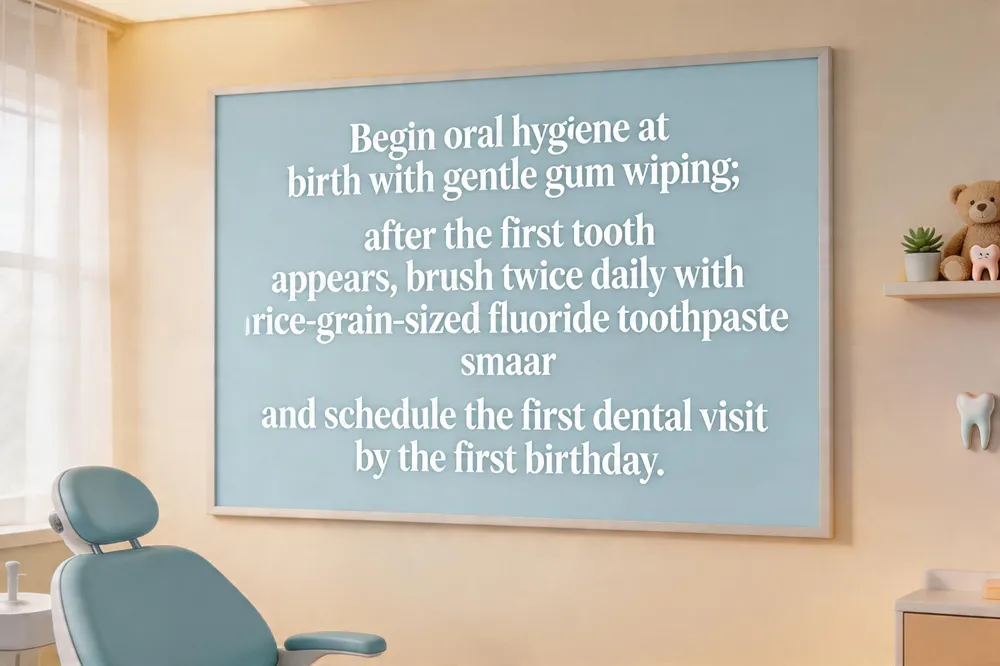 Begin oral hygiene the moment your baby is born. After each feeding, gently wipe the gums with a soft, damp washcloth or infant finger brush to remove bacteria before any teeth appear. Once the first tooth erupts—usually around six months—start brushing twice daily with a rice‑grain‑sized smear of fluoride toothpaste and a soft, small‑head toothbrush. This age‑appropriate amount protects enamel while minimizing swallowing.
What is the 7‑4 rule in Pediatric Dentistry? The 7‑4 rule links a child’s age in months to the expected number of primary teeth. At ~7 months the first tooth appears; subtract 4 from the child’s age in months to estimate total baby teeth (e.g., a 15‑month‑old should have ~11 teeth). By 24 months all 20 primary teeth are usually present. It is a flexible guide for monitoring development.
When should oral care for a baby begin? Oral care starts at birth with gum wiping. After the first tooth erupts, brush twice a day with a rice‑grain smear of fluoride toothpaste, and schedule the first dental visit by the first birthday. Regular clean‑ups at Smile Station Pediatric Dentistry ensure personalized, comfortable care and early detection of issues.
What is the rule of 7 in Pediatric Dentistry? The rule of 7 recommends a first orthodontic evaluation around age 7 to assess bite and growth, allowing timely referrals if needed.
Daily Brushing and Flossing Routine for Young Children
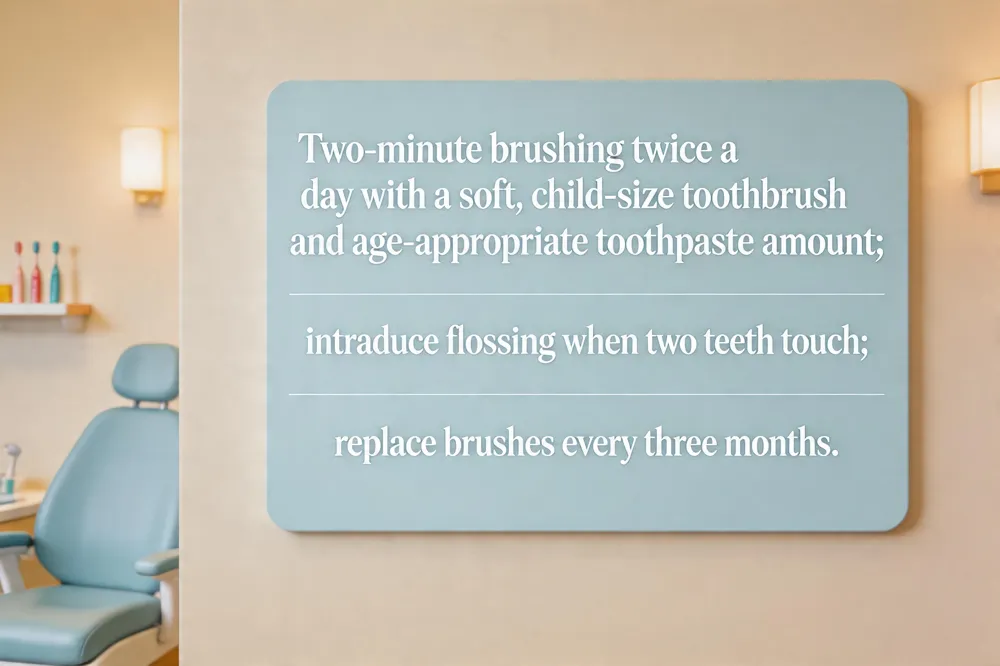 A solid oral‑care routine starts before the first tooth appears—wipe gums with a damp cloth after each feeding. Once teeth erupt, use a soft, child‑size toothbrush (≈1 inch × ½ inch head) with soft, rounded nylon bristles. For infants under‑3, apply a rice‑grain‑sized smear of fluoride toothpaste; from age 3‑6 a pea‑sized amount is ideal. Hold the brush at a 45‑degree angle and use gentle circular motions for a full two minutes, covering outer, inner, chewing surfaces and the tongue.
What is the best tooth care for kids? Begin with gum cleaning, then brush twice daily with the appropriate toothpaste amount, introduce flossing as soon as two teeth touch, and schedule the first dental visit by the first birthday. Regular six‑month check‑ups at Smile Station Pediatric Dentistry provide professional cleanings, fluoride varnish, and sealants, all delivered in a kid‑friendly environment.
Toothbrushing tips for toddlers – let them pick a fun toothbrush, sing a two‑minute song, supervise until age 7‑8, and praise effort.
How should an 18‑month‑old’s teeth be brushed? Use a tiny smear of fluoride toothpaste on a soft infant brush, brush twice daily with gentle circles for about two minutes, and supervise the whole process.
How often should a 2‑year‑old brush? Twice a day, two minutes each, with a rice‑grain‑sized toothpaste amount; parent‑assisted brushing is essential.
How should kids brush and floss correctly? Brush twice daily at a 45‑degree angle, circular motions; floss once daily once two teeth touch, using a C‑shaped motion and supervising until age 8‑10. Replace brushes every three months (ADA recommends replacing a toothbrush every three to four months). Smile Station’s modern electric brushes with timers make the two‑minute goal easy and fun.
Motivation and Fun: Making Oral Hygiene Enjoyable
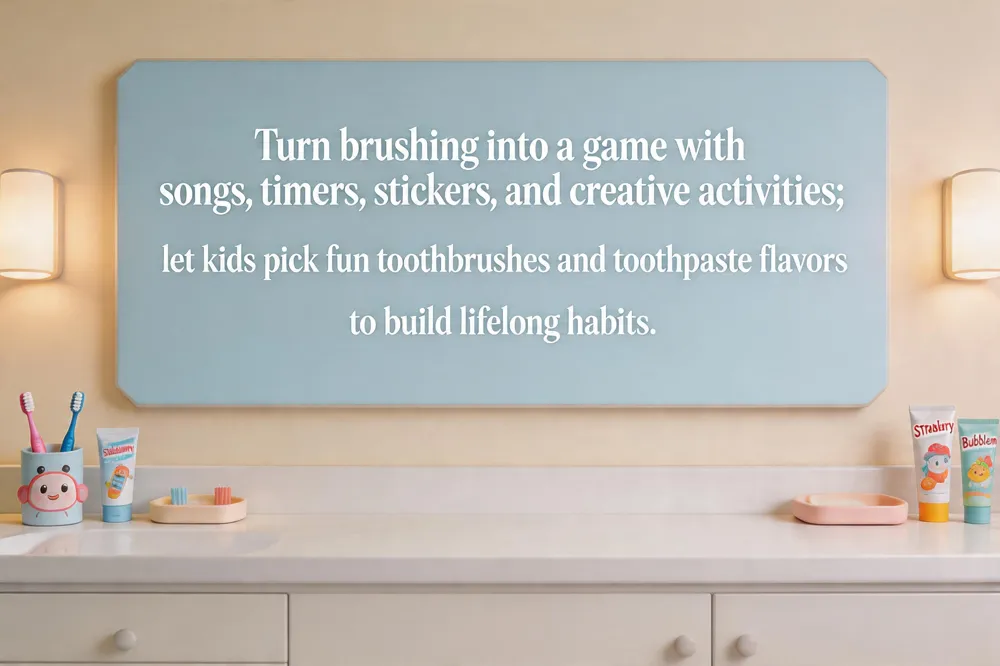 Parents can turn brushing into a game by playing a favorite two‑minute song or using a countdown timer, letting kids see exactly how long to brush. Let them pick a toothbrush and toothpaste with a beloved character or tasty flavor, and create a superhero story where they "battle" plaque. Simple rewards—stickers on a chart, high‑fives, or a small treat for consistent brushing—reinforce the habit, while brushing side‑by‑side models proper technique and family time.
Interactive activities such as "tooth‑brushing races," floss‑challenges with Lego, or science demos (e.g., soda‑soaked egg to show enamel erosion) teach why clean teeth stay bright. Crafts like making a marshmallow‑mouth model or designing DIY toothpaste labels let kids explore concepts while they play.
Printable resources are readily available: Colgate’s free "Know How to Brush" poster, the ADA’s 12‑by‑18‑inch oral‑health poster, and the AAPD’s downloadable "Healthy Smiles" guide provide visual reminders for home or school.
These fun, evidence‑based strategies help children develop lifelong oral‑hygiene habits in a joyful, supportive environment.
Products, Diet, and Preventive Care
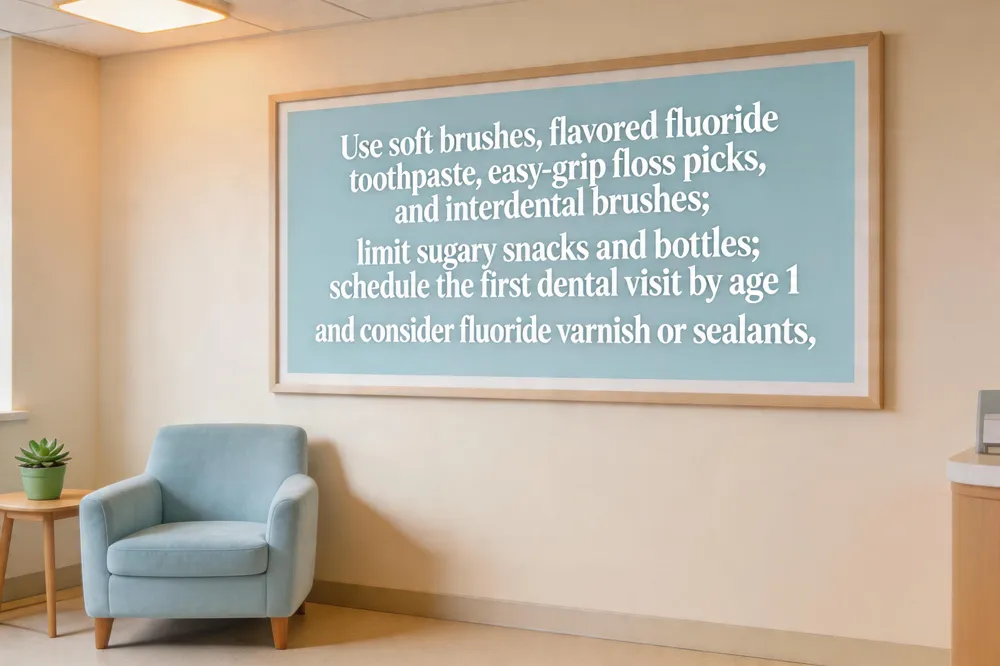 What oral‑care products are suitable for kids? Age‑appropriate soft brushes, kid‑friendly flavored fluoride toothpaste, easy‑grip floss picks, interdental brushes, and, when appropriate, fluoride mouth‑rinse.
What steps should parents take to maintain good oral health? Wipe gums before teeth erupt, brush twice daily with a rice‑grain toothpaste smear, schedule the first dental visit by age 1, supervise brushing until age 7‑8, introduce floss when two teeth touch, limit sugary snacks and bottles, and consider fluoride varnish or sealants at the dentist.
Why is dental care important for children? It prevents pain‑inducing cavities, supports speaking, chewing and confidence, guides jaw development, and teaches lifelong hygiene habits.
What is the Rule of 3 in Pediatric Dentistry? Brush three times a day, for three minutes each session, and replace the toothbrush every three months.
Professional Guidance and Long‑Term Oral Health
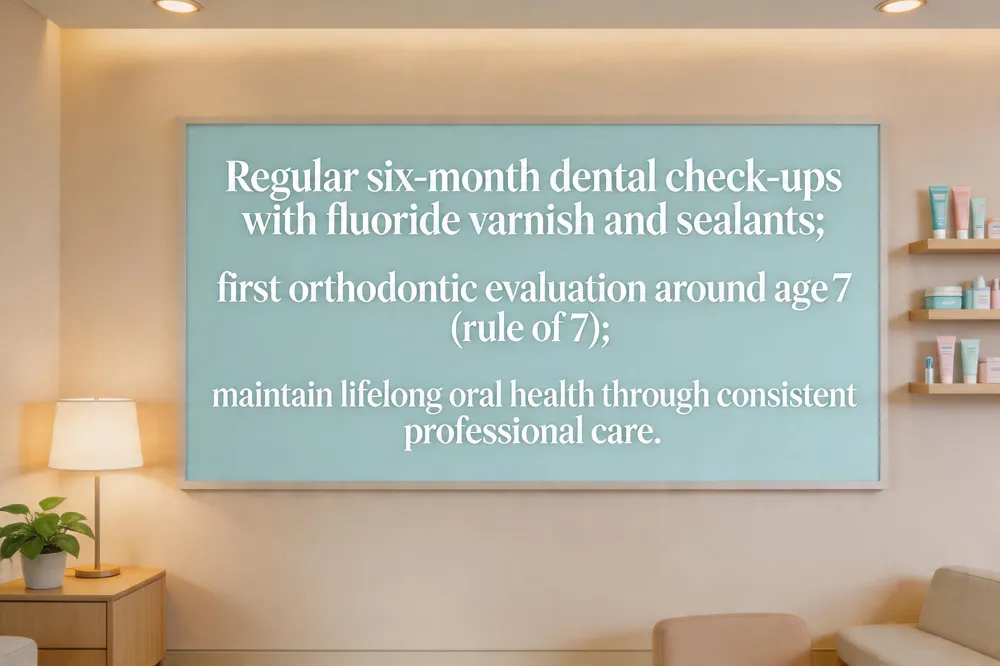 A consistent dental visit schedule is essential: schedule first appointment should occur by the first birthday or within six months of the first tooth erupting, followed by check‑ups every six months. During these visits, pediatric dentists apply fluoride varnish and recommend dental sealants on newly erupted permanent molars to protect against cavities. An orthodontic evaluation is advised around age seven – the rule of 7 – to assess bite, crowding, and growth, allowing early intervention when needed.
What is the rule of 7 in Pediatric Dentistry?
In dentistry, the rule of 7 refers to the age when children should have their first orthodontic evaluation, around age 7. While this may seem early for straightening teeth, some children benefit from early orthodontic intervention.
What is the rule of 3 in Pediatric Dentistry?
Brush three times a day, for three minutes each session, and replace the toothbrush every three months.
Regular monitoring helps catch emergencies early, ensures proper development, and supports lifelong oral health.
Putting It All Together for Bright Smiles
Begin each day and night with two minutes of gentle, circular brushing using a soft, child‑size toothbrush and a rice‑grain smear of fluoride toothpaste for kids under three, or a pea‑size amount for older children. Parents should supervise until the child can reliably spit and brush all surfaces, modeling the technique and turning the routine into a game with songs, timers, or reward charts. Even the best home care needs professional support—schedule a dental check‑up by the first birthday and keep visits every six months for cleanings, fluoride varnish, sealants, or orthodontic evaluation. At Smile Station Pediatric Dentistry we use technology such as electric brushes with built‑in timers and calming treatment rooms, making visit and while protecting smiles for life.