Why Sealants Matter for Kids
Molars and premolars have deep pits and fissures where food and bacteria hide, making them the most common sites for childhood cavities—up to three times more likely to decay without protection. Dental sealants act as a thin, BPA‑free resin shield that "seals out" these hidden germs, cutting cavity risk by up to 80% in the first two years and continuing to protect for years. Pediatric dentists at our office use gentle, light‑cured technology to apply sealants quickly and pain‑free, often during routine cleanings. By combining sealants with regular fluoride, brushing, and flossing, we give every child a durable, invisible defense while ensuring a comfortable, personalized experience.
How Sealants Work and When to Apply
Quick Reference Table
| Key Aspect | Details |
|---|---|
| Composition | Ultra‑thin, BPA‑free resin or glass‑ionomer coating; resin releases little fluoride, glass‑ionomer adds fluoride. |
| Application Steps | 1. Clean & dry tooth 2. Apply acid‑etch gel → roughen enamel 3. Rinse & dry 4. Paint sealant into pits/fissures 5. Cure with blue light (≈30 s). |
| Ideal Age Window | First permanent molars: ages 6‑7; second molars: ages 11‑13. Can be placed at any age, including adults. |
| Risk Reduction | ↓ Cavity risk up to 80 % in first 2 years, ~50 % for up to 4 years (CDC/ADA). |
| BPA Safety | Modern resin sealants contain minimal BPA, well below safety thresholds. |
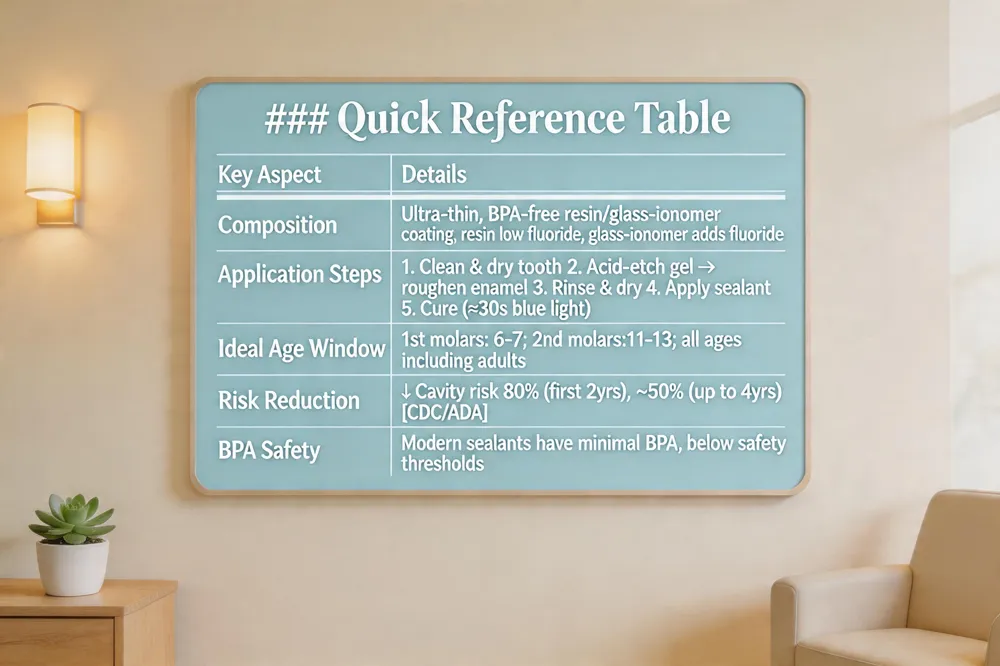 Dental sealants are ultra‑thin, BPA‑free resin or glass‑ionomer coatings that flow into the deep pits and fissures of molars and premolars. After the tooth is cleaned, an acid‑etch gel roughens the enamel, the sealant is painted on, and a blue curing light hardens it into a smooth, protective barrier that “seals out” plaque and acid‑producing bacteria. The most effective window is soon after permanent molars erupt—typically ages 6‑7 for the first set and 11‑13 for the second—although healthy teeth can be sealed at any age, even in adults.
Evidence from the CDC and ADA shows sealants cut cavity risk by up to 80 % in the first two years and about 50 % for up to four years, making them three times more protective than no sealant. Modern resin‑based sealants contain minimal BPA and release little fluoride, while glass‑ionomer options add fluoride‑release for high‑risk children.
Pros include a painless, quick (5‑10 min per tooth) procedure that saves families money and avoids drilling. Cons are the need for regular check‑ups to re‑apply worn material and occasional parental concern about trace BPA—issues that current research deems safe. Overall, sealants are a cost‑effective, evidence‑based preventive tool that fits perfectly into the comprehensive, child‑friendly services offered at Webb Pediatric Dentistry.
Placement Procedure, Comfort, and Duration
Procedure & Comfort Overview
| Step | Description | Approx. Time per Tooth | Pain Management |
|---|---|---|---|
| Cleaning & Drying | Remove plaque & moisture | <1 min | N/A |
| Etching | Apply mild acid gel to create microscopic texture | 15 s | Brief tingling possible |
| Rinse & Dry | Remove gel, dry enamel | 10 s | N/A |
| Sealant Application | Brush resin into pits/fissures | 15‑20 s | N/A |
| Light Curing | Blue curing light hardens sealant | ~30 s | N/A |
| Total per Tooth | 5‑10 minutes | Usually no anesthesia; topical gel optional | |
| Full Set (4 molars) | 15‑30 minutes | Same | |
| Side Effects |
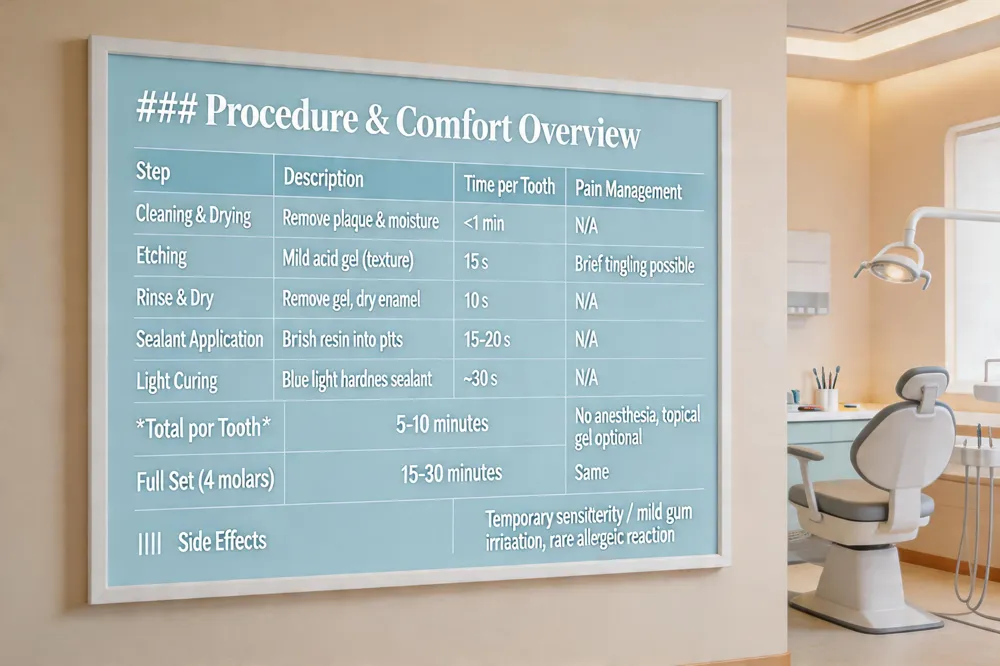 Dental sealants are applied in a quick, painless series of steps. First the tooth is cleaned and dried, then a mild etching gel is painted on the enamel to create a microscopic texture; the gel is rinsed off and the tooth is dried again. A liquid resin sealant is brushed into the pits and fissures and hardened with a curing light for about 30 seconds.
Pain management: Because the procedure involves no drilling, most children feel little discomfort. A brief tingling may occur from the etch, and a topical anesthetic gel can be used for anxious patients, but injectable anesthesia is rarely needed.
Typical appointment length: Each molar takes 5–10 minutes; a full set of back teeth is usually completed in 15–30 minutes, fitting easily into a routine visit.
Possible side effects: Temporary tooth sensitivity or mild gum irritation may appear for a few days; allergic reactions are extremely rare. BPA exposure is negligible and well below safety thresholds.
Answering common questions:
- Do they numb kids for sealants? No needle is required; a topical gel may be used if needed.
- How long does it take? About 5–10 minutes per tooth, 15–30 minutes for the full set.
- Side effects? Generally mild and short‑lived, such as brief sensitivity or gum irritation.
Cost, Insurance, and Value
Cost & Value Summary
| Item | Typical Cost (USD) | Insurance Coverage | Out‑of‑Pocket Range |
|---|---|---|---|
| Sealant per Tooth (Resin) | $30‑$60 | Preventive service often fully covered | $0‑$20 |
| Sealant per Tooth (Uninsured, Best Choice Dental) | $45‑$70 | None (self‑pay) | $45‑$70 |
| Full Set of First Permanent Molars (4 teeth) | $120‑$280 | Varies; many plans cover most | $0‑$80 |
| Long‑Term Savings | • Up to 80 % reduction in cavities first 2 years • Avoid costly fillings, crowns, root canals | — | Potential savings > $300 million nationwide (CDC) |
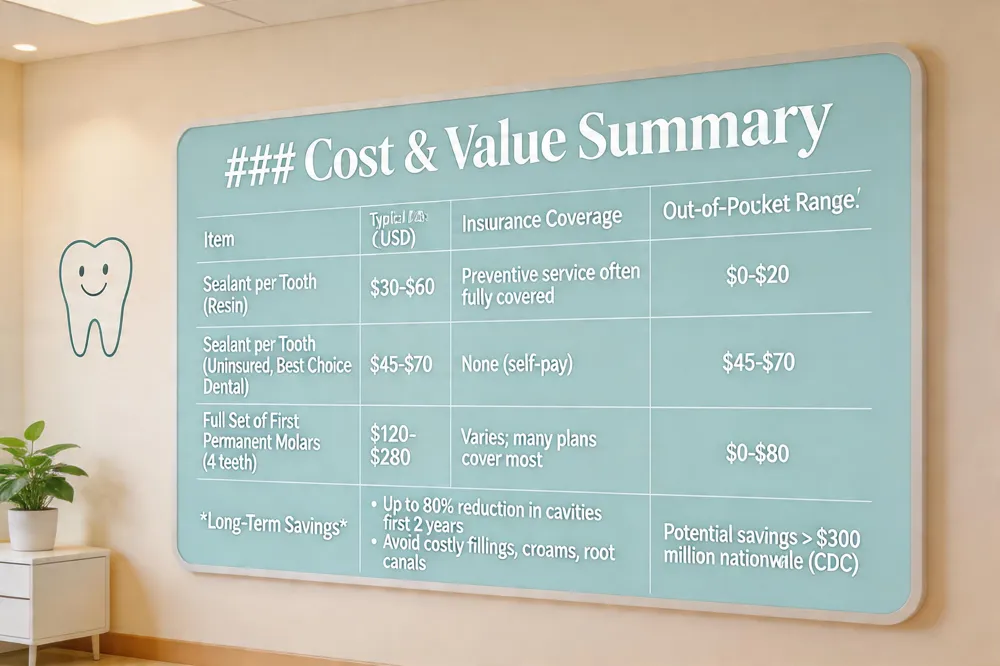 Dental sealants are a cost‑effective way to protect your child’s molars. A typical price per tooth ranges from $30 to $60, and many insurance plans cover seal preventive service, leaving families with only $0‑$20 out‑of‑pocket. At Best Choice Dental in Totowa, uninsured patients usually pay a discounted rate of $45‑$70 per tooth, so sealing all four first permanent molars can cost between $120 and $280. The one‑time investment pays off quickly: sealants reduce cavity risk by up to 80 % in the first two years and can prevent expensive fillings, crowns, or root canals later on. Over a child’s school years, the savings can exceed $300 million nationwide, according to CDC estimates. By choosing a practice that offers gentle, painless applications and routine monitoring, you ensure long‑term oral health while keeping costs low.
Maintenance, Longevity, and Follow‑up Care
Maintenance & Longevity Checklist
| Aspect | Recommended Action | Frequency |
|---|---|---|
| Sealant Integrity Check | Visual exam for wear, chipping, loss | Every 6‑month dental visit |
| Re‑application | Repair or replace compromised sealant | As needed (typically within 5‑10 years) |
| Oral Hygiene | Brush twice daily with fluoride toothpaste; floss daily | Daily |
| Diet Advice | Limit very hard or sticky foods that can damage sealant | Ongoing |
| Adult Sealants | Apply resin sealant on permanent molars/premolars with deep pits | Same protocol as children |
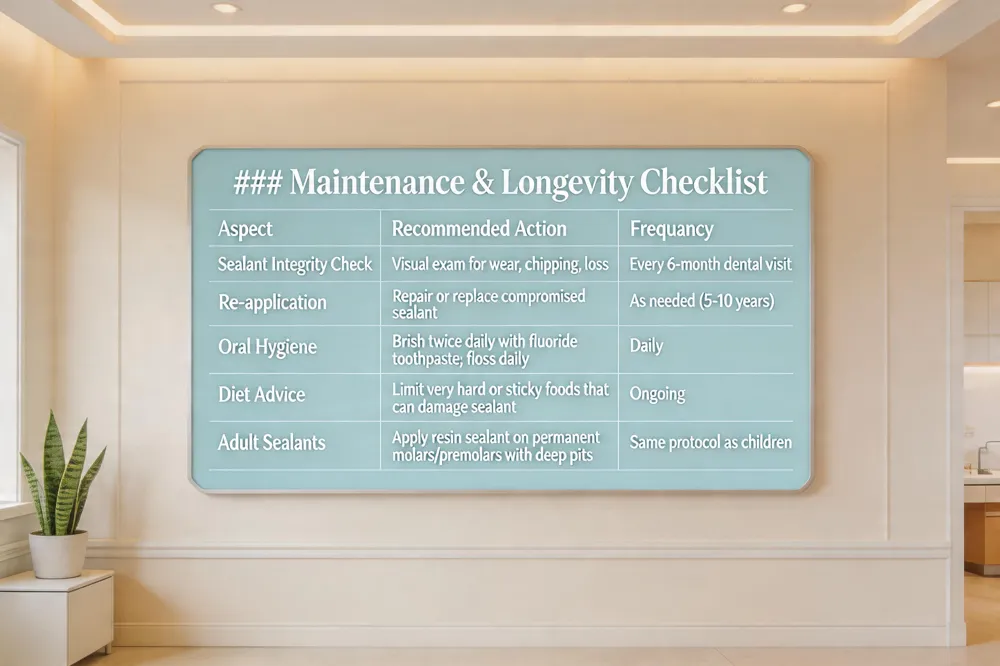 Dental sealants typically protect molars for 5‑10 years when the tooth is kept clean and the sealant remains intact. Children and adults should have the sealant checked at every six‑month exam; any wear, chipping, or loss is repaired or reapplied promptly so the barrier stays effective. Good oral hygiene—brushing twice daily with fluoride toothpaste, daily flossing, and limiting very hard or sticky foods—helps preserve sealant integrity. At Webb Pediatric Dentistry (3125 Springbank Ln., Charlotte, NC) we use BPA‑free, light‑cured resin sealants and a gentle DryShield system that makes placement painless and fast. Our team monitors sealant condition during routine cleanings and can re‑apply the coating as needed.
Dental sealants for adults – Adults can receive thin resin sealants on permanent molars and premolars with deep pits or grooves. The quick, painless procedure creates a smooth barrier that reduces cavity risk by up to 80 % in the first two years and remains protective for 5‑10 years when oral hygiene is maintained.
Teeth sealants for adults – When a tooth is free of decay, an adult‑ can benefit from a light‑cured sealant that blocks food and bacteria from hard‑to‑clean fissures. This cost‑effective preventive measure can prevent future fillings and is easily repaired or reapplied during regular dental visits.
Common Parent Concerns
Frequently Asked Parent Questions
| Concern | Fact / Advice |
|---|---|
| Cavity Prevalence | ~23 % of children ages 2‑5 have decay in baby teeth (especially in low‑income families). |
| Eruption Tracking (7‑4 Rule) | First 4 baby teeth appear ≈7 months; subsequent teeth ≈4 months apart. Subtract 4 months from child’s age to estimate expected primary teeth count. |
| Sealants vs. Fillings | Sealants prevent decay before it starts; fillings repair after decay. Sealants are painless, quick, and preserve tooth structure. |
| BPA Concerns | Modern sealants contain minimal BPA, far below safety limits; research deems them safe. |
| Need for Anesthesia | Generally none; topical gel may be used for anxious children. |
| Longevity | Sealants protect for 5‑10 years with proper care and regular check‑ups. |
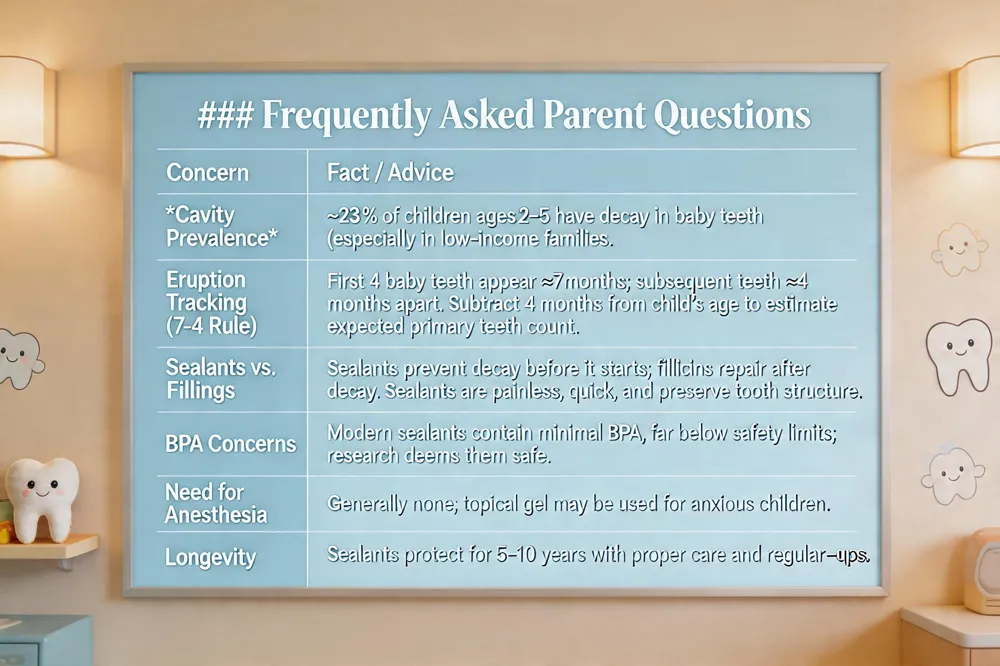 Cavities are surprisingly common in preschoolers – about 23 % of children ages 2‑5 have decay in their baby teeth, especially in low‑income families. Early decay can affect chewing, speech, and the eruption of permanent teeth, so regular check‑ups, twice‑daily brushing with fluoride toothpaste, and limiting sugary snacks are essential.
A helpful guide for tracking tooth eruption is the 7‑4 rule: the first four baby teeth appear around seven months, and then a new tooth typically emerges every four months. Subtracting four from a child’s age in months gives an estimate of how many primary teeth should be present, allowing parents and dentists to spot delays early.
Sealants versus fillings: sealants are a thin, tooth‑colored resin coating placed on the chewing surfaces of molars and premolars to block pits and prevent decay before it starts. Fillings repair a tooth after a cavity has formed. Sealants are painless, quick, and cost‑effective; fillings require drilling, possible anesthesia, and restore lost tooth structure.
Overall, sealants dramatically lower cavity risk—up to 80 % reduction in the first two years—while supporting good oral‑hygiene habits. At Webb Pediatric Dentistry, we use BPA‑free, FDA‑approved sealants, gentle techniques, and modern light‑curing technology to keep your child’s smile healthy and comfortable.
Final Takeaway
Dental sealants are a quick, painless, and non‑invasive way to shield your child’s molars from the deep pits and fissures where cavities love to hide. By creating a smooth, protective barrier, sealants cut decay risk by up to 80 % in the first two years, save families hundreds of dollars on future fillings, and make daily brushing and flossing easier. Because the material is BPA‑free, light‑cured, and blends with natural tooth color, the treatment is safe, virtually invisible, and comfortable for even the most anxious patients.\n\nNext steps: Schedule a routine preventive exam for your child, discuss any high‑risk factors (e.g., deep grooves, past cavities), and ask the dentist to evaluate sealant eligibility. Regular six‑month check‑ups will let the team monitor sealant wear and re‑apply when needed, ensuring continuous protection.\n\nBest Choice Dental in Totowa, NJ, offers comprehensive pediatric services—including gentle cleanings, fluoride treatments, and state‑of‑the‑art sealant placement—in a warm, family‑focused environment. Call (973) 245‑5000 or visit 215 Main St., Totowa, NJ 07512 during office hours (Mon‑Thu 9 am‑5 pm, Fri 8 am‑4 pm) to protect your child’s smile today.